
Hangbo Alloy Group
Shanghai · Est. 2012
UNS N08825 / W.Nr. 2.4858 — Nickel-iron-chromium alloy with copper and molybdenum additions for exceptional resistance to sulfuric acid, phosphoric acid, and chloride stress corrosion cracking.
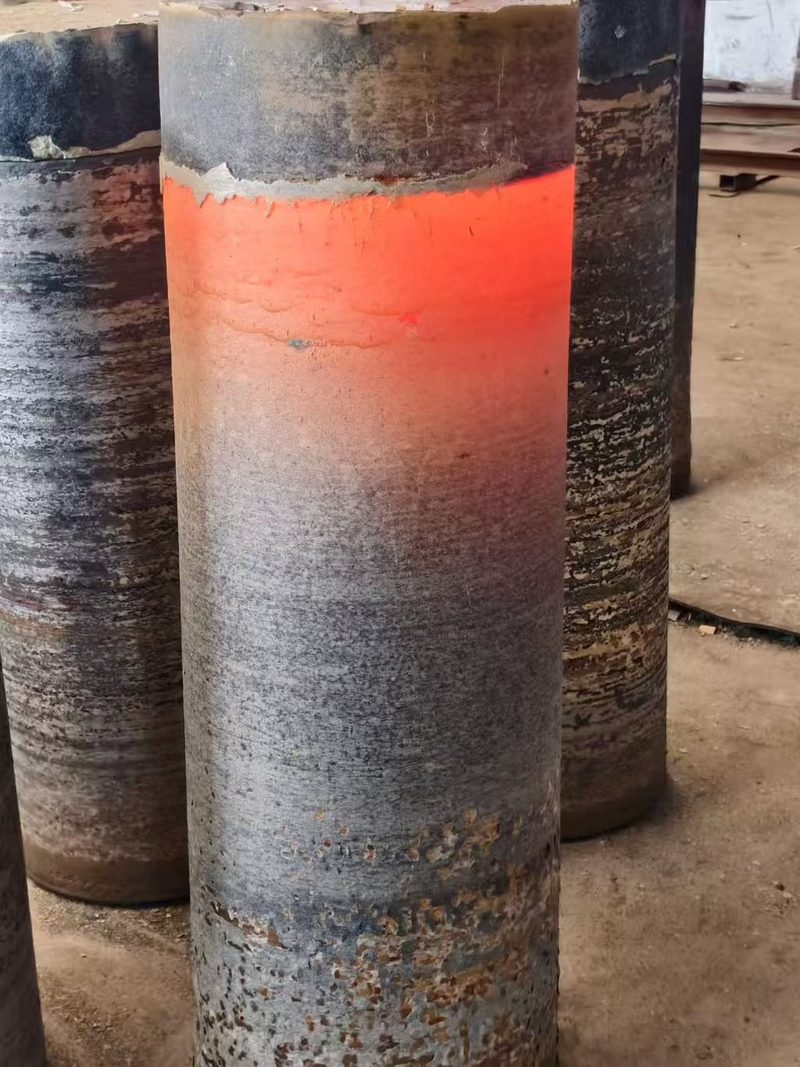
Incoloy 825 (UNS N08825 / W.Nr. 2.4858) is a fully austenitic nickel-iron-chromium alloy developed to provide exceptional resistance to a wide range of corrosive environments. The addition of molybdenum and copper gives the alloy superior performance in reducing acids, particularly sulfuric and phosphoric acids, while the high chromium content ensures good resistance to oxidizing media. Titanium is added for stabilization against intergranular corrosion after welding and exposure in the sensitizing temperature range.
Although Incoloy 825 is sometimes compared to stainless steels, its higher nickel content (typically 38-46%) gives it substantially better resistance to stress corrosion cracking in chloride environments and improved toughness at low temperatures. The alloy is not precipitation-hardenable; it achieves its mechanical properties through solid-solution strengthening and is normally used in the annealed condition. This makes fabrication, welding, and forming straightforward compared to age-hardenable nickel alloys.
One of the defining characteristics of Incoloy 825 is its ability to resist sulfuric acid over a broad range of concentrations and temperatures. In dilute sulfuric acid at temperatures below 60°C, the alloy exhibits corrosion rates well below 0.1 mm/year, making it suitable for acid piping, heat exchangers, and reaction vessels. In concentrated sulfuric acid, performance depends strongly on velocity, aeration, and the presence of chlorides, so application-specific testing is recommended. The alloy also performs well in seawater and brine, where its resistance to pitting and crevice corrosion exceeds that of conventional austenitic stainless steels.
The alloy's microstructure is a stable austenitic matrix with small amounts of titanium carbonitrides and intermetallic phases that are generally harmless when the material is correctly processed. Because Incoloy 825 is not hardened by heat treatment, its properties are controlled by cold work and annealing. Annealing is typically performed at 940-980°C followed by rapid air cooling or water quenching to dissolve any chromium carbides and restore corrosion resistance. Prolonged exposure in the 650-900°C range should be avoided because it can lead to sigma phase formation and reduced toughness.
Fabrication and welding of Incoloy 825 are similar to those of Type 316 stainless steel, with the important difference that the alloy requires lower heat input and faster travel speeds to minimize sensitization. Matching filler metals include ERNiFeCr-1 for gas tungsten arc welding and ENiFeCr-1 for shielded metal arc welding. Post-weld heat treatment is usually not required for corrosion resistance in most applications, provided welding parameters are properly controlled. The alloy can be formed by conventional hot and cold working methods, and it has excellent ductility for bending, flaring, and deep drawing.
At Hangbo Alloy Group, Incoloy 825 is supplied as bars, plates, sheets, seamless tubes, forgings, and welding consumables for chemical processing, oil and gas production, pollution control, and nuclear fuel reprocessing. All material is produced to ASTM/ASME specifications with full traceability and mechanical test certification.
The carefully balanced composition of Incoloy 825 provides resistance to both oxidizing and reducing environments. Nickel ensures austenitic stability and chloride SCC resistance, chromium provides passivity in oxidizing media, molybdenum improves pitting and crevice resistance, and copper enhances performance in sulfuric acid. Carbon is kept low to minimize carbide precipitation, while titanium stabilizes the alloy against sensitization.
| Element | Min % | Max % |
|---|---|---|
| Nickel (Ni) | 38.0 | 46.0 |
| Iron (Fe) | 22.0 | Balance |
| Chromium (Cr) | 19.5 | 23.5 |
| Molybdenum (Mo) | 2.5 | 3.5 |
| Copper (Cu) | 1.5 | 3.0 |
| Titanium (Ti) | 0.6 | 1.2 |
| Carbon (C) | — | 0.05 |
| Manganese (Mn) | — | 1.0 |
| Silicon (Si) | — | 0.5 |
| Sulfur (S) | — | 0.03 |
| Aluminum (Al) | — | 0.2 |
Incology 825 has physical properties similar to other austenitic nickel alloys, with moderate density, low thermal conductivity, and a coefficient of thermal expansion between that of carbon steel and austenitic stainless steel. These properties must be considered when designing welded joints and equipment for thermal cycling service.
| Property | Value | Unit |
|---|---|---|
| Density | 8.14 | g/cm3 |
| Melting Range | 1370 - 1400 | °C |
| Specific Heat (21°C) | 440 | J/kg·K |
| Thermal Conductivity (21°C) | 10.9 | W/m·K |
| Electrical Resistivity (21°C) | 1.13 | μΩ·m |
| Modulus of Elasticity (21°C) | 196 | GPa |
| Mean Coefficient of Thermal Expansion (20-100°C) | 14.0 | μm/m·°C |
| Curie Temperature | < -196 | °C |
The mechanical properties listed below are typical for solution-annealed bar and plate per ASTM B425 and ASTM B424. Incoloy 825 has excellent ductility and toughness, making it suitable for deep drawing, spinning, and cold forming operations. It work-hardens during forming but can be annealed between stages if necessary.
| Property | Value |
|---|---|
| Tensile Strength | 586 MPa (85 ksi) |
| Yield Strength (0.2% offset) | 241 MPa (35 ksi) |
| Elongation in 2 inches | 30% |
| Reduction of Area | 50% |
| Hardness | 80 - 90 HRB |
| Charpy V-notch Impact (room temp) | 140 J |
Incoloy 825 is primarily a corrosion-resistant alloy rather than a high-temperature strength alloy. Its maximum recommended service temperature in oxidizing service is approximately 540°C (1000°F). Above this temperature, the protective oxide scale may become less tenacious, and creep deformation becomes a design consideration. For applications requiring high-temperature strength, alloys such as Incoloy 800H or Inconel 625 should be considered.
The following table shows typical short-term tensile properties at elevated temperatures. Designers should note that long-term creep data and stress rupture testing should be consulted for pressure equipment operating above 450°C.
| Temperature (°C) | Tensile Strength (MPa) | Yield Strength (MPa) | Elongation (%) |
|---|---|---|---|
| 21 (Room) | 586 | 241 | 30 |
| 100 | 540 | 205 | 32 |
| 200 | 510 | 190 | 33 |
| 300 | 495 | 180 | 34 |
| 400 | 475 | 170 | 34 |
| 500 | 450 | 160 | 35 |
| 600 | 390 | 150 | 36 |
| 700 | 280 | 130 | 40 |
Incoloy 825 is recognized as one of the most cost-effective alloys for sulfuric acid service and has become a standard material for many chemical process industries. Its corrosion resistance is derived from the synergistic combination of nickel, chromium, molybdenum, and copper.
The broad corrosion resistance and good fabricability of Incoloy 825 lead to applications across many industries. It is often selected when stainless steels are inadequate but the cost of higher nickel alloys such as Hastelloy C-276 or Inconel 625 cannot be justified.
Hangbo Alloy Group produces Incoloy 825 in all standard mill product forms, with material certified to ASTM, ASME, and NACE requirements. Our product range includes:
| Standard | Description |
|---|---|
| ASTM B424 | Plate, Sheet, and Strip |
| ASTM B425 | Bar and Rod |
| ASTM B423 | Seamless Pipe and Tube |
| ASTM B829 | Seamless Nickel and Nickel Alloy Pipe and Tube (General) |
| ASTM B704 | Welded Tubes |
| ASTM B705 | Welded Pipes |
| ASTM B564 | Forgings |
| AWS A5.14 | Welding Wire (ERNiFeCr-1) |
| ASME SB-424 | Boiler and Pressure Vessel Code |
UNS N08825 / W.Nr. 2.4858: 38-46% nickel, 19.5-23.5% chromium, 2.5-3.5% molybdenum, 1.5-3.0% copper and 0.6-1.2% titanium, iron balance.
Sulfuric and phosphoric acids in particular, plus a wide range of oxidizing media from its high chromium content.
No - it is solid-solution strengthened and normally used in the annealed condition, which keeps fabrication simple.
Sulfuric acid piping, heat exchangers, reaction vessels and oil and gas components.
UNS N08825 / W.Nr. 2.4858, with the usual ASTM/ASME product specifications for tube, pipe, plate and bar.
Yes - its nickel content gives good SCC resistance and it is widely used in oil and gas; NACE compliance depends on the specific grade and condition.
Yes, readily, with titanium stabilization preventing intergranular corrosion after welding.
Round bar, plate, sheet, tube, pipe and fittings.
Its higher nickel content gives substantially better SCC resistance in chlorides and better low-temperature toughness.
Hangbo Alloy Group supplies Incoloy 825 in all standard product forms for chemical processing, oil & gas, marine, and pollution control applications. We provide mill test certificates, NACE compliance testing, third-party inspection, and custom processing including cutting, machining, and surface finishing.
For quotations, material certifications, or technical consultation, contact our sales team or call +86 166 2109 2936. We typically respond within 10 minutes.
Request a quotation for Incoloy 825 round bars, tubes, plates, or forgings. We stock standard sizes and accept custom orders.