
Hangbo Alloy Group
Shanghai · Est. 2012
UNS N08020 niobium-stabilised Ni-Fe-Cr-Mo-Cu alloy in plate, welded pipe and tube, bar and forgings — the established material for sulfuric acid, phosphoric acid and pharmaceutical process duty.
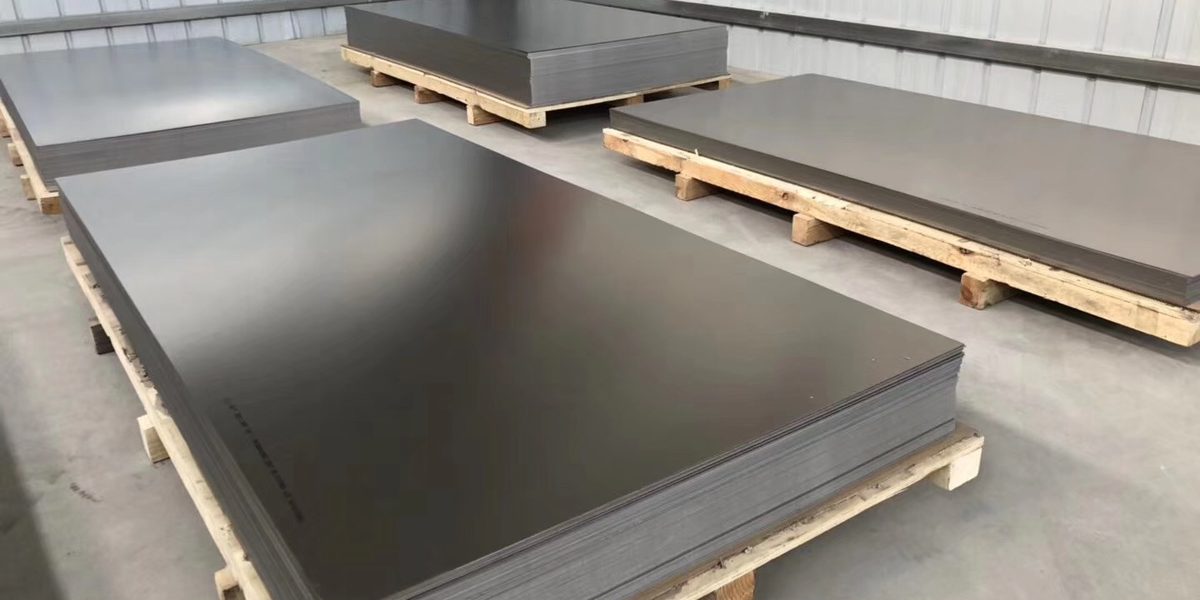
Alloy 20 (UNS N08020, also known by the legacy trade designations Carpenter 20 and 20Cb-3) is a niobium-stabilised nickel-iron-chromium-molybdenum-copper alloy developed specifically for sulfuric acid service. Its nominal composition is 32–38% nickel, 19–21% chromium, 2–3% molybdenum, 3–4% copper, iron balance, with niobium at eight times carbon up to 1.0% maximum and carbon limited to 0.07%.
That chemistry answers three separate failure modes at once. Chromium provides resistance to oxidising media, copper and molybdenum handle sulfuric and phosphoric acid, and niobium ties up carbon so the alloy can be welded without the chromium carbide sensitisation that attacks unstabilised stainless steel in the heat-affected zone. The result is a material that routinely outlasts 316L in sulfuric acid, nitric acid, phosphoric acid and mixed organic acid streams, while costing materially less than a nickel-base C-grade.
Typical applications include sulfuric acid pickling tanks and heaters, phosphoric acid evaporators and piping, pharmaceutical multipurpose reactors and transfer lines, food processing vessels handling acidic product, synthetic rubber and plastics production equipment, and heat exchanger tube bundles in acid cooling loops. Our technical note on Alloy 20 in sulfuric acid and pharmaceutical service covers concentration and temperature limits in detail.
Alloy 20 is specified under its own family of ASTM standards, each tied to the UNS N08020 composition:
Alloy 20 also appears in ASME Section II Part B under the SB designations, and is registered for use in ASME Section VIII Division 1 construction. Typical annealed minimum mechanical properties are 551 MPa tensile, 241 MPa yield and 30% elongation, giving a designer substantially more allowable stress than 316L at elevated temperature.
Alloy 20 is delivered solution annealed at 940–1010 °C and rapidly cooled. Stabilisation treatment at 925 °C for one hour per 25 mm of section may be requested where service falls in the carbide precipitation range, though the niobium addition makes this less critical than it is for unstabilised stainless grades.
Welding is the reason the grade exists. GTAW and GMAW with matching ERNiCrMo-3 or E320LR filler are standard, and no preheat or post-weld heat treatment is required for corrosion service. Heat input should be moderate and interpass temperature held below 150 °C to avoid excessive dilution and hot cracking risk. Dissimilar welds to carbon steel are normally made with a nickel-base filler to control iron dilution. Post-weld pickling and passivation restores the chromium-rich surface film and should always be specified for acid contact duty.
Machining behaviour sits between austenitic stainless steel and the nickel-base alloys: it work hardens faster than 304 but less aggressively than C276. Carbide tooling at 20–35 m/min for turning with a heavy soluble oil emulsion, positive rake, and a depth of cut that stays under the work-hardened layer gives good results. Drilling needs a slow, steady feed with a sharp 118–135° split point and plenty of coolant. Further parameters are in our machining guide, and finished components can be supplied through our machined parts to drawing programme.
Shipments are released with an EN 10204 3.1 certificate stating the ASTM specification and edition, the UNS number, the heat number, the annealing condition, and the measured mechanical and chemical results. Chemical verification is by optical emission spectrometry with wet-chemical backup for carbon, and niobium is reported because the Nb:C ratio is the stabilisation guarantee.
Non-destructive examination is available to the purchase order: ultrasonic testing to ASME Section V Article 4 for plate, eddy current or hydrostatic testing for welded tube and pipe, and dye penetrant to ASTM E165 on machined surfaces and weld repairs. Intergranular corrosion testing to ASTM G28 Method A or ASTM A262 Practice E can be quoted where the end user requires documented sensitisation resistance.
Hangbo Alloy is certified to ISO 9001:2015, GJB 9001C and GOST R. Third-party inspection through BV, SGS, TÜV, DNV or Lloyd's Register is arranged when specified, including witness testing and document review. Heat numbers are transferred to the packing list and marked on each piece so traceability is preserved through cutting and fabrication.
Export packing is standard: plate on protected timber pallets, welded tube end-capped and bundled, bar strapped in lifts, all with VCI paper and desiccant, plus the certificate of origin and any additional documentation the destination requires.
Alloy 20 carries roughly 33% nickel against 10% in 316L, plus 3–4% copper for sulfuric acid resistance and a niobium addition that prevents weld sensitisation. In sulfuric acid service it typically lasts several times longer than 316L, and its ASME allowable stress at elevated temperature is substantially higher. The trade-off is initial material cost, which remains well below that of a nickel-base C-grade alloy.
Plate, sheet and strip are covered by ASTM B463; welded pipe by ASTM B464; welded tube by ASTM B468; bar and wire by ASTM B473; billet and bar for reforging by ASTM B472; and forged flanges, fittings and valve parts by ASTM B462. The ASME SB equivalents apply for coded construction.
Yes. The niobium stabilisation means Alloy 20 can be welded for corrosion service without preheat or post-weld heat treatment, which is the principal reason it replaced unstabilised stainless grades in acid duty. Matching ERNiCrMo-3 or E320LR filler is standard, interpass temperature should stay below 150 °C, and post-weld pickling and passivation should be specified for acid contact surfaces.
Send us your grade, diameter, length, quantity, and any special requirements. Our team responds within 10 minutes during business hours.