
Hangbo Alloy Group
Shanghai · Est. 2012
Precipitation-hardening Inconel 718 in round bar, forged rings and discs, plate, seamless tube and machined components, aged to API 6ACRA and NACE MR0175 limits.
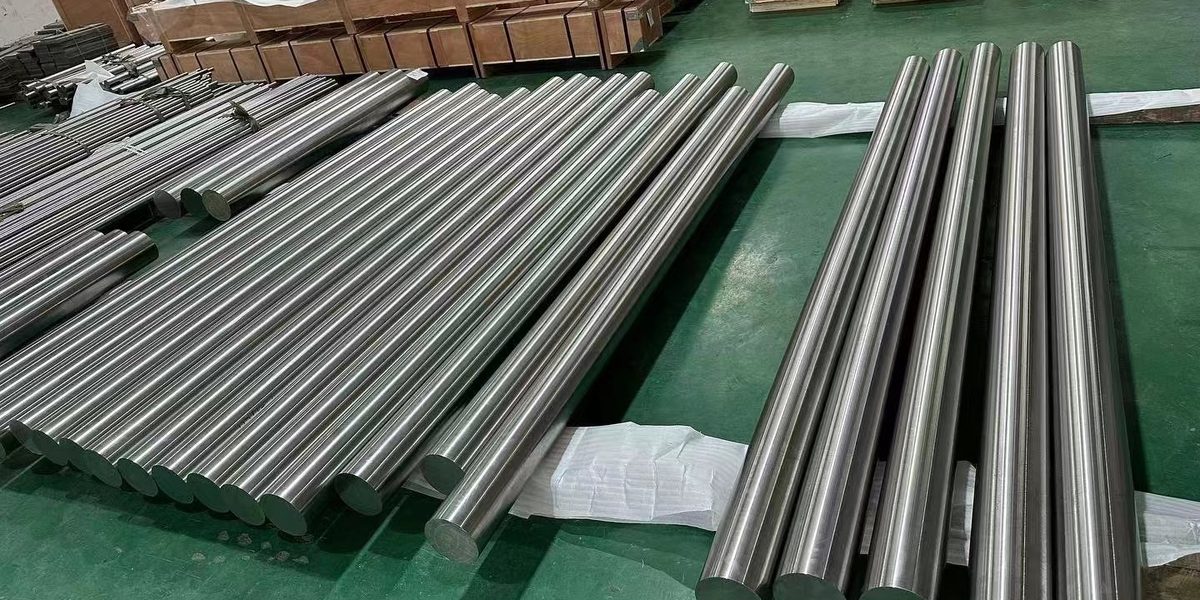
Inconel 718 is the precipitation-hardening nickel-chromium-iron-niobium-molybdenum alloy that carries more tonnage through aerospace engine programmes and oil and gas completion equipment than any other superalloy. Its roughly 52 % nickel, 19 % chromium, 18.5 % iron, 5 % niobium and 3 % molybdenum chemistry is hardened not by carbon but by the gamma double-prime (Ni3Nb) and gamma prime (Ni3(Al,Ti)) phases that precipitate during a two-step ageing treatment. That gives a minimum yield strength around 1,034 MPa (150 ksi) in the aged condition, roughly twice what annealed Inconel 625 delivers, with useful mechanical properties retained from cryogenic temperatures all the way to 650 °C.
Two characteristics explain the alloy's dominance. First, the sluggish ageing response means 718 is readily weldable: it does not harden in the heat-affected zone during welding and therefore does not suffer the strain-age cracking that plagues other gamma-prime strengthened superalloys. Second, the heat treatment window is forgiving enough that heavy sections can be consistently aged through, which is why it has become the standard for large forged rings, valve bodies and wellhead components. We cover the metallurgy in more detail in our precipitation strengthening guide.
ASTM B637 / ASME SB637 is the governing specification for precipitation-hardening 718 bar, forgings and forging stock, with the usual conditions being solution annealed, solution annealed and aged, or hot-worked and aged. The aerospace and defence supply chain works to the AMS series: AMS 5662 covers bars, forgings and rings supplied solution treated and aged, AMS 5663 the same product forms with 1,793 MPa minimum tensile, AMS 5664 bars that are hot finished and aged without a separate solution treatment, AMS 5596 sheet, strip and plate, and AMS 5589 / 5590 seamless tubing.
Oil and gas orders are normally placed to API 6ACRA, which defines the age-hardened nickel-based alloy requirements for downhole, wellhead, subsea and completion equipment. API 6ACRA classifies 718 into condition classes based on yield strength and hardness, and it places a hard cap on hardness for sour service — 40 HRC at the surface and 38 HRC average through section in the most restrictive classes. We supply to these limits and state the measured values on the certificate rather than leaving the buyer to assume compliance. Our NACE MR0175 sour service guide sets out how that intersects with ISO 15156 requirements.
Inconel 718 is melted by vacuum induction melting followed by electroslag remelting or vacuum arc remelting, a double or triple melt route that is effectively mandatory for rotating and pressure-containing aerospace parts because it removes the segregation and non-metallic inclusion populations that initiate fatigue cracks. Forged product is converted from VAR or ESR ingot on a hydraulic press or radial forge with carefully controlled hot working, since 718 has a narrow forging window — roughly 925 °C to 1,120 °C — and working below the delta solvus is what refines grain size in the finished part.
Round bar. Hot rolled and turned or cold drawn and ground from 8 mm to 350 mm diameter, in h9, h11 or ground tolerances, supplied annealed for machining or aged to final properties.
Forged rings and discs. Seamless rolled rings to 1,500 mm outside diameter and 400 mm face height, plus discs, hubs, blocks and contoured forgings, all to ASTM B637. Our forgings page covers the ring and disc route in detail.
Plate and sheet. Hot rolled plate from 5 mm to 60 mm and cold rolled sheet from 0.5 mm to 4 mm to AMS 5596, solution annealed and descaled.
Seamless tube. Cold drawn or pilgered hollows to AMS 5589 / 5590 and ASTM B983, typically 10 mm to 180 mm OD, for downhole control lines, injection tubing and aerospace ducting. Choosing between 718 and 625 for a sour gas completion is a recurring decision; our 718 versus 625 downhole comparison addresses it directly.
Machined parts. We supply finish-machined components to drawing, either from stock bar or from a shaped forging, with full first-article inspection reporting.
Every order ships with an EN 10204 3.1 or 3.2 certificate covering heat number, full chemical analysis, melt practice (VIM plus ESR or VAR where specified), tensile and hardness test results, impact testing where required, grain size per ASTM E112, heat treatment chart showing solution and ageing temperatures with hold times, and the results of the specified non-destructive examination. NDE normally includes ultrasonic testing to AMS 2631 or ASTM E2375 for bar and forging stock, eddy current and ultrasonic testing for tube, and penetrant or magnetic particle inspection on machined surfaces.
Supplementary testing we routinely provide includes delta-phase evaluation, notch-rupture testing to API 6ACRA, and sour service testing to NACE TM0177 Method A or per the client's own environmental cracking procedure. Third-party inspection is arranged through BV, SGS, TUV, DNV or Lloyd's Register. Our quality system is certified to ISO 9001:2015 and GJB 9001C, and we hold GOST R certification for the Russian market. Standard bar and forging stock ships in 2 to 4 weeks; aerospace-grade material requiring a full triple melt and qualification testing runs 8 to 12 weeks, and we will say so on the quotation rather than after the order.
Order annealed if you intend to machine the part significantly or weld it before final heat treatment — annealed 718 machines far more readily and ages to full strength afterwards. Order aged if the part is near net shape and you will only do light finishing, or if you cannot run a controlled ageing cycle in your own facility. We supply both and can arrange ageing after rough machining as a separate operation.
Under API 6ACRA and NACE MR0175 / ISO 15156, the most restrictive classes cap Inconel 718 at 40 HRC maximum at the surface with a 38 HRC average through the section, achieved by a specific solution and ageing cycle. Not every age-hardened 718 automatically meets this — it depends on the heat treatment. We certify to the class required and report measured hardness rather than assuming compliance.
Yes. Triple melted VIM-ESR-VAR material is available for rotating and critical aerospace parts where inclusion control and segregation are the governing concerns, and it is quoted with the melt practice stated explicitly on the certificate. Lead times are longer — typically 8 to 12 weeks — because the remelt route and the associated qualification testing cannot be compressed.
Send us your grade, diameter, length, quantity, and any special requirements. Our team responds within 10 minutes during business hours.