
Hangbo Alloy Group
Shanghai · Est. 2012
Explosion-bonded and roll-bonded clad plate that puts a corrosion-resistant nickel alloy surface on a structural carbon or low-alloy steel backing.
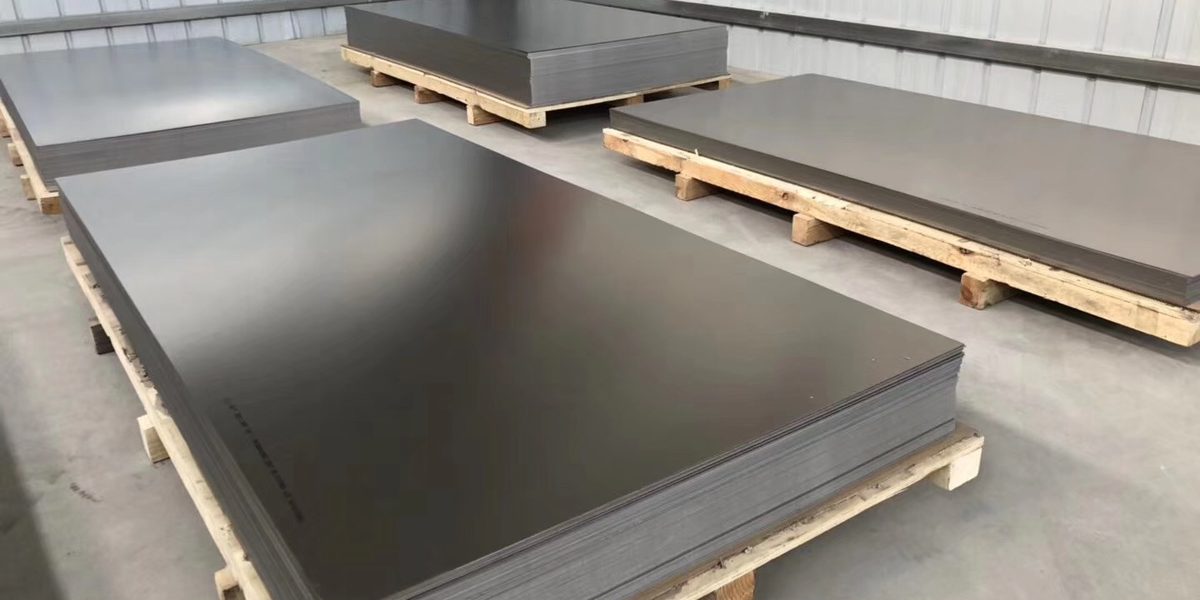
Clad plate is the economical answer to a familiar engineering problem: a vessel or duct needs the corrosion resistance of a nickel alloy on its wetted surface, but the wall thickness required for pressure containment makes solid alloy plate prohibitively expensive. A nickel alloy clad plate bonds a comparatively thin corrosion-resistant layer - typically 2 mm to 12 mm - onto a structural carbon steel or low-alloy steel backing, giving full corrosion performance on the process side and full mechanical strength from the cheap backing. In most corrosive duties, the cost saving against solid nickel alloy plate and sheet runs to 50 to 70 percent.
Shanghai Hangbo Alloy Group supplies clad plate produced by either explosive bonding or hot roll bonding, depending on size, cladding alloy and required bond integrity. Explosive bonding is the more flexible route and is used for thick backings, large plan areas and dissimilar combinations that will not roll-bond. Roll bonding gives excellent thickness uniformity over long lengths and is preferred for thinner cladding on large vessel shells. Both routes produce a metallurgical bond, not a mechanical or adhesive one, and both are qualified by shear testing and ultrasonic scanning.
Typical applications include pressure vessels and columns in refineries, flue gas desulphurisation absorber towers, chemical reactors and scrubbers, digesters and bleach plants in pulp and paper, seawater and brine duty equipment, and transition joints where a nickel alloy section must be welded to a carbon steel structure.
Explosion-bonded clad plate. A controlled detonation drives the cladding plate onto the backing at high velocity, producing a characteristic wavy metallurgical interface with bond shear strength usually well above the minimum specified. The route tolerates backing thicknesses from 6 mm upwards and cladding from 1.5 mm, and handles combinations - titanium on steel, nickel alloy on stainless - that roll bonding cannot.
Roll-bonded clad plate. A sealed assembly of cladding and backing is heated and hot rolled, reducing both layers together and producing a flat interface with very consistent cladding thickness. Roll bonding is limited in total area by mill width and is most economical on longer runs of a given combination.
Weld overlay cladding. Where geometry rules out plate - nozzles, dished heads, small diameters - the corrosion layer can be deposited by weld overlay instead. Our technical note on nickel alloy cladding and overlay welding compares the three routes and sets out where each is the better engineering and commercial choice.
Supply range. Total thickness 6 mm to 150 mm, cladding 1.5 mm to 12 mm, plate width up to 3000 mm and length up to 12000 mm subject to combination and route. Plates are supplied with cladding thickness verified by ultrasonic measurement on a grid, edges prepared, and optional bevels, cut-to-size blanks, dished and flanged heads, and formed shells.
Cladding selection follows the process chemistry rather than the mechanical duty, since the backing carries the load. Hastelloy C276 and C22 are the default choices for wet chlorine, hypochlorite, mixed oxidising and reducing acids and flue gas condensates; Inconel 625 is widely specified for seawater, sour gas and FGD absorbers and is also the standard choice where the vessel will see weld overlay repairs in service. Monel 400 cladding serves hydrofluoric acid alkylation units, caustic evaporators and seawater piping. Nickel 200 and Nickel 201 are used for caustic service above roughly 50 percent concentration and for food and synthetic fibre process equipment.
Incoloy 825 and Alloy 20 cover sulphuric and phosphoric acid duties, while Inconel 600 and Alloy 400 appear in specialised nuclear and marine applications. Our guide to heat exchanger alloy selection is a useful companion when the same fluid chemistry governs both the tubes and the shell or tubesheet. For refinery sour service, cladding is produced and documented to NACE MR0175 / ISO 15156. Backing materials are normally SA516 Grade 70, SA387 chromium-molybdenum grades or SA240 stainless, selected to match the design code and the welding procedure the fabricator will run.
Clad plate is only useful if the fabricator can weld it without destroying the corrosion layer, so we supply the information that makes the welding procedure straightforward: cladding alloy and thickness, backing grade, transition welding sequence, and recommended buttering and filler metals for the joint. Where the vessel design calls for it, we can provide cut edges with the cladding already buttered, or supply separate transition strips.
Each plate is ultrasonically scanned over 100 percent of its area to confirm bond integrity and to map cladding thickness, with a defined minimum bond area and a defined maximum permitted individual unbonded area per the applicable specification. Bond strength is verified by shear test on production test pieces. Mechanical testing of the backing - tensile, impact and bend - is taken from the same heat and witnessed where required. Cladding chemistry is confirmed by positive material identification on every plate, because a mix-up at this stage is expensive to correct in a finished vessel.
Documentation is issued to EN 10204 3.1 as standard and to EN 10204 3.2 with independent witness where the end client requires it. Our quality system holds ISO 9001:2015, GJB 9001C and GOST R certification, and third-party inspection can be arranged through BV, SGS, TUV, DNV or Lloyd's Register - the agencies most pressure vessel end users already name in their purchase specifications. Plates are shipped with permanent marking carrying heat number, cladding grade, dimensions and cladding thickness, and with edge protection on the cladding face.
Explosive bonding is the more flexible route and is normally chosen for thick backings, large plan areas, one-off plates and dissimilar combinations such as nickel alloy on carbon steel or titanium on steel. Roll bonding gives tighter cladding thickness uniformity over long lengths and is preferred for production runs of vessel shell plate. Both produce a metallurgical bond qualified by shear test and 100 percent ultrasonic scanning, so the decision is usually driven by size, combination and lead time rather than by bond quality.
Most process equipment is specified with 3 mm of cladding, which comfortably covers corrosion allowance, fabrication handling and the dilution zone at the weld. Where the design life is long, the fluid is highly aggressive or the vessel will see repeated weld repairs, 5 mm or 6 mm is common. Cladding below 2 mm is available but is harder to weld without excessive iron dilution into the corrosion layer, so we would normally recommend a buttering layer or a thicker cladding instead.
We supply flat plate cut to size with prepared edges and bevels, and through qualified forming partners we can also deliver dished and flanged heads, rolled shells and clad nozzles. Forming introduces strain into the bond zone, so formed items are re-ultrasonically tested after forming and receive a stress relief or a full heat treatment appropriate to the backing grade. Please send the drawing at enquiry stage so that forming, heat treatment and retest can be included in the quotation.
Send us your grade, diameter, length, quantity, and any special requirements. Our team responds within 10 minutes during business hours.