
Hangbo Alloy Group
Shanghai · Est. 2012
Monel 400 (UNS N04400) and copper-nickel 70/30 (UNS C71500) both resist seawater, but they reverse the nickel-to-copper ratio — and that single fact changes cost, strength, velocity tolerance and fouling. This comparison shows which to specify and why.
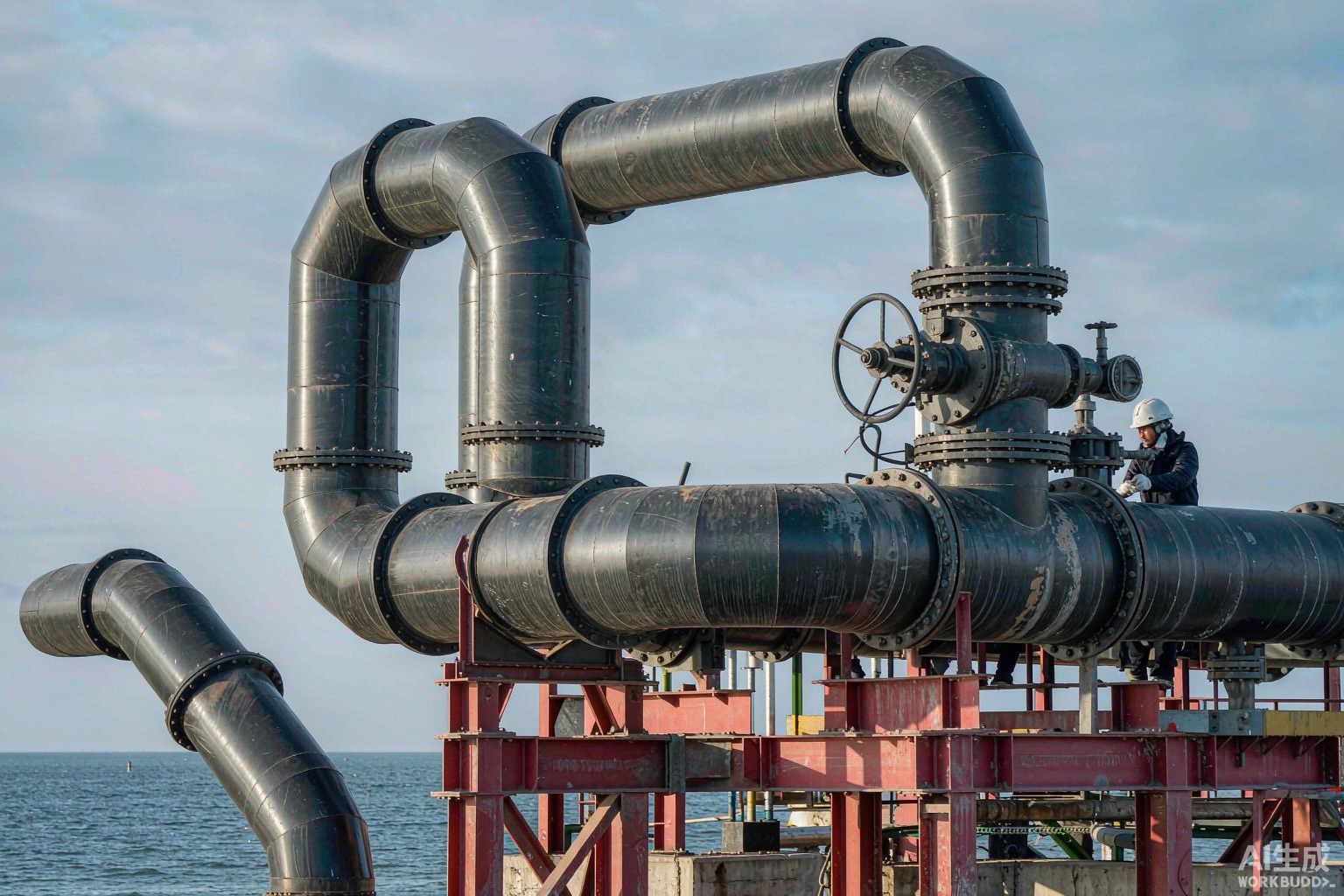
When a seawater piping system is specified, two materials dominate the conversation: Monel 400 (UNS N04400) and copper-nickel 70/30 (UNS C71500). Both resist seawater corrosion well, both have been proven in decades of marine service, and both are easy to over-specify or under-specify. The real question is not “which is the better alloy” but “which matches my flow velocity, pressure, mechanical load and budget over the life of the plant.” This comparison lays out the metallurgy, the velocity limits, the strength gap, the cost structure and the selection rules so you can choose without paying for nickel you do not need or buying a low-strength alloy where you need rigidity.
Monel 400 is a nickel-copper solid-solution alloy carrying roughly 63 percent nickel; copper-nickel 70/30 is, as the name says, 70 percent copper and 30 percent nickel with a small iron addition. That single reversal of the major elements changes everything downstream: cost, strength, galling, fouling and how the metal behaves when the pump overspeeds. We manufacture both families as seamless tube, pipe, plate and forgings, so this is written from the melt shop rather than a catalogue, and the numbers here are tied to the ASTM product specifications you will actually order against. Our own route runs from 100% virgin charge through VIM+ESR or VIM+VAR melting, oxide-scale removal, forging and rolling, standard heat treatment and finishing — every step under in-house chemical, mechanical, NDT and dimensional control.
If you are deciding between nickel-copper and a true nickel-base corrosion alloy for a more aggressive service, our Monel 400 property guide, our copper-nickel 70/30 marine piping guide and our broader offshore and subsea selection guide cover the alternatives. For the procurement side of either choice, see our nickel alloy procurement pitfalls buyer’s guide, which explains how to avoid mis-certified material regardless of grade.
The headline difference is the nickel-to-copper ratio, and because nickel is the expensive constituent, that ratio drives both price and a surprising number of service behaviours. Monel 400 is roughly two-thirds nickel; copper-nickel 70/30 is roughly one-third nickel. Beyond cost, the nickel level sets strength, the copper level sets the protective film and the iron level sets erosion-corrosion resistance.
| Property / element | Monel 400 (UNS N04400) | Copper-Nickel 70/30 (UNS C71500) | Why it matters |
|---|---|---|---|
| Nickel | 63.0 min | 29.0 – 33.0 | Nickel sets strength, toughness and price |
| Copper | 28.0 – 34.0 (bal.) | Balance (approx. 65 – 68) | Copper drives the seawater film and biofouling resistance |
| Iron | 2.5 max | 0.40 – 0.70 (iron-modified) | Iron in Cu-Ni sharply improves erosion-corrosion resistance |
| Manganese | 2.0 max | 1.0 max | Controls hot-working and weld behaviour |
| Typical density | ~8.8 g/cm³ | ~8.9 g/cm³ | Similar weights; both heavier than steel |
| Annealed tensile strength | ~550 MPa (80 ksi) | ~360 – 410 MPa (52 – 60 ksi) | Monel 400 is markedly stronger |
| Annealed yield strength | ~240 – 280 MPa | ~125 – 170 MPa | Cu-Ni needs thicker section or supports |
| Elongation | ~35% min | ~30% min | Both ductile and formable |
The practical reading of this table: Monel 400 buys you roughly 40–50 percent more tensile and yield strength for the price of roughly double the nickel content. Copper-nickel 70/30 buys you a lower material cost and, through its iron addition, an erosion-corrosion tolerance that is genuinely excellent for turbulent, high-velocity once-through seawater. If your system is thin-wall tube in a condenser, Cu-Ni is usually the smarter buy. If you need a rigid, high-strength piping run or a machined seawater component, Monel 400’s strength starts to justify its cost.
Both materials resist seawater by forming a thin, adherent, self-healing oxide or basic-copper-chloride film rather than by being intrinsically inert. The mechanism is similar; the failure modes differ. Monel 400 resists general and pitting corrosion in clean seawater almost indefinitely and is also resistant to many non-oxidizing acids, making it a genuine nickel-base marine alloy rather than a copper alloy with nickel in it.
Copper-nickel 70/30 resists seawater uniformly and is notably resistant to fouling organisms because of the small, slow copper ion release at the surface; that same property is why it is the default for ship hulls’ seawater systems and desalination tubes. Its weakness is different from Monel’s: in stagnant or low-velocity water copper-nickel can lose its protective film and suffer localized attack, whereas Monel 400 is more tolerant of quiescent conditions but more sensitive to very high velocity with entrained solids.
| Corrosion aspect | Monel 400 | Copper-Nickel 70/30 |
|---|---|---|
| General seawater corrosion | Excellent; very low rate | Excellent; very low rate |
| Pitting in chlorides | Resistant; rare in clean seawater | Resistant when film maintained |
| Biofouling tendency | Can foul; copper release is low | Low; copper ion release discourages fouling |
| Stagnant / low-flow risk | Tolerant | Film can break down; needs flow |
| Stress corrosion cracking in seawater | Generally resistant in pure seawater; avoid Hg, high-temp aerated | Not typically a concern in seawater |
| Galvanic coupling to steel | More noble; protects steel, sacrificial anodes needed | More noble than steel; same anode logic applies |
Note the galvanic point: both alloys are more noble than carbon steel and unprotected aluminium, so where they connect to steel piping, you should design in sacrificial anodes or dielectric isolation rather than assume the expensive alloy will survive as the anode. Our galvanic corrosion guide works through the practical coupling rules.
Velocity is the single most misjudged variable in seawater piping. Too slow and copper-nickel loses its film; too fast with entrained sand, shell or air and either alloy erodes. Published guidance treats “velocity” as a band rather than a number, because the real limit depends on whether the flow is clean, whether solids are present, and whether the line is once-through or recirculating.
| Flow condition | Monel 400 guidance | Copper-Nickel 70/30 guidance | Design implication |
|---|---|---|---|
| Clean once-through seawater | Up to ~3 m/s (10 ft/s) commonly cited | Up to ~3.6 – 4.5 m/s with iron-modified grade | Cu-Ni tolerates higher design velocity |
| Entrained sand / silt | Reduced; erosion-corrosion risk rises fast | Reduced; but iron-modified grade resists better | Add strainers, lower velocity, or line with Cu-Ni |
| Stagnant / intermittent | Acceptable | Avoid; flush or circulate | Monel 400 suits standby lines |
| Recirculating cooling | Fine | Fine; monitor chlorination and velocity | Either works with housekeeping |
The rule of thumb we give fabricators: design copper-nickel 70/30 lines to run above roughly 1 m/s to keep the film healthy and below the erosion threshold for your solids loading, and you will get the famous twenty-plus-year life. Monel 400 is more forgiving at the low end and stronger at the high end, but it does not have the iron-modified erosion edge that makes Cu-Ni the condenser-tube standard. For turbulent, solids-laden intake water, lean Cu-Ni; for high-pressure, intermittently flowing or mechanically loaded runs, Monel 400’s strength earns its keep.
The strength gap is the second reason specifiers reach for Monel 400. At similar wall thickness, Monel 400 piping carries meaningfully higher hoop stress, so it can be the difference between a schedule-80 run and a reinforced Cu-Ni run. The trade-off is fabrication sensitivity: Monel 400 work-hardens rapidly, needs powerful tooling, and its weldments are prone to hot cracking and porosity if the joint is not clean and the right filler is not used. Copper-nickel 70/30 is far more forgiving to weld and is routinely joined with matching or nickel-based fillers at high travel speeds.
For seawater fasteners and shafting where strength is the whole point, the age-hardened derivative Monel K-500 is the usual upgrade over 400; copper-nickel has no equivalent high-strength grade, which is itself a selection signal.
Because Monel 400 is two-thirds nickel and copper-nickel 70/30 is one-third nickel, the two materials track the nickel price on completely different slopes. When nickel spikes, Monel 400 tube becomes dramatically more expensive while Cu-Ni moves far less. That elasticity is why, on a purely economic basis, large-tonnage seawater systems (desalination, power-plant circulating water, shipboard firefighting mains) almost always default to copper-nickel.
| Factor | Monel 400 | Copper-Nickel 70/30 |
|---|---|---|
| Raw material cost driver | Nickel (two-thirds of alloy) | Copper plus one-third nickel |
| Relative base material cost | Higher; moves with nickel price | Lower; more stable |
| Typical service life at sea | 20+ years in clean seawater | 20+ years at correct velocity |
| Scrap / recovery value | Higher (nickel-rich) | Moderate |
| Where it wins economically | High-strength, low-tonnage, critical parts | High-tonnage, thin-wall, high-velocity systems |
Life-cycle cost is rarely about the alloy alone. A Monel 400 valve body that survives where a Cu-Ni body would need a heavier casting can be cheaper installed. Conversely, miles of Cu-Ni condenser tube beat Monel 400 on first cost by a wide margin for the same duty. The procurement trap is ordering Monel 400 for a duty that Cu-Ni handles, then paying double for nickel you never needed — or the reverse, specifying Cu-Ni where the strength or non-fouling-sensitivity requirement actually calls for Monel 400.
Use the following rules to place the decision. They are starting points; confirm against the actual ASTM product spec for your form and the duty of the line.
| If your system is… | Choose | Reason |
|---|---|---|
| Condenser / heat-exchanger tube, high velocity, high tonnage | Copper-Nickel 70/30 | Lower cost, erosion-corrosion resistance, fouling resistance |
| High-pressure seawater piping, needs thin wall and rigidity | Monel 400 | Strength lets you hold pressure at lower mass |
| Intermittent or standby seawater line, often stagnant | Monel 400 | Tolerates low/zero flow without film loss |
| Structural seawater component, machined or loaded | Monel 400 (or K-500) | Strength and toughness; Cu-Ni too soft |
| Shipboard firefighting / ballast, large bore, cost-driven | Copper-Nickel 70/30 | Proven, economical, weldable in field |
| Exposed to non-oxidizing acids as well as seawater | Monel 400 | Broader chemical resistance than Cu-Ni |
Write the UNS number and the product specification on the purchase order so the mill cannot substitute a “comparable” grade. Typical references:
| Product form | Monel 400 | Copper-Nickel 70/30 |
|---|---|---|
| Seamless pipe & tube | ASTM B165, B163 | ASTM B466 / B467 (C71500) |
| Plate, sheet, strip | ASTM B127 | ASTM B171 |
| Rod, bar, wire | ASTM B164 | ASTM B151 |
| Forgings | ASTM B564 | ASTM B371 / relevant copper alloy forging spec |
| Welding consumable | ERNiCu-7 (Monel 60) | ERCuNi |
Whichever you choose, require an EN 10204 3.1 certificate with the actual measured composition and the heat number permanently marked on every piece; for critical pressure or subsea duty, step up to 3.2 with third-party witnessing. Our seamless tube and pipe programme and round bar range cover both alloys, and our test reports and traceability process shows exactly what a complete certificate package contains.
Monel is a registered trademark of Special Metals Corporation; copper-nickel alloys are defined by their UNS numbers (N04400, C71500) and the ASTM product specifications above. This article is guidance for specifiers, not a substitute for the current edition of the applicable standard or a corrosion test in your actual seawater.
Copper-nickel 70/30 is normally cheaper because it contains roughly one-third nickel versus two-thirds in Monel 400, and nickel is the costly element. On large-tonnage seawater systems the cost gap can be very wide, so Monel 400 is usually reserved for duties where its strength or broader chemical resistance justifies the premium.
Not at the same wall thickness. Monel 400 has roughly 40–50 percent higher tensile and yield strength, so a Cu-Ni line needs a thicker wall or closer supports to carry the same hoop stress. In thin-wall condenser tube the question rarely arises, but in pressure piping the strength gap is decisive.
Copper-nickel 70/30, especially the iron-modified grade, tolerates higher velocity with entrained solids because iron in the alloy improves erosion-corrosion resistance. Monel 400 is strong but more vulnerable to erosion-corrosion when fast flow carries sand or shell debris.
Yes. Monel 400 tolerates low or zero flow without losing its protective behaviour, whereas copper-nickel 70/30 should be kept moving above roughly 1 m/s to maintain its film and avoid localized attack. For standby or intermittent lines, Monel 400 is the safer default.
Copper-nickel 70/30 is more forgiving, joining readily with ERCuNi or ERNiCu-7 fillers at good travel speeds. Monel 400 demands strict joint cleanliness and ERNiCu-7 filler to avoid hot cracking and porosity, and its tendency to work-harden makes fit-up and machining more demanding.
Generally yes. The slow copper-ion release at the Cu-Ni surface discourages marine growth, which is a major reason it is used in shipboard and desalination seawater systems. Monel 400 can still foul and usually relies on chlorination or mechanical cleaning like any other alloy.
No. The strength, density, velocity tolerance and fouling behaviour differ enough that a direct substitution can change wall thickness, support spacing, flow velocity and anode design. Always re-run the pipe-stress and velocity calculation and name the UNS number and ASTM spec on the order.
If you are weighing Monel 400 against copper-nickel 70/30 for a seawater, offshore or desalination system, send us the duty: flow velocity, solids loading, pressure, temperature, and whether the line is once-through or recirculating. We will confirm the right UNS and ASTM specification for your form, advise wall thickness and support spacing, and quote our own virgin-material, melt-controlled production with full heat-to-piece traceability. Typical response time is ten minutes, and we ship worldwide from Shanghai.
Email: serena@hangboalloy.com
Phone: +86 166 2109 2936
WhatsApp: +86 166 2109 2936
Send us the flow velocity, solids loading, pressure, temperature and whether the line is once-through or recirculating. We will confirm the correct UNS and ASTM specification for your product form, advise wall thickness and support spacing, and quote our own virgin-material, double-melted production with full heat-to-piece traceability.