
Hangbo Alloy Group
Shanghai · Est. 2012
Nickel 200 and Nickel 201 are the same 99.6 percent pure nickel apart from a single controlled element: carbon at 0.15 percent versus 0.02 percent. That split decides graphitization above roughly 315°C, magnetic permeability and the service temperature ceiling of each grade, and it is the only thing you should be arguing about when the part is pure nickel.
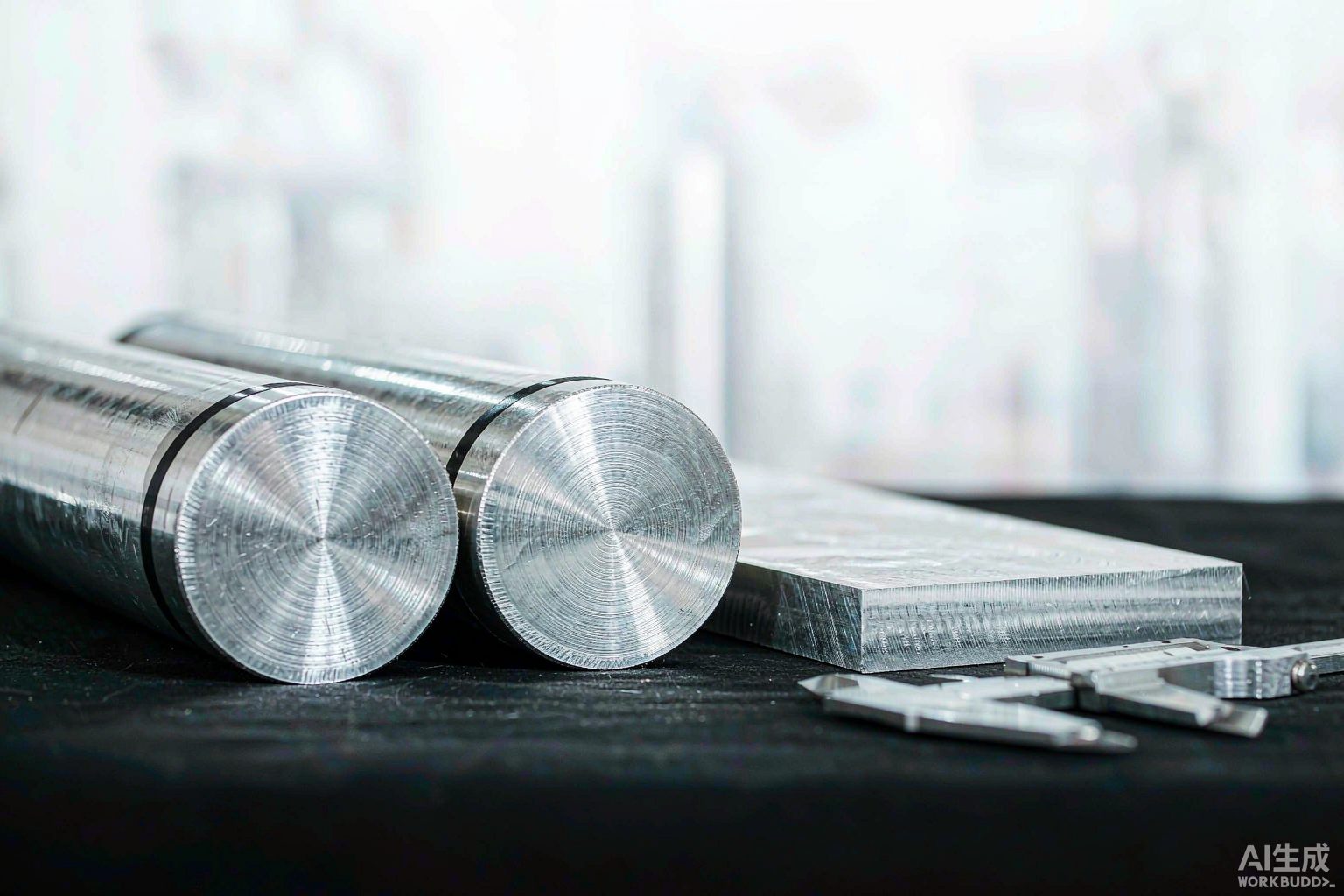
Nickel 200 and Nickel 201 are the two commercial grades of commercially pure nickel, and they are almost identical. Both are 99.6 percent minimum nickel, both resist caustic and a wide range of neutral and reducing media, and both are produced as rod, bar, plate, tube and strip. The only element the specs treat differently is carbon: Nickel 200 permits up to 0.15 percent, Nickel 201 limits it to 0.02 percent. That one number is the whole story, because it sets the temperature ceiling, the graphitization resistance and the magnetic behaviour. If you are choosing between them, you are really choosing a carbon limit, and this article shows how to do that without over-specifying. For the bigger picture on buying pure nickel safely, our procurement pitfall guide covers the traps that apply to every nickel grade.
We supply both grades as rod, seamless tube, plate and forgings, and our production starts from a fully virgin, prime raw-material charge, then vacuum induction melting paired with either electroslag remelting or vacuum arc remelting, with the specified standard annealing and a full quality loop covering chemistry, mechanical testing, non-destructive testing and dimensional verification. Because the carbon is controlled from the melt, the grade on the certificate is the grade in the bar.
Both grades are work-hardenable rather than heat-treatable, so their strength comes from cold work and their softness from annealing, a point that matters when you specify temper. That behaviour is identical across the two grades and is not affected by the carbon split, so temper and grade are independent choices on the order.
The short answer is that Nickel 200 and Nickel 201 share the same nickel purity and the same impurity limits for iron, manganese, silicon, copper and sulfur; only carbon is split. The table below shows the controlled chemistry side by side using the standard ranges.
| Element | Nickel 200 (UNS N02200) | Nickel 201 (UNS N02201) |
|---|---|---|
| Nickel, min | 99.0% | 99.0% |
| Carbon | ≤ 0.15% | ≤ 0.02% |
| Manganese, max | 0.35% | 0.35% |
| Iron, max | 0.40% | 0.40% |
| Silicon, max | 0.35% | 0.35% |
| Copper, max | 0.25% | 0.25% |
| Sulfur, max | 0.01% | 0.01% |
Because the only controlled split is carbon, you should not pay a premium expecting a different alloy. You are buying a carbon limit, and the right move is to specify exactly the limit your service requires — Nickel 200 where the temperature is modest, Nickel 201 where it is not. Our Nickel 200 and Nickel 201 reference pages cover the individual grades in full.
This near-identical chemistry is exactly why the two grades are listed together in the same product specification and why mix-ups happen: only the carbon line on the certificate distinguishes them, so the document is the control point.
Carbon in nickel is not inert. At elevated temperature the excess carbon in Nickel 200 can precipitate as graphite at the grain boundaries, embrittling the material and reducing ductility in a process called graphitization. Nickel 201 holds carbon so low that this graphite network does not form, so it keeps its toughness where the higher-carbon grade would not. The carbon difference also nudges two other behaviours: Nickel 201 shows lower, more stable magnetic permeability and slightly better electrical and thermal conductivity, which is why it is the default where magnetic or electronic properties are part of the spec.
None of this changes corrosion resistance in the ordinary sense — both grades resist caustic and reducing media by virtue of the nickel itself. The carbon split is about high-temperature stability and magnetism, not about whether the metal survives the chemical environment. That is why the decision is driven by service temperature and any magnetic requirement rather than by the medium alone.
For buyers, the practical reading is that carbon is the only lever that changes between the two grades, so the specification should name it explicitly rather than leave it to chance. A certificate that simply says “pure nickel” without the UNS and the carbon limit forces a later argument about which grade was supplied, and that argument is hardest to win after the part is already installed. Tie the grade to the operating temperature on the drawing and the ambiguity disappears before the order is placed.
The cleanest way to choose is by the operating temperature, because that is where the two grades actually diverge in behaviour. The table sets the practical bands.
| Service condition | Nickel 200 | Nickel 201 |
|---|---|---|
| Continuous service up to ~315°C (600°F) | Suitable | Suitable |
| Above ~315°C (graphitization zone) | Risk of embrittlement | Suitable |
| Cycling across 315°C | Questionable | Preferred |
| Magnetic / electronic spec | Acceptable | Preferred |
As a rule, design with Nickel 200 up to about 315°C and switch to Nickel 201 for anything that sits above that line or that heats and cools through it. Equipment that crosses the threshold only occasionally is still safer on Nickel 201, because you do not want to discover graphitization after the part has been in service. The same temperature discipline applies across the wider nickel versus stainless selection when pure nickel is the chosen family.
The 315°C line is not a hard cliff but a practical boundary backed by long service experience. Below it, Nickel 200 performs reliably for the full life of the equipment; above it, the graphite that forms at the grain boundaries accumulates with time and temperature, so the margin erodes the longer and hotter the part runs. Nickel 201 removes the mechanism rather than merely delaying it, which is why it is the conservative choice whenever the design temperature is uncertain or the equipment sees excursions.
In practice the two grades divide along temperature and duty rather than by industry. Nickel 200 carries the bulk of moderate-temperature caustic handling, food and chemical shipping, plumbing and hardware, and general structural parts in pure nickel. Nickel 201 owns the hot, concentrated caustic end, the high-temperature band where pure nickel is still sound, and the magnetic or electronic applications that need a controlled, stable permeability. Both appear in aerospace and defense work where the grade is named by specification.
| Application | Typical grade | Reason |
|---|---|---|
| Caustic soda, moderate temperature | Nickel 200 | Resists NaOH; temperature below graphitization |
| Hot, concentrated caustic | Nickel 201 | Low carbon avoids graphite / carburization |
| Electronic, magnetic parts | Nickel 201 | Lower, stable permeability |
| Food, chemical drums, hardware | Nickel 200 | Cost and adequacy at low temperature |
| Cryogenic service | Both | Pure nickel stays tough when cold |
For cold service the choice is moot: pure nickel stays ductile at very low temperature, which is why it is common in cryogenic and LNG duty and both grades are acceptable there. The grade decision therefore collapses to temperature and magnetism, and everything else is the same metal.
One more point that surprises buyers: because the chemistry is otherwise identical, Nickel 200 is often the lower-cost option and is easy to over-specify. If the service never approaches the graphitization temperature and there is no magnetic requirement, paying the premium for Nickel 201 buys nothing. Conversely, specifying Nickel 200 on a hot caustic line to save cost is a false economy the failure will eventually collect. Match the grade to the band and the duty and the decision becomes mechanical rather than a guess.
The grades are covered by paired product specifications that name both UNS numbers, so the order must state the UNS and the edition to remove ambiguity.
| Standard | Product |
|---|---|
| ASTM B160 / ASME SB160 | Rod and bar |
| ASTM B161 / ASME SB161 | Seamless pipe and tube |
| ASTM B162 / ASME SB162 | Plate, sheet and strip |
| ASTM B163 / ASME SB163 | Seamless condenser and heat-exchanger tubes |
| ASTM B725 | Welded pipe |
| UNS N02200 / N02201 | Grade identity |
Note that these product specs cover both grades, which is precisely why the certificate must name the UNS and the carbon limit rather than just saying “pure nickel.” A supplier can be technically compliant with B160 while shipping N02200 against an N02201 requirement unless the order pins the UNS and edition. This is the same clause discipline that protects you across sour-gas and downhole work, where the named grade is the contract.
Use this list to specify the right grade without over-buying:
Compositionally they are the same 99.6 percent minimum nickel. The one controlled difference is carbon: Nickel 200 allows up to 0.15 percent, Nickel 201 caps it at 0.02 percent. Everything else a buyer cares about on temperature ceiling, graphitization resistance and magnetic behaviour flows from that carbon limit, not from any other alloying change.
Above roughly 315°C (600°F) the carbon in Nickel 200 can precipitate as graphite at the grain boundaries, a process called graphitization that embrittles the material and lowers ductility. Nickel 201's 0.02 percent carbon is too little to form that graphite network, so it stays ductile and is rated for continuous service well above 315°C. That is the single reason the two grades split by temperature.
As a practical rule, Nickel 200 is used up to about 315°C (600°F); above that, specify Nickel 201, which is rated for continuous service into the high-temperature band where pure nickel is still sound. For equipment that cycles through the 315°C line, design with Nickel 201 so you are never on the wrong side of the graphitization threshold.
Both grades are ferromagnetic, but Nickel 201's very low carbon gives a more stable and lower magnetic permeability and slightly better electrical and thermal conductivity, so it is the usual choice where magnetic or electronic behaviour is part of the specification. If your drawing names a permeability band, the carbon-controlled grade is the safer call.
Pure nickel is the classic caustic-resistant metal. Nickel 200 covers the bulk of caustic service at moderate temperatures, while Nickel 201 is preferred at the hot, concentrated end of the caustic range where graphitization and carburization concerns grow. Match the grade to the operating temperature rather than treating all caustic duty as identical.
Only below about 315°C and where magnetic and electrical behaviour are not specified. Above that temperature, or anywhere the graphite precipitation would matter, substituting Nickel 200 for Nickel 201 invites embrittlement. They are not interchangeable on temperature, and the certificate must name the grade and the carbon limit explicitly.
Common product specs are ASTM B160 for rod and bar, B161 for seamless pipe and tube, B162 for plate, sheet and strip, and B163 for seamless condenser and heat-exchanger tubes, each covering both UNS N02200 and N02201. The order should name the UNS number and the edition so the mill cannot ship the higher-carbon grade against a low-carbon requirement.
If your drawing names a pure-nickel grade and you want to be sure the carbon limit matches the service temperature, send us the temperature, medium and product form. We will confirm whether Nickel 201 is required, quote the right grade with carbon controlled from melt, and document it on the certificate.
Email: serena@hangboalloy.com
Phone: +86 166 2109 2936
WhatsApp: +86 166 2109 2936
Send us the service temperature, medium and product form. We will confirm whether the carbon limit of Nickel 201 is required for your temperature band, quote the right grade with chemistry and carbon controlled from melt, and document it on the certificate.