
Hangbo Alloy Group
Shanghai · Est. 2012
A mill certificate that says analysed by OES usually proves only the elements a spectrometer reads well, and OES reads carbon, sulfur, boron, nitrogen, oxygen and hydrogen poorly or not at all. This guide shows why a spectrometer certificate is incomplete, which method proves each element, and the purchase-order clauses that force a complete, trustworthy chemistry.
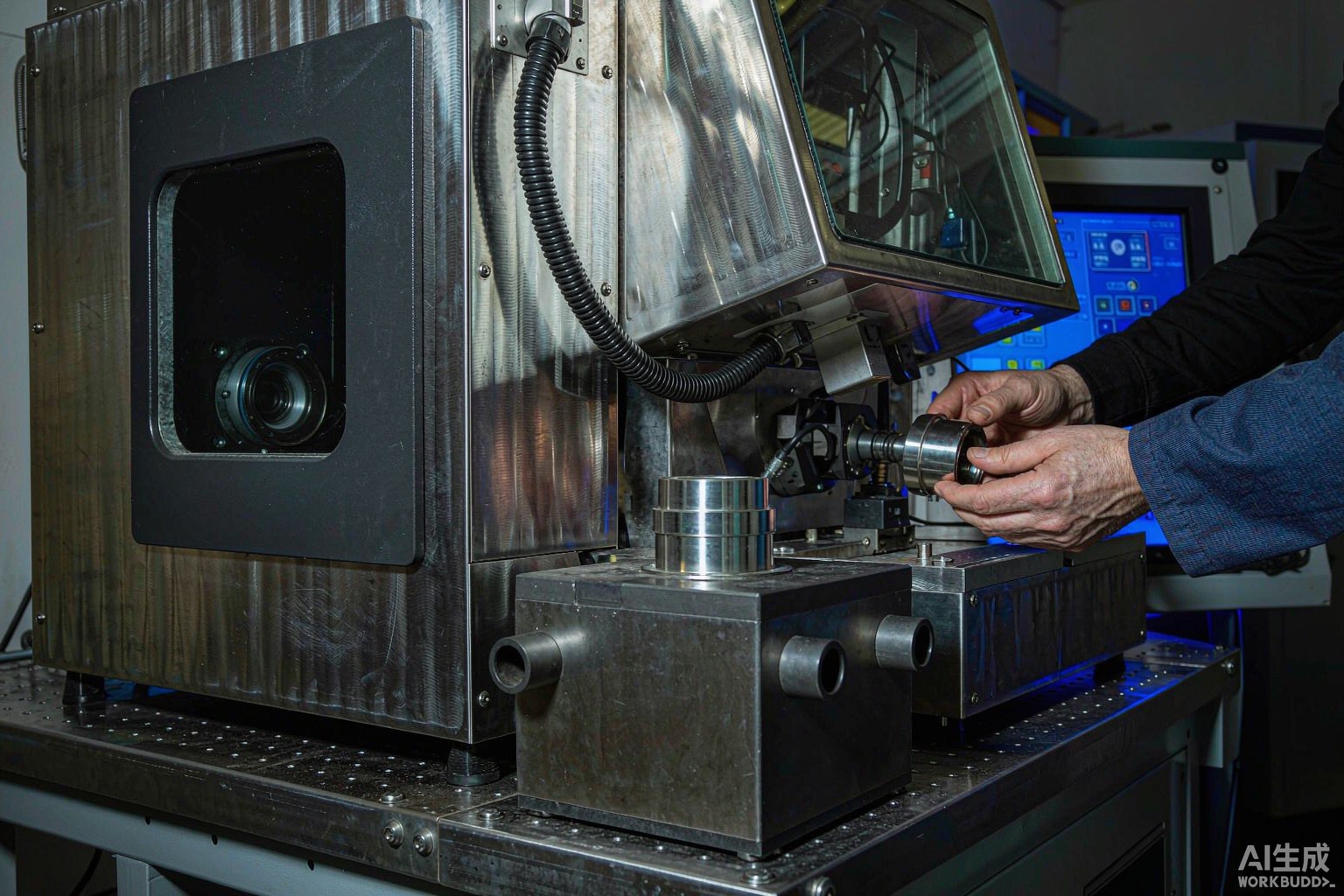
Short answer: a mill test certificate that says “analysed by OES” usually proves only the elements an optical emission spectrometer can read well — and OES reads carbon, sulfur, boron, nitrogen, oxygen and hydrogen poorly or not at all; you get a trustworthy chemistry only when the certificate also lists combustion, inert-gas-fusion and wet chemical results for those light elements, and you prove it by specifying the full-element list and the method per the grade’s ASTM or EN standard on the purchase order. A certificate with a blank or “by difference” entry for carbon is not a chemistry you can build a reactor on.
This guide explains why a spectrometer certificate is incomplete, which elements each method actually measures, where the common gaps and fabrications hide, the standards that force a complete analysis, and the purchase-order clauses that make a thin certificate the seller’s problem. The gap sits inside the wider pattern in our complete nickel alloy procurement pitfalls guide, but here we go deep on the single most-forged part of a mill certificate: the chemistry.
We are a Shanghai nickel alloy producer, so the analysis steps below are the ones our own laboratory runs before a heat is released; we give them as receiving checks, not as a substitute for the certificate or the test report on the lot you actually receive. If a certificate shows carbon only “by difference,” the first question is what method proved it — and whether that method was ever run.
Short answer: OES excites the metal with a spark and reads the light from the vaporised atoms, which works beautifully for most alloying and impurity elements above a few tens of parts per million, but the spark cannot resolve the light elements — carbon, sulfur, boron, nitrogen, oxygen, hydrogen — because they sit outside the spectral windows the instrument reads or are swamped by the argon atmosphere of the spark stand.
A supplier can hand you a perfectly genuine OES printout that, by itself, says almost nothing about the carbon or sulfur in the heat. Those two elements decide whether a grade is the grade you ordered: carbon controls the strength and corrosion behaviour of stainless and many nickel alloys, and sulfur drives hot-workability and inclusion control. If the certificate lists them only as “by difference” or leaves them blank, you have a chemistry with a hole in it. The same gap lets a dishonest seller copy a plausible OES pattern from a real heat and invent the light-element line, which is why the method matters as much as the numbers. The topic connects directly to the chemical-composition discipline in our Hastelloy C-276 composition guide and to why alloy selection still matters even when a handheld check is a different, coarser tool altogether.
Short answer: optical emission spectrometry (OES) and X-ray fluorescence (XRF) cover the matrix and most trace elements but miss the light ones; combustion analysis (LECO-type) measures carbon and sulfur by burning the sample; inert-gas fusion measures nitrogen, oxygen and hydrogen by melting the sample in a flux; and wet chemical titration or gravimetry confirms the limits spectroscopy cannot resolve — a complete certificate uses all of them.
OES and XRF are fast and excellent for nickel, chromium, molybdenum, iron, cobalt, niobium and the like. Combustion analysis burns a precisely weighed sample in oxygen and measures the CO₂ and SO₂ released, giving carbon and sulfur directly. Inert-gas fusion melts the sample in a graphite crucible under helium and traps the evolved N₂, O₂ and H₂, giving the remaining light elements. Wet methods — titration, gravimetry, colorimetry — are slow but are the reference against which the instruments are calibrated, and they are what you cite when a dispute reaches arbitration. The table shows where each fits.
| Method | Elements it reads well | What it misses | Best use |
|---|---|---|---|
| OES (spark) | Ni, Cr, Mo, Fe, Co, Nb, Ti, Al, Cu | C, S, B, N, O, H poorly | Fast matrix + trace scan |
| XRF | Heavy elements, coatings | Light elements, low concentrations | Coating / field screening |
| Combustion (LECO) | Carbon, sulfur | Everything else | Mandatory C & S proof |
| Inert-gas fusion | Nitrogen, oxygen, hydrogen | Matrix elements | Mandatory N/O/H proof |
| Wet chemistry | Reference values, disputed limits | Slow, manual | Arbitration / confirmation |
None of these replaces the others; they cover different parts of the periodic table. Our notes on pitting and crevice corrosion explain why the impurity side of this list is where a cheap melt gets caught. The same analytical care protects welding consumables, where carbon and sulfur control hot-cracking in the joint — a discipline we cover in our welding guide.
Short answer: carbon, sulfur, boron, nitrogen, oxygen and hydrogen are the six elements an OES certificate routinely fails to prove, and each one changes how the alloy behaves — carbon sets strength and sensitization resistance, sulfur drives hot cracking, boron and nitrogen are deliberate strengtheners in some superalloys, and oxygen and hydrogen control ductility and service life — so a certificate that omits them is not a complete chemistry.
Carbon is the most abused entry: a seller who never ran a combustion analysis will write a carbon value copied from the specification or left “by difference,” which is not a measurement. For grades where carbon is capped at a few tenths of a percent, that gap is the difference between the alloy you specified and one that sensitizes or cracks in service. Boron and nitrogen are added intentionally in some nickel superalloys at the tens-to-hundreds of ppm level, and only inert-gas fusion or wet methods confirm them. The table maps each light element to the method that actually proves it.
| Element | Why it matters | Method that proves it | Red flag on a cert |
|---|---|---|---|
| Carbon | Strength, sensitization, carbide control | Combustion analysis | “By difference” or blank |
| Sulfur | Hot cracking, inclusions | Combustion analysis | Only OES value quoted |
| Boron | Grain-boundary strengthener (some grades) | Inert-gas fusion / wet | No entry at all |
| Nitrogen | Strength, stability | Inert-gas fusion | Left blank |
| Oxygen | Ductility, inclusions | Inert-gas fusion | No entry at all |
| Hydrogen | Delayed cracking, ductility | Inert-gas fusion | No entry at all |
Because these elements are cheap to fake on paper and expensive to measure, the certificate line is exactly where fabrication shows up. Our Inconel 625 property notes are a useful second check, because a wrong carbon or a swapped grade usually shifts the measured values too.
Short answer: name the grade and UNS, reference the applicable ASTM or EN product specification, and require the certificate to report the full element list including carbon, sulfur, boron, nitrogen, oxygen and hydrogen with their methods named — because a standard such as ASTM B162 or B446 already defines the complete analysis, and your job is to demand that all of it, not just the convenient part, appears on the EN 10204 document.
Do not write “full chemistry” alone; write the standard and the element list. A useful clause states the material shall conform to the chemical requirements of the applicable ASTM or EN specification for the grade, the mill test certificate shall report every element in that specification including carbon, sulfur, nitrogen, oxygen and hydrogen, the method for each light element shall be stated, and the certificate shall be EN 10204 3.1 (or 3.2 where specified). Where the application is safety-critical, require a 3.2 with an independent witness. The point is to make the supplier prove the whole chemistry rather than the part an OES can print. When a seller resists naming methods, that resistance is itself the signal — and it is the same enforceability logic we use for alloy selection in the procurement pitfalls guide.
| Requirement | What to write | Why it matters |
|---|---|---|
| Specification | ASTM / EN for the grade & UNS | Defines the full element list |
| Certificate type | EN 10204 3.1 or 3.2 | Proves the actual heat |
| Light elements | C, S, B, N, O, H reported | Closes the OES gap |
| Method named | Combustion / IGF / wet stated | Stops “by difference” |
| Witness | 3.2 independent where critical | Independent verification |
Brand names such as Inconel, Hastelloy and Monel are trademarks of their respective owners; the alloys are defined by their UNS numbers and the ASTM or EN specifications, and the analysis requirement should always track that specification rather than a trade name.
Short answer: four clauses move a chemistry dispute back to the seller — require the full-element certificate per the grade’s standard with methods named, require carbon and sulfur by combustion (not by difference), require nitrogen, oxygen and hydrogen by inert-gas fusion where the grade calls for them, and warrant the reported chemistry against the actual heat.
Without these, a supplier can honestly say the certificate “shows chemistry” while the part you care about — carbon, sulfur, boron — was never measured. With them, the chemistry is warranted as actually analysed, and a certificate that omits a method is a non-conformance you can reject. Keep the language measurable; a clause nobody can test is a clause nobody honours. This is the same enforceability logic we apply to traceability and substitution in the procurement pitfalls guide.
Run these checks before you accept a nickel alloy heat:
Not on its own. OES reads the matrix elements well but carbon and sulfur are outside its reliable range, so a certificate that quotes them only from OES, or leaves them “by difference,” has not actually measured them. Carbon and sulfur must come from a combustion analysis, which burns a weighed sample and measures the gases released. If the method line does not say combustion, treat the carbon and sulfur values as unverified.
It means the balance was calculated by subtracting the reported elements from 100 percent rather than measured directly, and it is a red flag for any element it covers. A genuine carbon or sulfur figure comes from combustion analysis, not arithmetic. Where the specification sets a tight limit on carbon or sulfur, a “by difference” entry means you have no evidence the limit was met, and you should reject the certificate or require the combustion result.
No, and it measures something different. A handheld XRF or PMI unit is a field tool for identifying the alloy family and catching gross mix-ups; it is not a substitute for a laboratory analysis of the heat. It reads major elements at modest precision and, like OES, handles the light elements poorly. Our alloy selection guide covers how grade identity is established; the full chemistry still comes from the lab methods described here.
Because in some nickel superalloys they are deliberate, tightly controlled strengtheners added at the tens-to-hundreds of parts-per-million level, and a few ppm the wrong way changes creep and grain-boundary behaviour. They are also exactly the elements an OES certificate tends to skip. Inert-gas fusion or wet chemical analysis is what confirms them, and for those grades a certificate that omits boron or nitrogen is incomplete, not minor.
A 3.1 certifies that the documented values were measured on the represented material and is issued by the manufacturer; a 3.2 adds an independent witness — typically a third-party inspector — who verifies the test results against the actual material. For most procurement a 3.1 from a trusted mill is sufficient, but for safety-critical or regulated work the independent sign-off of a 3.2 removes the single-source-trust risk and is worth specifying.
Yes, and for high-value or critical heats it is worth doing. You can send a sample to an independent laboratory for OES plus combustion and inert-gas-fusion analysis, and you can run a density check or a PMI screen as a quick consistency test. The value of doing so is leverage: a certificate that fails your independent check becomes a documented non-conformance you can reject and recover against, rather than a quiet assumption.
It can change it decisively. Carbon sets strength, controls carbide precipitation and sensitization resistance, and in some grades is capped tightly because too much invites intergranular corrosion or hot cracking. A heat that quietly substituted a higher-carbon melt can pass a visual inspection and then fail in service, which is why the combustion result for carbon is the single most important line to confirm on a nickel alloy certificate.
If you have received material with a thin certificate — carbon “by difference,” missing light elements, or an OES-only chemistry — or you want alloy whose analysis you can trust, send the specification to us. At our Shanghai works the analysis is part of the process, not an afterthought: each heat comes from a fully prime virgin melt taken through VIM and then ESR or VAR remelting, and its chemistry is released only after optical emission spectrometry for the matrix elements is backed by combustion and inert-gas-fusion analysis for carbon, sulfur, nitrogen, oxygen and hydrogen, with wet chemical methods used to confirm the limits that spectroscopy cannot resolve. Tell us the grade and UNS, the form and the application, and we will quote material with a complete EN 10204 3.1 certificate that names the method for every element, including the light ones, and we will confirm the analysis requirements to write into your next purchase order. Typical response is about ten minutes, and we ship worldwide from Shanghai.
Email: serena@hangboalloy.com
Phone: +86 166 2109 2936
WhatsApp: +86 166 2109 2936
Send us the grade and UNS, the form and the application, and any chemistry limits that matter to you. We will quote material with a complete EN 10204 3.1 certificate that names the analytical method for every element including carbon, sulfur, boron, nitrogen, oxygen and hydrogen, and confirm the analysis and certificate requirements to write into your next purchase order.