
Hangbo Alloy Group
Shanghai · Est. 2012
Liquid metal embrittlement cracks an otherwise perfect nickel alloy component with no warning and almost no material loss. This buyer's guide explains why cadmium, zinc and mercury attack hot, stressed joints, how to recognise and confirm the damage, and the clauses that exclude these metals from your specification.
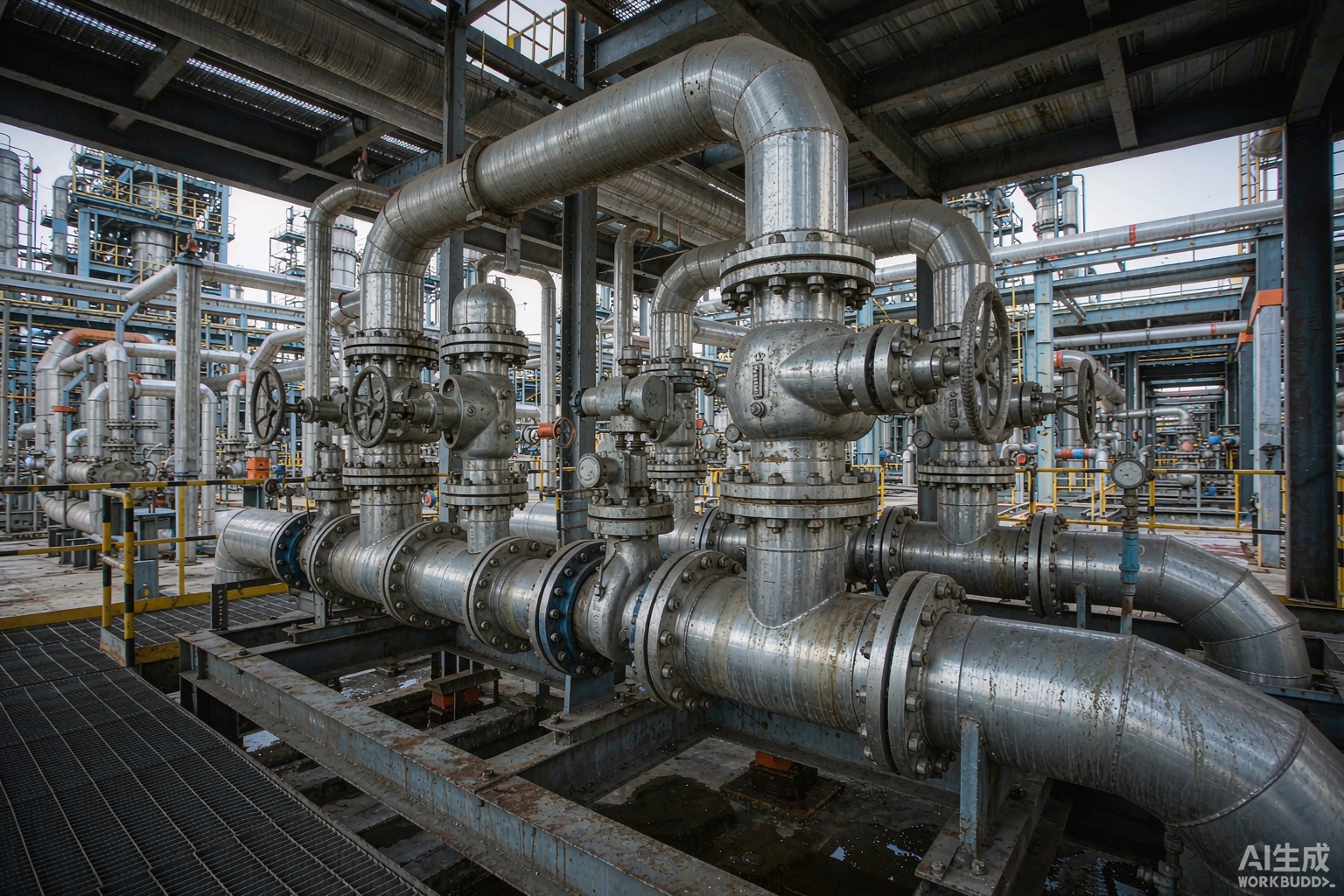
Liquid metal embrittlement is one of the few failure modes that can crack an otherwise perfect nickel alloy component with no warning and almost no material loss. A thin film of a low-melting metal — most often cadmium, zinc, mercury or a lead-tin solder — contacts a stressed nickel alloy surface at a temperature at or near that metal's melting point, and the component cracks along its grain boundaries under a load it would otherwise carry for decades. It is a specification and handling hazard, not a material-quality defect, and it is entirely preventable by what you write into the purchase order and the service manual.
This guide is written for procurement managers, plant engineers and project buyers who specify Inconel, Hastelloy, Incoloy, Monel and related alloys for chemical plants, refineries, aerospace and power equipment. It explains what liquid metal embrittlement is, which liquid metals attack which alloys, how to recognise the damage, the inspection that catches it, and the exact clauses that keep cadmium-plated fasteners, galvanized contact and mercury-exposed cleaning out of your nickel alloy joints. Every point is paired with something you can require in writing.
We treat this subject seriously because Hangbo Alloy Group is a Shanghai nickel alloy producer that melts, forges, rolls, heat-treats and finishes its own bar, plate, tube, forgings and welding products, then verifies them in an in-house metallurgical laboratory. Our finishing and packaging discipline exists to keep foreign low-melting metals away from the surfaces we ship, and the controls below mirror what we apply to our own stock. For background on the materials most at risk, our Inconel 625 guide, our Hastelloy C-276 composition guide and our nickel versus stainless selection guide cover the baseline properties.
Short answer: liquid metal embrittlement is cracking of a solid, normally ductile metal caused by contact with a liquid (or very low-melting) metal, with essentially no corrosion or weight loss — just sudden intergranular fracture under load.
It is easy to confuse with other failures, so the distinction matters. Corrosion removes metal; embrittlement does not. Galvanic attack between dissimilar metals dissolves one of them; liquid metal embrittlement leaves the liquid metal essentially unchanged and cracks the solid one. Hydrogen embrittlement introduces atomic hydrogen into the lattice; liquid metal embrittlement requires a film of a second metal at the surface. The practical consequence for a buyer is that the usual corrosion-prevention language in a specification does not address this failure mode at all — you need specific, named-metal exclusions.
The damage typically appears as fine, branched cracks running along grain boundaries, often immediately adjacent to the source of the liquid metal. A cadmium-plated steel washer sitting on an Inconel flange, a zinc-coated support touching a heated Hastelloy duct, or residue from a mercury-containing instrument can each initiate it. The component can look serviceable until the crack propagates and the part fails.
Short answer: many high-nickel alloys combine high service temperature, high sustained stress and excellent corrosion resistance that lets them survive environments where a low-melting metal can still reach its melting point at the surface.
Three conditions must coincide for liquid metal embrittlement: a susceptible solid metal, the presence of a specific liquid metal, and a tensile stress. Nickel alloys frequently meet all three. They are chosen precisely for high-temperature and high-pressure service, so surface temperatures can reach the melting points of cadmium (about 320 °C), zinc (about 420 °C) or tin-lead solders. They carry high sustained loads in flanges, bolting and pressure parts. And because they resist ordinary corrosion so well, a film of cadmium or zinc is not visibly attacked and is easily overlooked during assembly or maintenance.
This is why the hazard is a procurement and maintenance issue rather than a mill issue. The base metal can be exactly to specification and still crack if a cadmium-plated fastener is used on a hot joint, or if a galvanized clamp is fitted to a heated nickel alloy line. The control therefore belongs in the material call-out, the fastener specification and the site work instruction.
Short answer: cadmium and zinc are the two most common industrial hazards; mercury, lead, tin, gallium and their alloys are the others to exclude from hot nickel alloy surfaces.
| Liquid / low-melting metal | Typical melting point | Common industrial source | Why it reaches nickel alloy surfaces |
|---|---|---|---|
| Cadmium | ~321 °C | Cadmium plating on fasteners, Cd-bearing anti-seize, some brazing filler | Plated bolts and washers on heated flanges and exhaust joints |
| Zinc | ~420 °C | Galvanized steel supports, zinc-rich paint, die-cast parts | Clamps, hangers and frames touching hot ducting or piping |
| Mercury | ~ -39 °C (liquid at ambient) | Old instruments, switches, sensors, spilled mercury | Contaminated tooling, gauges or cleaning residues |
| Lead and tin-lead solder | ~327 °C / ~183 °C | Solder, ballast, older electrical contacts | Repair soldering on or near nickel alloy parts |
| Gallium and gallium alloys | < 30 °C for some alloys | Specialty solders, mirrors, some alloys | Rare in process plant but catastrophic where present |
The table gives typical melting points for orientation only; the actual temperature at which a given couple cracks depends on alloy composition, surface condition and applied stress, and reported service failures have occurred both at and somewhat below the nominal melting point under sustained load. The safe rule for a buyer is absolute exclusion of these metals from hot, stressed nickel alloy surfaces rather than reliance on a temperature threshold.
Short answer: look for tight intergranular cracks with no corrosion product, concentrated near a cadmium-plated, galvanized or soldered neighbour, and confirm with metallography plus EDX detection of the foreign metal.
| Observation | What it indicates | How to confirm | Where it usually appears |
|---|---|---|---|
| Fine branching cracks along grain boundaries | Intergranular fracture, little or no material loss | Metallographic section and fractography | Around fasteners, flanges and clamp contact points |
| No rust, scaling or general corrosion | Not a corrosion mechanism | Visual and EDX surface scan | On otherwise clean, corrosion-resistant surfaces |
| Residue of Cd, Zn, Hg or Pb at the crack mouth | Presence of the embrittling metal | SEM / EDX elemental mapping | At the contact with the offending component |
| Cracking only on hot, loaded members | Stress plus temperature plus liquid metal | Reconstruct service temperature and load | Flanges, bolting, heated ducts and supports |
| Sudden failure well below design load | Embrittled rather than overloaded | Compare to baseline mechanical properties | After a maintenance or retrofit with new hardware |
The cheapest early signal is administrative: a record of what hardware touched the joint. If a cadmium-plated fastener or galvanized clamp was fitted to a heated nickel alloy member, treat every similar joint as suspect and inspect it before further service. This is why the purchase-order exclusions below are worth more than any amount of post-failure analysis.
Short answer: it enters through substituted hardware (cadmium-plated bolts), site retrofits (galvanized clamps), maintenance consumables (zinc-rich paint, solder) and contaminated tooling or cleaning agents — rarely from the mill itself.
| Entry point | Typical cause | Control |
|---|---|---|
| Fasteners and washers | Cadmium-plated or zinc-coated hardware used on hot joints | Specify cadmium-free, zinc-free fasteners for nickel alloy service |
| Supports and clamps | Galvanized hangers touching heated ducting | Require non-galvanized, compatible supports with separation |
| Maintenance consumables | Zinc-rich paint, solder repair near nickel parts | Ban listed metals in the maintenance specification |
| Cleaning and tooling | Mercury-contaminated rags, gauges or solvents | Mercury-free cleaning and segregated tooling |
| Brazing and joining | Wrong filler with cadmium or low-melting constituents | Name the approved filler and qualify the procedure |
The hazard is amplified by the fact that nickel alloys are often specified into the exact environments — hot, stressed, corrosion-resistant — where a stray low-melting metal does the most damage. For joints in sour or chloride service, the same component may also be governed by our NACE MR0175 guidance and our sour-gas selection guide, so the metal-exclusion clause and the service-standard clause must be written together, not in conflict.
Short answer: name the excluded metals explicitly, require cadmium-free and zinc-free hardware on nickel alloy joints, ban mercury-containing consumables, and make these inspection requirements rather than notes.
| Clause | What to require | Why it matters |
|---|---|---|
| Excluded metals | "No cadmium, zinc, mercury, lead or gallium on or near nickel alloy surfaces" | Removes the embrittling source by rule |
| Fastener plating | Cadmium-free, zinc-free fasteners; state the allowed coating | Stops the most common entry point |
| Supports and clamps | Non-galvanized, compatible material with a separation layer where contact is possible | Prevents hot zinc contact |
| Maintenance consumables | Zinc-rich paint, solder and mercury banned in the work instruction | Controls site-introduced hazard |
| Brazing filler | Named cadmium-free filler, qualified procedure | Avoids low-melting constituents in joins |
| Receiving inspection | EDX or XRF spot check for Cd/Zn on critical hot joints | Catches non-conforming hardware before service |
Note that excluding these metals is compatible with good corrosion practice; it does not conflict with the measures in our galvanic corrosion guide, which addresses dissimilar-metal attack by dissolution. Here the concern is embrittlement by a surface film, so the remedy is exclusion and separation rather than cathodic protection.
Short answer: use penetrant testing for surface cracks on suspect joints, metallography to confirm intergranular fracture, and SEM/EDX to detect the residual embrittling metal — and verify hardware plating before assembly, not after failure.
Penetrant testing finds surface-breaking cracks on accessible joints and is the right first check on any assembly that may have seen cadmium or zinc contact. Tight intergranular cracks can be missed by coarse methods, so on critical components combine PT with a metallographic cross-section that shows the crack path. The decisive evidence is elemental: an EDX or similar scan at the crack mouth that reveals cadmium, zinc, mercury or lead confirms the mechanism rather than speculation.
The highest-value inspection is upstream, on the hardware itself. A portable XRF or EDX check of incoming fasteners, washers and clamps for cadmium and zinc, before they reach the joint, costs little and prevents the failure entirely. This pairs naturally with the positive-material-identification discipline in our procurement pitfalls guide, where verifying what you were actually shipped is the recurring theme.
Short answer: there is no single universal LME standard; control it through explicit material-exclusion clauses backed by ASTM plating, NDT and compositional-analysis practices.
| Document family | Relevance to LME control | Buyer action |
|---|---|---|
| ASTM plating and coating practices | Define cadmium-free, zinc-free and qualified coatings | Reference the allowed coating specification by number |
| ASTM E165 / E1417 penetrant testing | Surface crack detection on suspect joints | Require PT on critical hot nickel alloy assemblies |
| ASTM E1085 / E1505 XRF or EDX analysis | Detect Cd, Zn, Hg, Pb on hardware and cracks | Require incoming plating verification |
| ASTM E3 / E407 metallography | Confirm intergranular crack path | Require fractographic evidence on any failure |
| Service standards (NACE, API) | Hardness, sampling and sour-service limits | Apply where the joint is in pressure or sour service |
Because liquid metal embrittlement is governed by what you forbid rather than by a property you measure on the base metal, the strongest document is your own specification clause, supported by the verification practices above.
Put these into every specification and site work instruction that involves hot, stressed nickel alloy components:
No. Galvanic corrosion dissolves one of the two metals in the couple and you see material loss and rust or scale. Liquid metal embrittlement causes almost no material loss; the solid nickel alloy simply cracks along its grain boundaries while the liquid metal film remains essentially unchanged. The remedies are different too — galvanic attack is managed by isolation and cathodic design, while embrittlement is controlled by excluding the low-melting metal entirely. Our galvanic corrosion guide covers the dissolution case.
Cadmium plating was historically popular on fasteners because it is a good anti-seize and corrosion coating, and cadmium melts at a temperature that hot nickel alloy flanges and exhaust joints routinely reach in service. A cadmium-plated bolt or washer sitting on an Inconel or Hastelloy flange therefore becomes a ready source of the embrittling metal exactly where stress and temperature are highest. Specify cadmium-free hardware and the hazard disappears at the source.
Mercury is liquid at ambient temperature and is a known embrittling metal for several alloy systems, so spilled or残留 mercury from old instruments, switches or contaminated cleaning agents is a real, if less common, hazard. The control is mercury-free cleaning and segregated tooling in any area where nickel alloy components are handled, plus EDX confirmation if a spill is suspected.
No, the mechanisms are separate. Hydrogen embrittlement introduces atomic hydrogen into the lattice and is managed by low-hardness limits and baking after plating; liquid metal embrittlement requires a film of a second metal at the surface and is managed by excluding that metal. A part can be fully protected against hydrogen yet still crack from cadmium contact. The hydrogen embrittlement guide addresses the hydrogen case specifically.
Confirm it with three steps: penetrant testing to locate the surface cracks, metallography to show an intergranular path with little corrosion, and SEM or EDX to detect cadmium, zinc, mercury or lead at the crack mouth. Finding the foreign metal at the fracture surface is the decisive evidence that distinguishes this failure from overload, fatigue or corrosion.
Avoid cadmium and zinc plating specifically; other qualified, cadmium-free and zinc-free coatings can be acceptable if they are named in the specification and verified. The point is to forbid the embrittling metals by name and to confirm the actual plating on incoming hardware, rather than to ban plating broadly. Where you are unsure, specify the exact allowed coating and require an XRF or EDX check before assembly.
It affects both, because stainless steels are also susceptible to cadmium and zinc embrittlement at temperature, which is why the same exclusion clauses protect mixed stainless-and-nickel installations. The reason it is emphasized for nickel alloys is that they are selected into the hottest, most highly stressed services where the low-melting metal more easily reaches its melting point at the surface. Our nickel versus stainless guide helps choose between them for the joint.
If you are specifying Inconel, Hastelloy, Incoloy or Monel for hot, stressed service and want to keep cadmium, zinc, mercury and other low-melting metals away from your joints, send us the grade, standard, product form, dimensions and quantity, plus the service environment. We will confirm the right material and finishing for your condition, apply our own cadmium- and zinc-free handling and packaging controls, and quote our double-melted, in-house finished stock with full heat-to-piece traceability. Typical response time is ten minutes, and we ship worldwide from Shanghai.
Email: serena@hangboalloy.com
Phone: +86 166 2109 2936
WhatsApp: +86 166 2109 2936
Send us the grade, form, dimensions and service environment. We will confirm whether cadmium, zinc or mercury exclusion is required for your temperature and stress, recommend cadmium-free hardware and coating, and quote our own double-melted, in-house finished stock with full traceability.