
Hangbo Alloy Group
Shanghai · Est. 2012
Wrong welding wire on a nickel alloy weld fails silently: the joint looks sound while the deposited metal carries the wrong chemistry. This buyer's guide shows how to specify, verify and protect against substituted or downgraded filler.
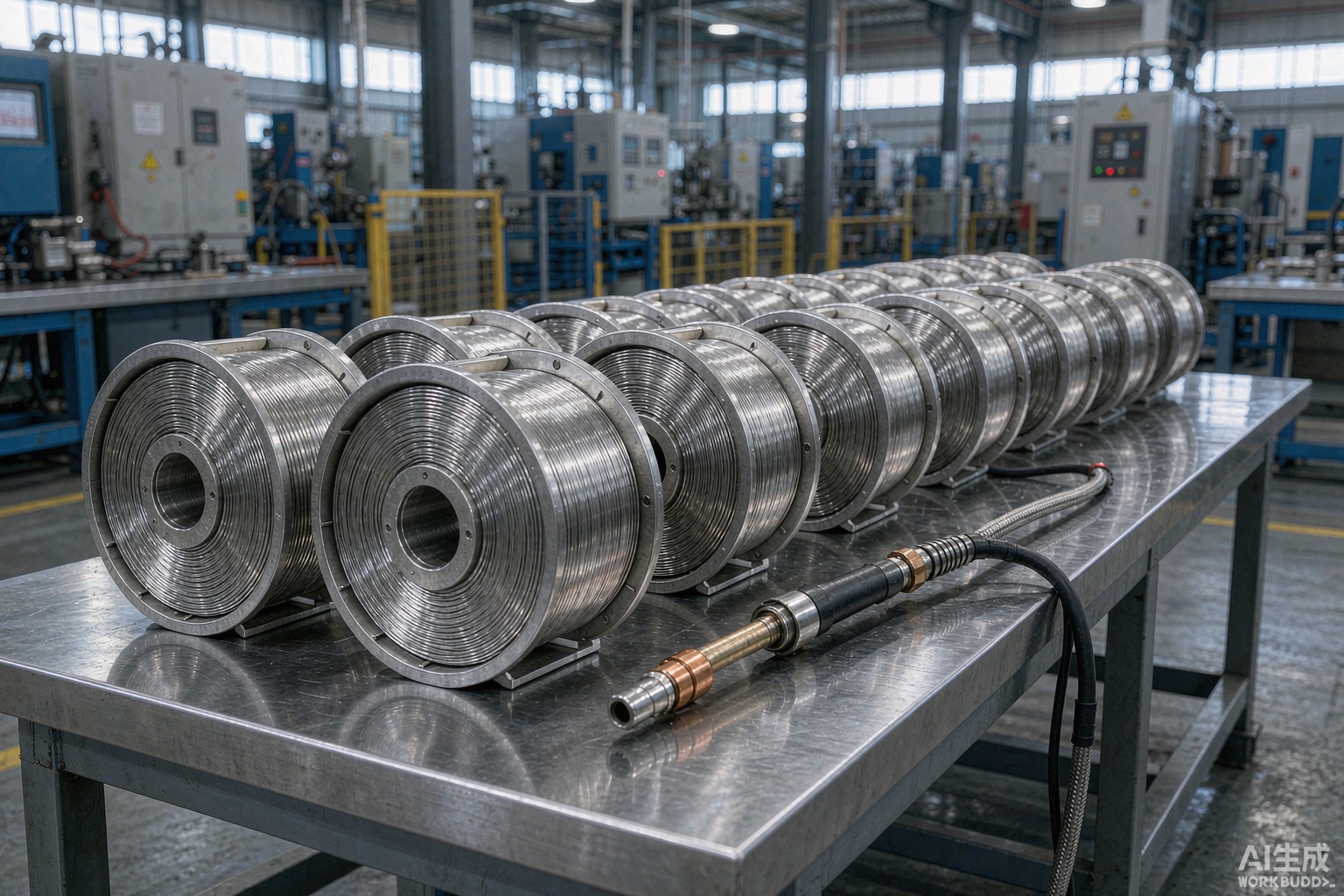
A welding consumable mismatch happens when the filler metal, electrode or flux supplied with a nickel alloy job is not the grade the weld procedure actually qualified, or is not chemistry-compatible with the base alloy it joins. It is one of the quietest ways a corrosion-resistant weld fails, because the joint can look perfect, pass a visual examination and even pass a radiograph, while the deposited metal carries the wrong chemistry and fails months later in service. This guide is written for buyers who purchase welded nickel alloy components, corrosion-resistant overlays or spooled welding wire, and who need to know how to specify, verify and protect themselves against a substituted or downgraded consumable.
We cover what a consumable mismatch is, why it quietly destroys weld performance, the most common ways suppliers swap or mislabel filler, the document and physical checks that catch it, the standards that govern wire certification, and a ready-to-use set of purchase-order clauses. Every point here can be written into a specification this week. The prevention steps below reflect how Hangbo Alloy Group controls filler and base stock together inside its own Shanghai plant, where melting, forming and welding-consumable qualification run under a single quality system. For the material baseline, our Inconel 625 guide, our Hastelloy C-276 composition guide and our nickel versus stainless selection guide set the chemistry that a correct filler must match.
Short answer: a mismatch is any situation where the deposited weld metal is not the filler grade the procedure called for, or is not chemistry-compatible with the base alloy it joins. The weld may still be sound, but it is no longer the weld that was engineered.
The simplest form is a direct substitution: an ERNiCrMo-3 wire is replaced with a cheaper ERNiCr-3, or a Hastelloy C-276 overlay is laid with a C-22 or a generic Ni-Cr-Mo wire that does not meet the same corrosion envelope. A second form is a paperwork mismatch, where the certificate names the correct grade but the spool on the truck carries a different, unmarked lot. A third is a condition mismatch, where the right grade arrives but in a damp, contaminated or expired state that changes how it deposits and how much hydrogen it introduces.
What unites these cases is that the buyer paid for one weld and received another. Because the base metal is usually still the correct, certified alloy, the problem hides inside a joint that appears fully conforming on the surface. That is precisely why detection has to happen at the consumable, not only at the finished weld.
Short answer: the filler decides the chemistry of the deposited metal, and deposited-metal chemistry decides corrosion resistance, strength and cracking behaviour more than almost any other variable in a weld.
Nickel alloy welding is a dilution exercise. The weld pool is a mixture of base metal and filler, and if the filler is the wrong grade the mixed deposit can lose pitting resistance, lose strength, or become sensitised and crack in service. A C-276 joint welded with a plain Ni-Cr wire, for example, will not deliver the molybdenum-rich envelope that resists reducing acids, and the weak point will be exactly the seam that sees the harshest environment. In sour service a wrong filler can push the deposit outside the hardness and chemistry limits that keep sulfide stress cracking at bay.
The danger is asymmetric: a good filler can sometimes tolerate a small base-metal variation, but a wrong filler cannot be compensated for by anything else in the joint. The weld is only as corrosion-resistant as its least-resistant region, and that region is set by what was fed through the torch. A substitution that saves a few percent on wire can remove the margin the whole component relied on.
From a procurement standpoint the cost is not only the failed part. A mismatched weld found in service usually means cutting out and re-welding a fitted component, then repeating the qualification, the non-destructive examination and, for pressure or rotating equipment, a fresh integrity assessment before the plant can run again. Specifying and verifying the filler at the front end costs a fraction of that, which is why the checks in this guide belong in the order rather than in a post-mortem report after a joint has already let go.
Short answer: substitutions are usually grade swaps, relabelled lots, wrong diameter or condition, or a filler that was never qualified against the base it is joining.
| Failure mode | What it looks like | Where it hides | How to catch it |
|---|---|---|---|
| Grade substitution | ERNiCr-3 sold as ERNiCrMo-3; generic Ni-Cr-Mo as C-276 wire | Certificate and spool label differ from deposited chemistry | PMI the spool; check UNS against AWS A5.14 |
| Relabelled lot | Correct cert, wrong physical spool | Seal broken, lot number mismatched at receiving | Verify lot number and packaging seal on arrival |
| Wrong diameter or condition | Out-of-spec wire, damp or expired flux-cored | Porosity, hydrogen cracking, poor fusion | Check condition, moisture, expiry at goods-in |
| Unqualified pairing | Filler never qualified to the base WPS | Procedure qualification record missing or generic | Demand WPS and PQR referencing the exact filler |
| Counterfeit certificate | Forged mill cert for the wire | Cert looks complete but lot cannot be traced | Trace cert to the producer's batch record |
Most of these are discovered only because someone compared the physical consumable to the paperwork at goods-in. A certificate reviewed in an office, weeks before the spool is opened on the shop floor, catches none of them, which is why the physical check is not optional for critical work.
Short answer: verify the filler at three points — the paperwork before you buy, the physical spool when it arrives, and the deposited metal if the joint is critical.
| Check | What to require | Instrument / method | What a pass looks like |
|---|---|---|---|
| Wire certificate | UNS and AWS/EN grade, heat and lot number, chemistry | Review EN 10204 3.1 before PO release | UNS matches the specified filler exactly |
| Spool PMI | PMI on the actual wire, not just the cert | Handheld XRF or OES on the spool | Measured chemistry matches the named grade |
| Packaging integrity | Sealed, labelled, lot-matched packaging | Visual at goods-in | Seal intact, lot number matches the cert |
| WPS / PQR | Filler named in the qualified procedure | Review qualification records | Procedure names the exact UNS filler used |
| Deposited metal test | All-weld-metal chemistry and corrosion where critical | Chemical plus G28 / A262 as applicable | Deposit meets the alloy's corrosion envelope |
The single highest-value check is positive material identification on the wire itself. A measurement on the spool, or on a short length of the deposited bead, confirms what is actually present rather than what the paper claims. Our nickel alloy welding guide covers the welding parameters that keep dilution predictable, which matters because unpredictable dilution makes a borderline filler even riskier and harder to verify after the fact.
Short answer: require filler certified to AWS A5.14 / A5.11 (or the ISO 18274 / EN ISO 18274 equivalents) with an EN 10204 3.1 certificate that names the exact UNS and lot.
| Document | Covers | Buyer action |
|---|---|---|
| AWS A5.14 / A5.11 | Nickel alloy bare and covered electrodes, UNS and chemistry | Quote the AWS class and UNS in the PO |
| ISO 18274 / EN ISO 18274 | International wire and rod chemistry limits | Use where the project specifies ISO/EN |
| EN 10204 3.1 | Inspection certificate for the lot | Require 3.1, not a generic 2.1 |
| ASME SFA-5.14 | Code-equivalent filler for pressure equipment | Apply for vessel and pipe work |
| WPS / PQR | Procedure and qualification record | Confirm the filler appears by UNS in both |
None of these certificates proves the spool in your receiving bay is the one described, which is why the paperwork check is necessary but never sufficient. The standard tells you what a grade must contain; it does not tell you what is on the truck, and a forgeable certificate is still only as trustworthy as the lot it references.
Short answer: name the filler by UNS and AWS/EN class, require lot-traced 3.1 certification, forbid substitution without written approval, and make spool verification and packaging checks receiving requirements.
| Clause | What to require | Why it matters |
|---|---|---|
| Filler identification | Exact UNS and AWS/EN class for wire and flux | Removes ambiguity a supplier could exploit |
| No substitution | Written approval required for any change | Stops silent grade swaps |
| Lot certification | EN 10204 3.1 naming heat and lot | Ties the spool to a traceable batch |
| Receiving verification | PMI and seal/lot check at goods-in | Catches relabelled or wrong spools |
| Condition requirement | Dry, in-date, undamaged flux and wire | Prevents hydrogen and porosity defects |
| Procedure link | WPS/PQR references the exact filler UNS | Ensures the weld was qualified with that wire |
If the component is for sour or chloride service, tie the filler clause to our sour-gas selection guide and our NACE MR0175 notes, because the deposited-metal hardness and chemistry limits that prevent sulfide stress cracking are exactly the limits a substituted filler can breach. When crevice and pitting life matter, review our PREN and crevice corrosion guide so the filler choice does not quietly lower the joint's corrosion rating. For Monel and copper-nickel systems the same logic applies, as our Monel 400 guide shows for marine welding.
Put these into every inquiry or order that includes welding wire, electrodes, flux or welded nickel alloy components:
Yes. Radiography and visual inspection check soundness, not deposited chemistry. A mismatched filler can produce a porosity-free, crack-free weld that is simply the wrong alloy, which is why only chemistry verification on the spool or the deposited metal confirms the grade. A clean-looking weld is not evidence of a correct filler.
Only if the procedure was qualified with it and the service permits the lower molybdenum content. They are different grades with different corrosion envelopes, and treating them as interchangeable is exactly the silent substitution this guide warns against. When in doubt, require the grade named in the qualified WPS and refuse the swap.
No. The base alloy and the filler are certified independently, so a perfect base certificate says nothing about what was fed through the torch. Filler verification must be a separate receiving check, because the two certificates never cover the same object once the weld is made.
Dilution varies widely with process, joint geometry and technique, but what matters is that the final deposit stays inside the alloy's corrosion and strength envelope. An already-marginal filler leaves no margin once diluted by base metal, so the safe approach is to specify a filler that meets the requirement even after the expected dilution, not one that only meets it on paper.
The certificate proves the producer's batch, not the spool in your bay. Verify the lot number and seal on arrival and, for critical joints, identify the wire directly. A 3.1 is necessary but not sufficient, and a perfect certificate attached to the wrong physical spool is the most common way the gap appears.
Flux condition drives hydrogen and porosity. Require dry, in-date, undamaged flux and treat any damp or expired consumable as rejected, because moisture in flux is a direct route to hydrogen cracking in the weld. Store and handle flux to the producer's moisture limits and re-bake only where the specification allows it.
Qualify the exact filler UNS to the base and joint in a WPS/PQR, and name that UNS in the order. Trusting a trade name without a qualification record leaves the weld undefended if the wire is later swapped, because no one specified which certificate the substitute had to match.
If you are buying welded nickel alloy components, corrosion-resistant overlays or spooled welding wire and want the deposited metal to match the procedure you paid for, send us the base grade, standard, joint detail, service environment and quantity. We will confirm the correct filler by UNS, qualify it under our own welding procedure, and supply double-melted, fully traceable base and consumable stock from our Shanghai plant with positive material identification on both. Response time is typically ten minutes, and we ship worldwide.
Email: serena@hangboalloy.com
Phone: +86 166 2109 2936
WhatsApp: +86 166 2109 2936
Send us the base grade, standard, joint detail, service environment and quantity. We will confirm the correct filler by UNS, qualify it under our own welding procedure, and quote double-melted, fully traceable base and consumable stock with positive material identification on both.