
Hangbo Alloy Group
Shanghai · Est. 2012
254 SMO, Alloy 926 and Inconel 625 all resist seawater, but they are not interchangeable. This comparison weighs composition, PREN, stress-corrosion resistance, temperature envelope and cost-risk so you can choose the grade that matches your duty.
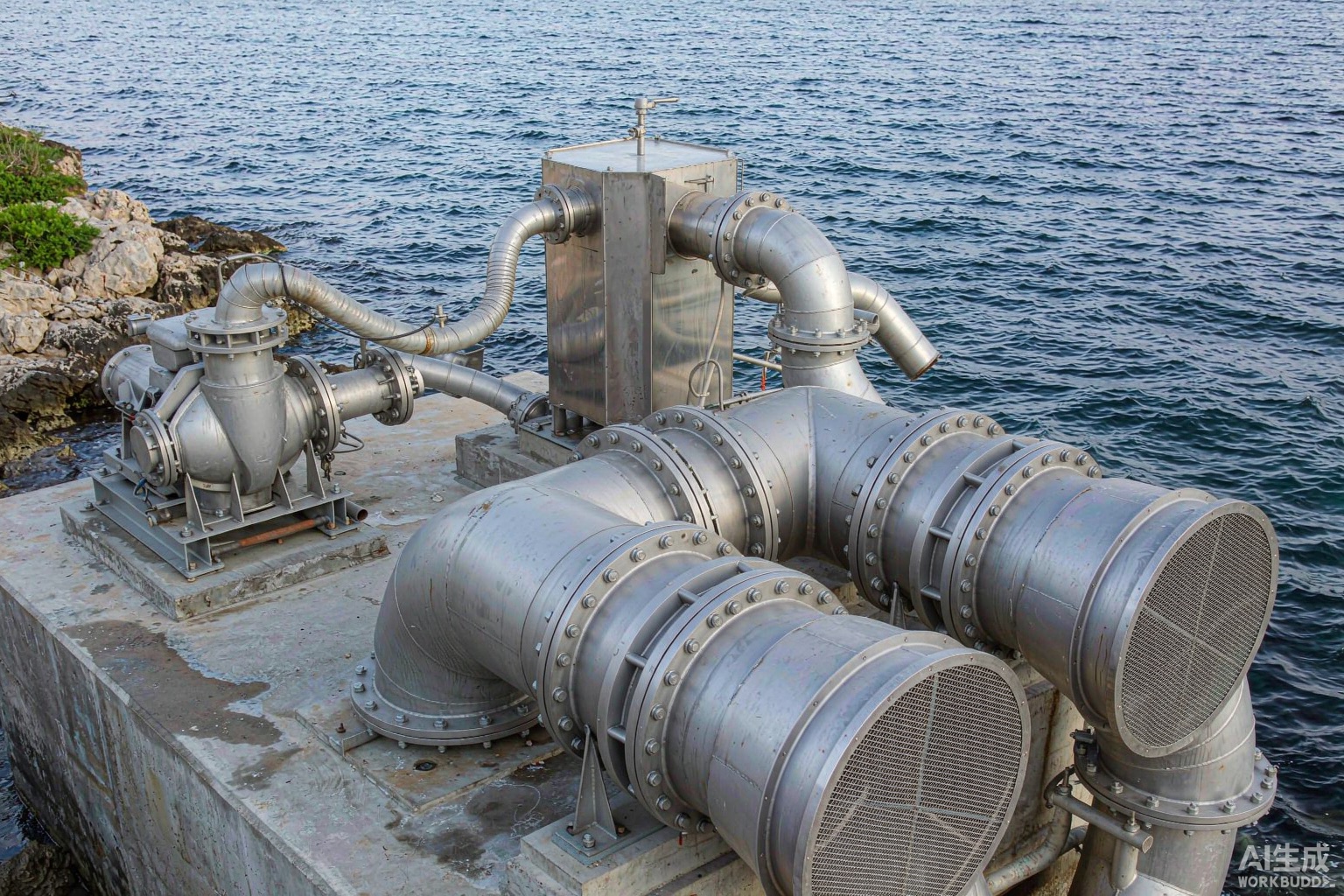
When a project needs a seawater or brackish-water alloy, three names come up again and again: 254 SMO, Alloy 926 and Inconel 625. They overlap in corrosion resistance, but they are not interchangeable. The first two are 6Mo super-austenitic stainless steels with moderate nickel; the third is a nickel-base alloy with more than half its mass as nickel and a substantial molybdenum and niobium content. Choosing between them is a budget-and-risk decision, not a spec-sheet beauty contest.
This comparison is written for marine, offshore, desalination, scrubber and process engineers who must pick one grade and defend the choice. It lays out composition, pitting and crevice resistance, mechanical behaviour at temperature, weldability and the cost-and-risk trade-off, then gives a selection rule you can put in a datasheet. Our procurement pitfalls guide covers how to avoid fake or mis-certified versions of any of these once you have chosen.
We manufacture all three families in our Shanghai works. Hangbo Alloy Group starts from a 100% virgin prime charge, melts by VIM and refines by ESR or VAR, removes oxide scale thoroughly before working, applies the standard solution anneal or age cycle required by the applicable ASTM or EN grade, and controls every step: composition by spectrometry and wet analysis, mechanical and impact testing, ultrasonic and penetrant inspection, dimensional checks, marking and export packing. Our Inconel 625 guide and Alloy 926 guide give deeper property data on each.
Three numbers decide most of the outcome in seawater: the pitting resistance equivalent number (PREN), the nickel content, and the molybdenum content. PREN = %Cr + 3.3×%Mo + 16×%N is the standard screening formula for austenitic and super-austenitic grades, and it is a useful first filter even though it does not capture crevice behaviour, biofouling or velocity effects.
The fourth axis is consequence. A heat-exchanger tube in a cooling-water system and a subsea manifold flange are both "seawater", but their failure costs differ by orders of magnitude. The right alloy is the one whose reserve of corrosion margin matches the consequence you cannot afford.
All three are nickel-chromium-molybdenum systems, but in very different proportions. The table uses the published ASTM / EN composition limits; actual commercial heats typically sit near the middle of the ranges.
| Element (wt%) | 254 SMO (UNS S31254) | Alloy 926 (UNS N08926) | Inconel 625 (UNS N06625) |
|---|---|---|---|
| Nickel | 17.5 – 19.5 | 24.0 – 26.0 | 58.0 min |
| Chromium | 19.5 – 20.5 | 19.0 – 21.0 | 20.0 – 23.0 |
| Molybdenum | 6.0 – 6.5 | 6.0 – 7.0 | 8.0 – 10.0 |
| Nitrogen | 0.18 – 0.22 | 0.15 – 0.25 | — |
| Niobium (Columbium) | — | — | 3.15 – 4.15 |
| Copper | 0.5 – 1.0 | 0.5 – 1.5 | — |
| Iron | Balance | Balance | 5.0 max |
| Carbon (max) | 0.020 | 0.020 | 0.10 |
| Approx. PREN | ~43 – 45 | ~45 – 48 | ~48 – 55 |
The two 6Mo grades are close cousins: Alloy 926 simply carries more nickel (about 24–26 percent versus about 18 percent) which improves certain reducing-environment resistance and general toughness, at a modest cost premium. Inconel 625 is in a different class of material — a true nickel-base alloy whose molybdenum and niobium give it the highest PREN of the three and a much wider service-temperature envelope. Reading PREN correctly is covered in our PREN guide.
In clean, aerated, flowing seawater all three resist pitting and crevice attack well, and all three sit far above 316L stainless. The differences emerge in the hard cases: stagnant crevices, hot seawater, polluted harbour water, and mixed acid-chloride process streams.
| Service condition | 254 SMO | Alloy 926 | Inconel 625 |
|---|---|---|---|
| Flowing clean seawater | Excellent | Excellent | Excellent |
| Seawater crevices, ambient | Good, watch stagnation | Good to very good | Very good, largest margin |
| Hot seawater / brine | Limited above ~40°C (104°F) | Limited, slightly better | Strong to much higher temperature |
| Chloride + reducing acid | Moderate | Good | Very good |
| Biofouling-assisted attack | Needs good flow | Needs good flow | Most tolerant of surface films |
| Stress corrosion (chloride) | Good resistance | Good resistance | Excellent; nickel-rich matrix |
Stress-corrosion cracking resistance is the clearest divider. The high-nickel matrix of Inconel 625 resists chloride stress corrosion far more robustly than the austenitic 6Mo steels; our chloride stress-corrosion guide explains why nickel content is the dominant factor. For most clean-seawater cooling and desalination duties the 6Mo grades are ample; for subsea hardware and sour-prone offshore service, 625 earns its premium. The offshore and subsea selection guide frames the consequence side.
Seawater alloys are often chosen for corrosion alone, but the part also has to hold load, and here the nickel-base alloy separates from the stainless grades decisively.
| Property | 254 SMO | Alloy 926 | Inconel 625 |
|---|---|---|---|
| Typical tensile strength | ~650 MPa (94 ksi) | ~650 MPa (94 ksi) | ~830 MPa (120 ksi) min, annealed |
| Useful temperature ceiling | Moderate; not a high-temp grade | Moderate | Up to ~650°C (1200°F) oxidative, higher load-bearing |
| Cryogenic toughness | Good | Good | Excellent |
| Strength retention at heat | Limited | Limited | Strong, precipitation-strengthenable variants exist |
If the component also sees elevated temperature — a flare system, a hot effluent line, a heat-traced submarine pipeline — Inconel 625 is often selected not for seawater resistance but because it is the only one of the three that keeps meaningful strength hot. For purely ambient seawater, the 6Mo grades cover the mechanical need at lower cost.
No published price should be quoted here because alloy cost moves with the nickel and molybdenum market, but the ordering is stable: 254 SMO is the lowest-cost option, Alloy 926 carries a modest premium for its higher nickel, and Inconel 625 is materially more expensive because it contains roughly three times the nickel and more molybdenum. The question is whether that premium buys avoided risk.
| If your duty is… | Lowest-risk adequate choice | Why |
|---|---|---|
| Flowing clean seawater, ambient, easy inspection | 254 SMO | Full margin at lowest cost; PREN ~43–45 |
| Seawater with crevices, warmer or variable | Alloy 926 | Extra nickel and PREN for a small premium |
| Subsea, sour-prone, high temperature, hard to inspect | Inconel 625 | Highest corrosion and SCC margin; strength at temperature |
| Confined budget, redundant system, short design life | 254 SMO | Cost saved outweighs the small added risk |
| Single-point failure with huge consequence | Inconel 625 | Margin is cheaper than the failure |
A common mistake is specifying 625 everywhere to "be safe", which wastes budget on parts where 254 SMO would last the design life, and then under-specifying on one hidden crevice where only 625 would survive. Grade to the duty, not to fear. For chloride and sour interactions, see the sour gas selection guide.
Our copper-nickel 90/10 seawater guide is worth reading if the duty is pure cooling-water piping, where Cu-Ni can be the most economic choice of all and changes the comparison entirely.
| Grade | UNS | Common product specifications |
|---|---|---|
| 254 SMO | S31254 | ASTM A240 / A312 (plate, pipe), EN 1.4547 |
| Alloy 926 | N08926 | ASTM B625 / B673 / B674, EN 1.4529 |
| Inconel 625 | N06625 | ASTM B443 (plate), B446 (bar), B444 / B622 (tube), B564 (forgings) |
Inconel, Hastelloy, Incoloy, Monel, Nimonic and Haynes are registered trademarks of their respective owners; the grades here are defined by their UNS numbers and the ASTM, EN and AMS specifications cited. Verify the current edition of any standard you order to before purchase.
This article is guidance for buyers, not a legal opinion or a substitute for the applicable standard. Specifications change; always verify against the current edition of the specification you order to.
For ambient, flowing, clean seawater the best value is 254 SMO, which delivers full pitting and crevice resistance at the lowest cost. Alloy 926 adds margin for warmer or crevice-prone water at a small premium, and Inconel 625 is the most capable overall but costs materially more. "Best" depends on duty and consequence, not on a single ranking.
Very nearly. Both are 6Mo super-austenitic stainless steels with about 20 percent chromium and 6 percent molybdenum; Alloy 926 carries roughly 24–26 percent nickel versus about 18 percent in 254 SMO, plus a slightly wider molybdenum and nitrogen range. That extra nickel improves certain reducing-environment resistance and toughness for a modest price increase.
Because it is a nickel-base alloy, not a stainless steel: it contains at least 58 percent nickel, 8–10 percent molybdenum and 3–4 percent niobium, versus roughly 18–26 percent nickel in the 6Mo grades. Nickel and molybdenum are the two most expensive constituents, so the contained-metal value alone puts 625 well above the others before any processing cost is added.
Only up to moderate temperature. As seawater warms, its crevice and pitting aggression rises; 254 SMO is generally limited to around 40°C (104°F) in crevice conditions, while Inconel 625 stays resistant to much higher temperatures. For hot seawater or brine, step up to 625 or at least confirm the design temperature against the alloy's proven service history.
Yes, decisively. Chloride stress-corrosion cracking resistance scales with nickel content, and 625's nickel-rich matrix resists it far better than the austenitic 6Mo steels. That is a major reason 625 is chosen for subsea and offshore hardware where both chlorides and sustained tension are present. Our chloride stress-corrosion guide covers the mechanism.
All three are weldable with appropriate filler: 254 SMO and Alloy 926 are welded with matching or overalloyed 6Mo consumables, and Inconel 625 with ERNiCrMo-3 (Inconel 625 type) filler. The 6Mo steels are sensitive to heat input and contamination but straightforward; 625 is robust but more expensive in both base and filler. Our nickel alloy welding guide covers procedure detail.
That usually wastes budget. 625 is the right call for subsea, sour, high-temperature or single-point-failure duties, but for flowing ambient seawater a 6Mo grade will meet the design life at a fraction of the cost. Grade to the actual duty and consequence, and reserve 625 for where its margin is genuinely needed.
Name the UNS number and the full ASTM or EN product specification with its edition, require the melting route and a permanent heat identification on every piece, and require an EN 10204 3.1 certificate as a minimum (3.2 with a named third party for critical service). Our test reports and traceability page shows what a complete package contains.
If you are deciding between 254 SMO, Alloy 926 and Inconel 625 for a seawater, brackish or offshore duty, send us the service conditions, required forms and quantities. We will recommend the grade that matches your risk and budget, confirm the specification, and quote our own virgin-material, double-melted production with full heat-to-piece traceability. Typical response time is ten minutes, and we ship worldwide from Shanghai.
Email: serena@hangboalloy.com
Phone: +86 166 2109 2936
WhatsApp: +86 166 2109 2936
Send us the service conditions, product forms and quantities. We will recommend the grade that matches your risk and budget, confirm the specification, and quote our own virgin-material, double-melted production with full heat-to-piece traceability.