
Hangbo Alloy Group
Shanghai · Est. 2012
The heat number is the serial of the melt that links a piece of nickel alloy to its analysis, heat treatment and test records. When it survives only on a bundle tag, the material becomes anonymous and your warranty, root-cause analysis and regulatory compliance vanish with it. Here is how traceability is lost and the controls that keep it.
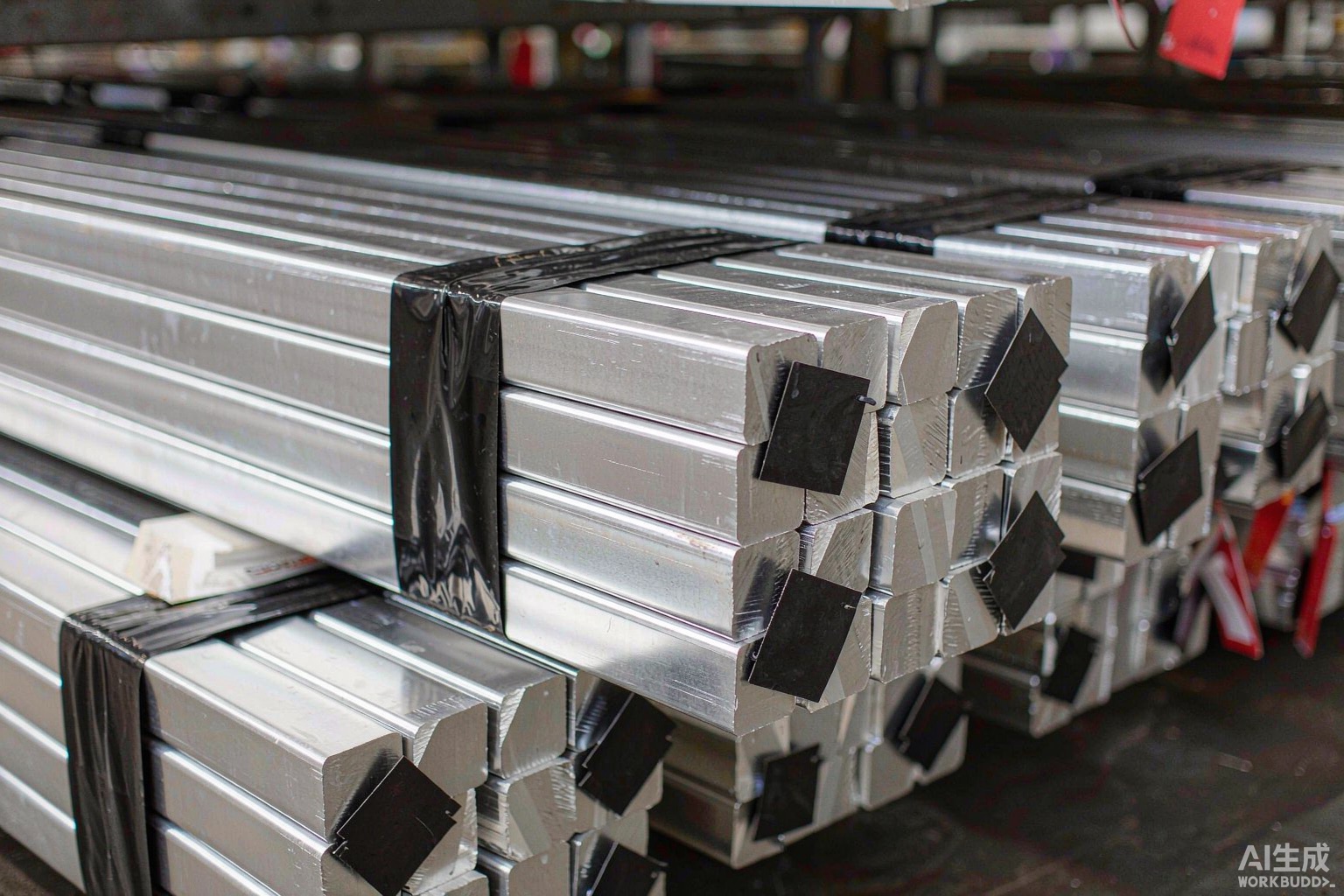
The heat number is the single most important identifier on a piece of nickel alloy, and the one most easily lost. It is the serial number of the melt: the link from a specific bar, tube or plate back to the exact VIM+ESR or VIM+VAR heat, the ladle analysis, the heat-treatment chart and the mechanical and NDT results. Remove that number and the material becomes anonymous metal — it may be perfectly good, but you can no longer prove it, recall it, or claim against it. When a truckload of nickel alloy arrives with the heat identity only on a paper tag that rips off in the yard, the traceability died at the gate, and a future failure will be your loss to absorb.
This article explains what the heat number connects, the ordinary ways it gets separated from the metal after delivery, why that separation voids your claim and your root-cause analysis, and the purchase-order and receiving controls that keep every piece tied to its certificate for life. We are a manufacturer that marks every piece with its heat identity and ships the matching certificate and packing list together, so the discussion is from the side that preserves traceability rather than loses it. Because we control the whole chain from virgin charge and VIM+ESR or VIM+VAR melting through oxide-scale removal, working, heat treatment and finishing to marking, packing-list and certificate generation against one heat record, the identity cannot diverge. Our procurement pitfalls guide names lost heat identity as the failure point that turns every other defect into an uncollectable claim, and our Inconel 625 and Inconel 718 guides describe the forms that must stay traceable.
The one-line rule: if the heat number is not permanently on the piece, it is not on the piece — a bundle tag is a wish, not traceability.
The direct answer: the heat number is the key that opens every record attached to a specific melt — virgin-charge analysis, melting route and furnace identity, heat-treatment chart, composition, mechanical tests, NDT results and the certificate — so without it a piece of nickel alloy cannot be verified, investigated or claimed against.
| Record | Linked by heat number to… |
|---|---|
| Raw-material / ladle analysis | The virgin charge and incoming verification of that heat |
| Melting route | VIM+ESR or VIM+VAR furnace identity and remelt |
| Heat-treatment chart | The actual load, soak and quench for that heat |
| Composition & mechanical tests | The measured values for that exact heat |
| NDT results | The UT / PT records scoped to that heat |
| Certificate (EN 10204) | The document that certifies that heat |
Notice that nothing here depends on the grade name. Two bars of “Inconel 625” from two different heats can have meaningfully different measured compositions and microstructures; the heat number is what lets you tell them apart and act on the difference. Our test reports and traceability process shows the full document set a heat number should open.
Traceability is lost in ordinary, predictable ways — none of them dramatic, all of them fatal to a future claim.
Our round bar, seamless tube and plate shipments carry permanent heat marking per piece with the packing list and certificate cross-referenced, because traceability is a physical property of the shipment, not a paper afterthought.
The cost of these failures is not theoretical. A common pattern is a fabricator who receives several heats of bar in one mixed load, files the single forwarded certificate, and weeks later cuts and commingles the bars on the shop floor. When a machined component then fails a hardness or corrosion check, there is no way to say which heat supplied the bad piece, so the investigation stops at “inconclusive” and the cost is written off. The same material, marked per piece and certificated per heat, would have pointed straight to the responsible melt — and to any sister pieces still in stock that should be quarantined. Traceability is therefore not bureaucracy; it is the difference between a resolved problem and a recurring one.
When a component fails and you suspect the material, the first question any responsible investigator asks is “which heat was this, and what does its certificate say?” If the heat number is gone, that question has no answer, and the sequence below is what follows.
| Consequence | What happens without the heat number |
|---|---|
| Warranty / claim | Rejected — you cannot prove the failed part came from the contested lot |
| Root-cause analysis | Impossible — no link to composition, heat treatment or NDT |
| Fleet-wide action | Blocked — you cannot identify and recall sister parts from the same heat |
| Retrospective verification | Lost — no basis to re-test or PMI a specific heat later |
| Regulatory compliance | At risk — pressure-equipment and sour-service rules require identifiable material |
| Supplier leverage | Gone — the mill has no incentive to help an anonymous claim |
For sour service this is doubly serious. NACE MR0175 / ISO 15156 and the associated purchasing discipline assume you can identify the exact material placed in H₂S service; our NACE guide and sour gas guide reinforce why identifiable material is non-negotiable there.
Consider the recall scenario that traceability enables. If a specific heat is found to have an out-of-range property or a contamination event, the heat number lets you locate every piece from that melt — in your warehouse, in a half-built assembly, or already installed — and act on all of them at once. Without the number, you can only react to failures one at a time, each as it occurs, with no way to know whether the next component shares the same defective parent. That inability to act in bulk is precisely what turns a contained quality event into a field-wide reliability problem, and it is the quiet reason traceability is written into pressure-equipment and aerospace purchasing rules rather than being left to choice.
The detection happens at the dock, not after failure. Make these checks part of receiving inspection.
Our offshore and subsea guide and Monel 400 guide note that marine and subsea material, once installed, is extraordinarily expensive to retrieve — another reason the identity must be ironclad before it goes underground or overboard.
| Control | What to write into the order |
|---|---|
| Permanent marking | Every piece marked with heat number by stamp / etch / laser |
| Certificate match | Certificate references the exact heat number on the piece |
| Certificate per heat | One EN 10204 3.1 (or 3.2) per heat, not per shipment |
| Packing list cross-reference | Packing list ties each piece to its heat and certificate |
| Photographic record | Pre-shipment and on-arrival photographs of marked material |
| Retained sample | Identified offcut retained for future testing |
| Third-party witnessing | SGS / TÜV / BV / DNV verification of marking and documents |
At our facilities, marking, packing-list compilation and certificate generation happen together against the same heat record, so the number on the bar, the list and the certificate cannot diverge. That single integration is what makes traceability real rather than promised.
| Requirement | Reference |
|---|---|
| Material identification | ASME Boiler & Pressure Vessel Code material traceability rules |
| Pressure equipment | Pressure Equipment Directive (PED) identification and marking |
| Certificate type | EN 10204 3.1 minimum, 3.2 with third-party witnessing |
| Sour service | NACE MR0175 / ISO 15156 material identification discipline |
| Marking | Product specification marking requirements (heat / lot identity) |
None of these standards can help you if the heat number left the building on a paper tag. The control is physical marking plus a document set that mirrors it, verified at receiving. Our Inconel 718 aerospace guide and Inconel 625 guide describe forms where traceability is a contractual and often regulatory obligation, not a courtesy.
The cheapest control is also the simplest: insist that the heat number is on the piece, not just the paperwork, before the material is accepted into stock. A receiving inspector who photographs the marked ends and files the certificate against the same number creates a chain that survives any later handling, storage or re-numbering. That single habit — marking on the metal, mirrored by the document, captured at the gate — is what separates material you can claim against from metal you merely hope is correct.
Trademarks such as Inconel and Monel are owned by their respective companies; the grades are defined by their UNS numbers and ASTM product specifications. This article is guidance for buyers, not a legal opinion or a substitute for the current edition of the applicable standard or regulation.
A heat number is the unique identifier of a single melt — the specific VIM+ESR or VIM+VAR heat from which a batch of material was made. It links a physical piece back to its ladle analysis, melting route, heat-treatment chart, composition, mechanical tests, NDT results and certificate. Without it, the piece is anonymous metal.
No. A tag is easily lost, mixed or removed during handling and storage, and once it is gone the bars it identified are untraceable. Traceability requires the heat number to be permanently marked on every individual piece, cross-referenced to a certificate that names that exact heat.
Because only the heat named on the certificate can be verified; every other heat in the delivery has no matching document. If a failure later occurs, you cannot prove which heat the failed part came from, so the claim is rejected and root-cause analysis is impossible.
Partly, and only if the material is still identifiable. Positive material identification confirms composition but does not recreate the heat-treatment chart, mechanical record or NDT results tied to the original heat. Once the heat number is gone, you have chemistry at best, never the full genealogy the claim depends on.
It matters wherever a failure would be costly or where you might need to act across a batch. Even for ordinary parts, lost traceability blocks warranty recovery and any fleet-wide response. For pressure equipment, sour service and aerospace it is also a compliance requirement.
Permanent heat marking on every piece, a certificate (EN 10204 3.1 minimum, 3.2 for critical service) that names the exact heat number, one certificate per heat, a packing list cross-referencing each piece to its heat, pre-shipment and on-arrival photographs, and a retained identified sample. For critical duty, add third-party witnessing of marking and documents.
Check that every piece carries the heat number, that the number matches the certificate, that there is one certificate per heat, that the counts reconcile with the packing list, and photograph the marked material before it enters storage. Keep an identified offcut per heat for future verification.
If you have received nickel alloy whose heat identity is only on a bundle tag, or you want traceability written correctly into your next order, send us the grade, form, quantities and the service (pressure, sour, aerospace, marine). We will tell you exactly what marking, certificate-per-heat and documentation to require, and quote our own virgin-material, double-melted production with permanent heat marking on every piece and full heat-to-piece traceability. Typical response time is ten minutes, and we ship worldwide from Shanghai.
Email: serena@hangboalloy.com
Phone: +86 166 2109 2936
WhatsApp: +86 166 2109 2936
Send us the grade, form, quantities and the service (pressure, sour, aerospace, marine). We will tell you exactly what marking, certificate-per-heat and documentation to require, and quote our own virgin-material, double-melted production with permanent heat marking on every piece and full heat-to-piece traceability.