
Hangbo Alloy Group
Shanghai · Est. 2012
A two-week delivery promise on double-melt Inconel is physically impossible. Learn the lead-time red flags that hide substitution, rush work and allocation risk, and the questions that expose a hollow promise before you pay.
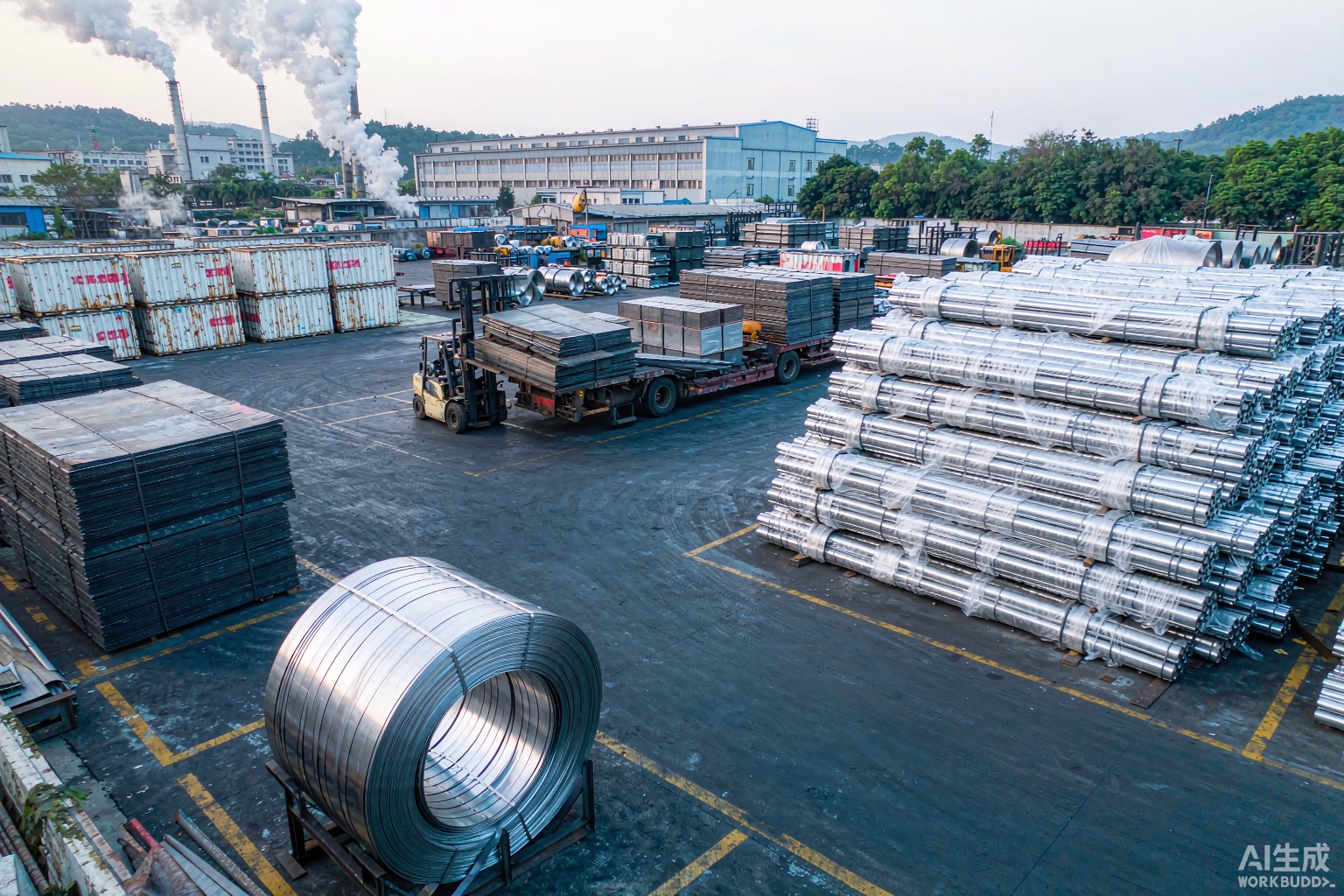
Short answer: a delivery promise that is far shorter than the physical melting and testing time of the alloy you ordered is the single most reliable early warning that something in the supply chain is being hidden — usually allocation, silently swapped material, or work rushed past proper heat treatment. Overseas buyers of nickel-base and high-temperature alloys lose more money to impossible lead times than to almost any other single clause, because the bait pulls the order in and the problems surface only after the deposit is spent.
This guide explains why certain delivery windows are physically impossible for double-melted material, the four most common lead-time traps, how allocation cycles during nickel-price spikes drive substitution, the documents and questions that expose a hollow promise, and the purchase-order language that keeps a fast promise from becoming a fast failure. A reader who finishes this article can read a quotation’s delivery line and tell, within a few hours of asking the right questions, whether the supplier is quoting real mill capacity or quoting a fantasy.
We are a Shanghai-based nickel alloy manufacturer, not a trading desk, so the timelines described here come from running vacuum-induction and remelt furnaces ourselves rather than from reselling other people’s stock. Where a number depends on a specific standard or a specific furnace schedule, we say so; where it does not, we give the engineering reason the limit exists.
Short answer: when a supplier promises two or three weeks for material that physically requires vacuum melting, remelting, forming, heat treatment and full inspection, the only way to meet that date is to skip a step, substitute a grade already in stock, or sell you material allocated from a different customer’s order. None of those outcomes is visible on the quotation.
Nickel alloys are not commodities that sit on a shelf in every grade. A double-melted heat of Inconel 718 or Hastelloy C-276 (for the chemistry that forces this route, see our Inconel 625 property guide) begins as a virgin melt, is refined by a second remelt, is forged or rolled, is solution-annealed or age-hardened per the governing ASTM or AMS specification, and is then inspected and certified. Each of those stages has a floor duration set by physics and by furnace queueing, not by sales pressure. A quotation that collapses the whole chain into ten working days is not beating the competition — it is describing a different product than the one on the data sheet.
The danger is that the buyer only discovers the gap after paying. A supplier who cannot actually make the grade in the promised window has three escape routes, and all three move risk onto your project: rush the heat treatment so the material is soft or coarse-grained, ship a substitute grade that is “close enough” and hope you never PMI it, or shave the inspection so the certificate arrives on time but the testing did not. The delivery promise is the tripwire; the damage lands in the metallurgy.
Short answer: for vacuum-induction melting followed by electroslag or vacuum-arc remelting, a realistic factory-floor total from confirmed order to inspected, certified bar or plate is typically in the range of six to fourteen weeks, and longer for large forgings or tight chemistry — so any flat promise under four weeks for double-melt stock should be questioned line by line.
The table below is a planning model, not a guarantee; furnace loads, test-house queues and shipping windows move the total. What it shows is that the individual steps simply do not compress below their physical floor, so a quotation that promises the finished, certified material in two weeks is contradicting the process itself.
| Process stage | What it actually involves | Typical floor duration |
|---|---|---|
| Virgin melt & VIM | Charging 100% prime raw material, vacuum induction melting, sampling | 1–2 weeks (queue-dependent) |
| ESR or VAR remelt | Second refining pass for cleanliness and ingot soundness | 1–2 weeks |
| Forge / roll / peel / grind | Hot working to bar, plate or tube hollow, then conditioning | 1–3 weeks |
| Solution anneal or age hardening | Heat treatment to the governing ASTM or AMS spec | Several days to 2 weeks |
| Testing & certification | Chemistry, mechanicals, NDT, dimensional, EN 10204 3.1/3.2 | 1–2 weeks |
| Packing & export freight | Seaworthy packaging, booking, ocean transit | 3–6 weeks (freight) |
Note the last row is ocean freight, not manufacturing. Buyers in Europe or North America should add transit on top of the factory lead time, so a realistic door-to-dock window for double-melt stock from Asia is usually closer to ten to eighteen weeks than to three. A quotation that promises four weeks door-to-door is either shipping ex-stock material of unknown pedigree or simply wrong about its own schedule. For high-temperature turbine grades, dedicated creep-rupture testing adds further weeks on top of this baseline, and our creep-rupture guide explains why that testing cannot be compressed without invalidating the data.
Short answer: the four traps are the “ex-stock” lie, the allocation swap, the rush-heat-treatment shortcut, and the rolling-window promise — and each one can be detected by asking for the heat number at order and for the actual inspection dates on the certificate.
| Trap | What the promise hides | How to detect it | How to prevent it |
|---|---|---|---|
| “Ex-stock, ships tomorrow” | Material is double-melt only on paper; the real bars may be single-melt or a substitute | Ask for the heat number and the melt route before paying; cross-check with mill test certificate verification | Require the actual melt route and EN 10204 3.1 named to your PO |
| Allocation swap | During a nickel spike the supplier diverts your grade to a higher-paying order and ships a substitute | Compare the chemistry on delivery against the ordered UNS; use PMI testing at receiving | Name the UNS, forbid substitution without written consent, hold a deposit against the exact heat |
| Rush heat treatment | Furnace time is cut so the date holds, leaving soft or coarse-grained material | Request soak time, furnace chart and hardness; review against alloy selection limits | Specify the heat-treatment cycle by reference and require the furnace record |
| Rolling-window promise | “4 weeks” silently becomes 8, then 12, as the supplier re-queues your job | Ask for a written confirmed schedule with liquidated terms | Put a delivery penalty or cancellation right in the PO for missed windows |
None of these traps requires exotic detection. The cheapest control is to ask, in writing, for the heat number at the moment you place the order and for the inspection and heat-treatment dates on the certificate when it ships. A supplier who cannot name a heat before melting has not actually reserved furnace capacity for you.
Short answer: when nickel or cobalt prices jump, a supplier who promised you a grade at a fixed price and a fixed date faces a strong incentive to divert that material to a customer paying more, and the easiest way to honor your date without honoring your grade is to substitute a cheaper, already-available alloy.
This is why a fast, firm quote during a volatile metals market deserves more suspicion than a slow one. The substitution is rarely blatant; it is usually a “technically equivalent” grade that shares some properties but fails on the one that matters to your service environment — chloride resistance, sour-service limits, or high-temperature creep. For downhole and sour-service grades the extra NACE MR0175 verification lengthens the window further; our NACE MR0175 guide and our sour-gas alloy selection guide cover what that testing involves and why it cannot be skipped. The legal and practical limits of grade substitution are a separate subject, but the trigger is almost always schedule pressure combined with a price the supplier can no longer meet.
The defense is to lock the grade by its UNS number, forbid any substitution without your written release, and to understand total cost of ownership well enough that a suspiciously cheap, suspiciously fast quote reads as a warning rather than a win. A price that is too good and a date that is too short are the same signal seen from two sides.
Short answer: before you release a deposit, ask for the melt route, the confirmed furnace slot, the inspection plan and a written delivery schedule — and treat any supplier who answers only with a lower price as one who cannot answer the question.
A genuine mill can tell you, in plain terms, which furnace the heat is booked into and roughly when, because the booking already exists. A reseller quoting a grade they do not make will deflect with vague assurances. The single most useful question is: “What is the heat number you have allocated to my order, and what is the melt route?” If the answer is a discount, you have your answer.
For long or critical orders, build in third-party inspection hold points at melting and at final inspection. A hold point at the remelt stage means you (or your inspector) confirm the material is actually being made before you pay the balance — which is exactly when a hollow lead-time promise would otherwise have already taken your deposit. Pair this with the discipline in our complete procurement pitfalls guide so the lead-time check sits inside a full verification routine rather than standing alone.
Short answer: write the delivery date as a committed, penalty-backed commitment that is explicitly linked to the exact grade and heat — so a supplier cannot keep the date by changing the metal.
A delivery clause that names only a calendar date invites the allocation swap, because the supplier can meet the date by any means. The clause should state the grade by UNS, forbid substitution without written release, require the heat number at order, and attach a consequence for missing the window. The broader set of surcharge and price-risk clauses belongs in the same PO, because date risk and price risk are the same exposure expressed differently.
| Clause element | What it should say | What it prevents |
|---|---|---|
| Grade lock | UNS number named; no substitution without written buyer release | Allocation swap to a cheaper grade |
| Heat identification | Heat number supplied at order acceptance | Phantom capacity and post-order diversion |
| Process named | VIM+ESR or VIM+VAR and the heat-treatment spec referenced | Rush or skipped heat treatment |
| Schedule commitment | Confirmed date with cancellation or penalty right | Rolling-window slippage |
| Verification right | Buyer or TPI hold point at melt and final inspection | Undetected substitution before payment |
Apply these points to every nickel alloy inquiry where a delivery window matters:
As a planning rule, a flat promise under four weeks for vacuum-induction plus electroslag or vacuum-arc remelted bar or plate should be questioned, because the individual process steps each have a physical floor and furnace queues add more. Large forgings or tight chemistry run longer. If a supplier promises two or three weeks for certified double-melt stock, ask which step they are planning to skip or substitute.
Not always, but it deserves proof. A genuine ex-stock position means the specific heat, grade and condition are already made and certified, and the supplier can name the heat number immediately. If the “ex-stock” answer comes with no heat number and no certificate tied to your PO, treat it as a placeholder that will be filled with whatever is convenient when your deposit clears.
Because the supplier is promising a fixed price and a fixed date on material whose raw cost is moving against them. The incentive to divert your grade to a higher-paying order, or to substitute a cheaper alloy, rises exactly when the market is volatile. A slow, conditional quote is often the honest one; a fast, firm, cheap quote in a spike is the one to verify hardest.
Ask for the allocated heat number and the melt route at the moment you place the order. A real mill with booked furnace capacity can answer; a reseller who has not reserved anything will answer with a discount or a deflection. Combined with a PMI and certificate check at receiving, this closes most of the risk.
It changes the economics. A clause that links the date to the exact grade, forbids substitution without written release, and attaches a cancellation or penalty right makes the cheat expensive to attempt, so the marginal supplier self-selects out before you pay. It will not stop a determined fraudster, which is why it pairs with inspection hold points and receiving verification.
For critical or large orders, yes — a hold point at remelt confirms the material is actually being made before you release the balance, which is precisely when a fake lead-time promise would otherwise have already taken your deposit. For small, non-critical stock, a heat-number-at-order requirement plus a receiving PMI check is usually enough.
It should, but rarely does. Most factory lead times exclude transit, and a promise of “four weeks” often means four weeks to ex-works, not to your dock. Always confirm whether the quoted window is ex-works, FOB, or door-to-door, and add ocean transit for Asia-to-Europe or Asia-to-North-America realistically at three to six weeks on top of manufacturing.
If a quotation’s delivery line looks too short for the grade you specified, or you want a second opinion on whether a supplier can really make your alloy in the window they promise, send it to us. Our route runs on a 100% prime virgin charge refined through vacuum induction melting paired with electroslag or vacuum arc remelting, with complete oxide-scale removal before forming, then forging, rolling, peeling and grinding, solution annealing or aging to the applicable ASTM or AMS specification, and full in-house verification of chemistry, mechanical properties, NDT and dimensions. Tell us the grade and UNS, the form and condition, the quantities, the required date and the service environment, and we will tell you the realistic manufacturing window, confirm whether the promised date is physically possible, and quote our own double-melted material with a named heat, a confirmed schedule and the inspection evidence to back the commitment. Typical response is about ten minutes, and we ship worldwide from Shanghai.
Email: serena@hangboalloy.com
Phone: +86 166 2109 2936
WhatsApp: +86 166 2109 2936
Send us the grade and UNS, the form and condition, the quantities, the promised date and the service environment, plus any quotation you were offered by another supplier. We will tell you the realistic manufacturing window, confirm whether the promised date is physically possible, and quote our own virgin-material, double-melted bars and plates with a named heat, a confirmed schedule and the inspection evidence to back the commitment.