
Hangbo Alloy Group
Shanghai · Est. 2012
UNS N09902 / W.Nr. — — Chemical composition, mechanical properties, and corrosion resistance data for engineers and procurement professionals.
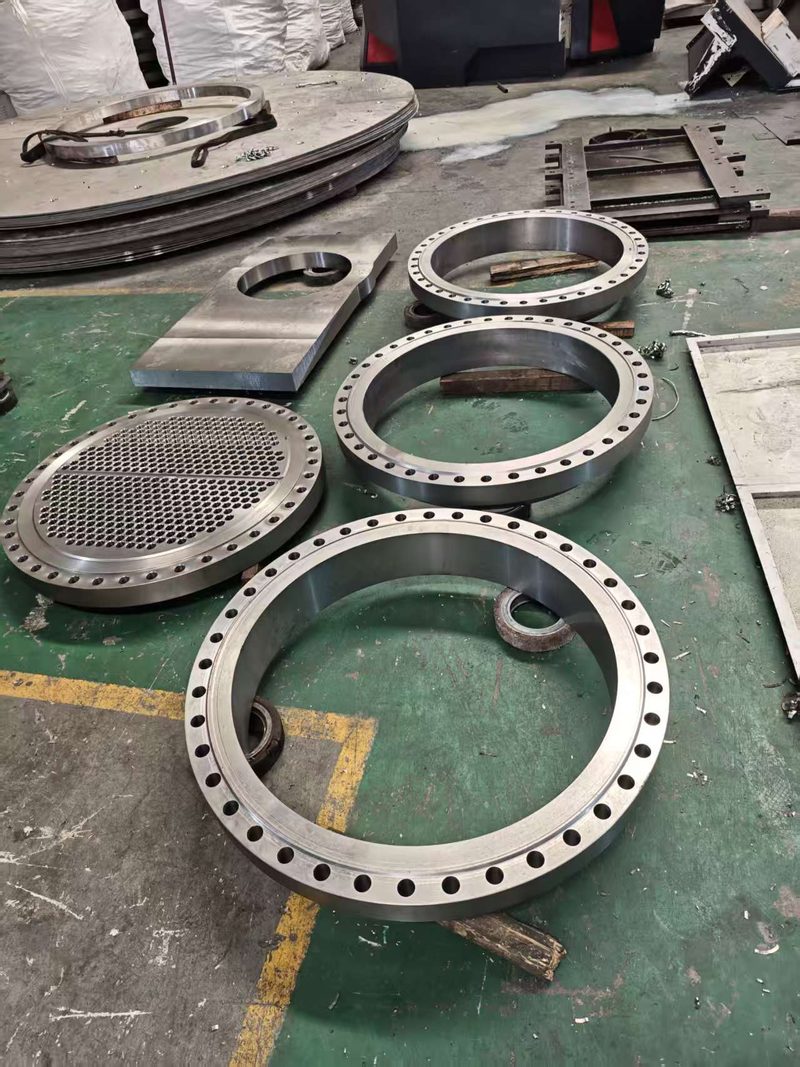
Ni-Span C902 (UNS N09902) is a nickel-iron-chromium alloy with a constant elastic modulus over a wide temperature range (-50°C to +80°C). The alloy is precipitation-hardenable through titanium and aluminum additions, making it ideal for precision springs and resonators.
The chemical composition of Ni-Span C902 is carefully controlled to achieve its unique combination of properties and performance characteristics.
| Element | Min % | Max % |
|---|---|---|
| Nickel (Ni) | 41.0 | 43.5 |
| Iron (Fe) | Balance | Balance |
| Chromium (Cr) | 4.90 | 5.40 |
| Titanium (Ti) | 2.20 | 2.60 |
| Aluminum (Al) | 0.30 | 0.60 |
| Carbon (C) | — | 0.06 |
| Manganese (Mn) | — | 0.80 |
| Silicon (Si) | — | 1.00 |
The mechanical properties of Ni-Span C902 vary depending on product form and heat treatment condition. The data below represents typical values for solution-annealed material.
| Property | Value |
|---|---|
| Tensile Strength | 1240 MPa |
| Yield Strength (0.2% offset) | 965 MPa |
| Elongation in 2 inches | 15% |
| Density | 8.07 g/cm3 |
| Melting Point | 1380 °C |
| Max Service Temperature | 450 °C |
Good resistance to atmospheric corrosion. The chromium content provides moderate resistance to oxidizing environments. For severely corrosive environments, protective coatings may be required.
The unique combination of properties makes Ni-Span C902 suitable for a wide range of demanding applications:
Hangbo Alloy Group manufactures and supplies Ni-Span C902 in the following product forms, conforming to ASTM, AMS, and ASME specifications:
| Standard | Description |
|---|---|
| ASTM B478 | Thermostat Metals |
| AMS 5221 | Strip |
| AMS 5225 | Wire |
| ASTM F30 | Controlled Expansion Alloy |
| DIN 17745 | German Standard |
| SAE AMS 5221 | Aerospace Material |
The defining property of Ni-Span C902 — a Young's modulus that stays near 179 GPa between roughly -50 °C and +80 °C — is produced by a two-step heat treatment, not by the chemistry alone. Getting the cycle wrong is the most common reason a batch drifts out of tolerance.
| Step | Practice | Purpose |
|---|---|---|
| Solution anneal | 980 °C, rapid cool | Dissolve Ti/Al, soften for forming |
| Cold work | 20–50 % reduction | Introduce dislocations for ageing |
| Age (standard) | 620–650 °C, 4 h, air cool | Precipitate γ′ Ni₃(Ti,Al) |
| Age (fine tune) | ±20 °C on ageing temperature | Trim thermoelastic coefficient to spec |
Forming must be completed in the solution-annealed condition; ageing after final forming locks in both the spring set and the modulus. See our guide to precipitation hardening of nickel superalloys for the metallurgy behind the γ′ response.
Ordinary spring steels lose stiffness as temperature rises, so a device calibrated at 20 °C drifts at 50 °C. Ni-Span C902 is age-hardened so that the elastic modulus is nearly flat from -50 °C to +80 °C, keeping instruments and resonators accurate without temperature compensation.
Not in the resonant or load-sensing section. The heat-affected zone reverts the carefully set modulus. Where joining is unavoidable, place the weld outside the active element or use mechanical clamping; see our machining and fabrication guidance for alternatives.
Precision strip and foil, cold-rolled bar and wire, in both solution-annealed and aged conditions, with modulus and thermoelastic coefficient certified per heat.
UNS N09902: 41-43.5% nickel, 4.9-5.4% chromium, 2.2-2.6% titanium and 0.3-0.6% aluminum, iron balance, precipitation-hardened.
Tensile about 1240 MPa, yield about 965 MPa and 15% elongation after age hardening.
The elastic modulus stays nearly constant from -50 °C to +80 °C, which is why it suits precision instruments and resonators.
About 450 °C, limited by the stability of the aged condition.
Precision springs, tuning forks, resonators, pressure-sensing diaphragms and other devices needing temperature-stable elasticity.
Solution treatment followed by age hardening to set the constant-modulus behaviour; the exact cycle controls modulus and thermoelastic coefficient.
Hangbo Alloy Group maintains extensive inventory of Ni-Span C902 in all standard product forms. We can provide mill test certificates, third-party inspection reports (SGS, TUV), and custom processing services.
For quotations, material certifications, or technical consultation, contact our sales team or call +86 166 2109 2936. We typically respond within 10 minutes.
Request a quotation for Ni-Span C902 round bars, tubes, plates, or custom products. We stock standard sizes and accept custom orders.