
Overview
Nimonic 80A (Russian designation ХН77ТЮР or ЭИ437Б, Chinese designation GH4033) is a precipitation-hardenable nickel-chromium superalloy strengthened by gamma prime (γ') phase — Ni₃(Al,Ti). With excellent creep resistance and oxidation resistance up to 750°C, it is widely used in gas turbine blades, discs, and high-temperature fasteners in aerospace and industrial gas turbine applications.
Chemical Composition
| Element | Nimonic 80A / ХН77ТЮР |
|---|---|
| Nickel (Ni) | Balance (~77%) |
| Chromium (Cr) | 19.0–22.0% |
| Titanium (Ti) | 2.0–2.8% |
| Aluminum (Al) | 0.6–1.0% |
| Carbon (C) | ≤ 0.07% |
| Manganese (Mn) | ≤ 0.4% |
| Silicon (Si) | ≤ 0.6% |
| Boron (B) | ≤ 0.01% |
| Cerium (Ce) | ≤ 0.01% |
Titanium and aluminum are the key precipitation-hardening elements, forming the coherent γ' strengthening phase Ni₃(Al,Ti) during aging treatment.
Mechanical Properties
| Property | 20°C | 700°C |
|---|---|---|
| Tensile Strength (Rm) | ≥ 900 MPa | ≥ 600 MPa |
| Yield Strength (Rp0.2) | ≥ 650 MPa | 400–450 MPa |
| Elongation (A) | ≥ 15% | ≥ 8% |
| Density | 8.19 g/cm³ | |
Creep Properties
- 100-hour creep rupture strength at 700°C: σ₁₀₀ ≈ 200–250 MPa
- 10,000-hour creep rupture strength at 700°C: σ₁₀₀₀₀ ≈ 120–150 MPa
- 100-hour rupture strength at 750°C: σ₁₀₀ ≈ 150 MPa
These properties limit continuous service above 750°C. For higher temperature requirements, Nimonic 90 or Inconel 718 should be considered.
Heat Treatment (Precipitation Hardening)
- Solution Treatment: 1080±10°C, hold 8 hours, air cool
- First Stage Aging: 750±10°C, hold 16 hours, air cool
- Second Stage Aging: 700±10°C, hold 16 hours, air cool
The two-stage aging process optimizes the size and distribution of γ' precipitates for maximum creep resistance.
International Standards
| Standard | Designation |
|---|---|
| GOST (Russia) | ХН77ТЮР / ЭИ437Б |
| GB (China) | GH4033 |
| ASTM | B637 (bar/forging) |
| British Standard | Nimonic 80A |
| DIN/EN | 2.4631 |
Aerospace & Gas Turbine Applications
- Low-pressure turbine blades — service to 750°C
- Turbine discs — compressor and turbine rotor components
- Sealing ring elements — hot section static seals
- Fasteners — bolts, studs for temperatures up to 700°C
- Combustion chamber components
- Nozzle guide vanes
Comparison with Nimonic 80A
ХН77ТЮР and Nimonic 80A are essentially identical in chemical composition and mechanical properties. Minor differences: Nimonic 80A may have tighter control on boron (B ≤ 0.008%) and may include zirconium (Zr ≤ 0.05%). For practical purposes, these grades are interchangeable.
Forging, Machining and Heat-Treatment Practice
ХН77ТЮР (ЭИ437Б) is the Russian equivalent of Nimonic 80A and is processed on essentially the same route. In practice, most property shortfalls trace back to the ageing cycle rather than to the melt.
| Step | Practice |
|---|---|
| Hot work | 1150–1000 °C, finish above 1000 °C |
| Solution treat | 1080 °C, 8 h, air cool |
| Age | 700–750 °C, 16 h, air cool |
| Typical result | ≥ 1000 MPa tensile, ≥ 620 MPa yield at 20 °C |
- Machine in the solution-treated condition where possible — the aged alloy is abrasive and work-hardens rapidly.
- Use rigid setups and sharp carbide tools; avoid dwelling, which work-hardens the surface and accelerates tool wear.
- Weldability is limited. For turbine blade repairs use a matching γ′-forming filler and re-age the whole component afterwards.
- Details of the precipitation sequence are covered in our age-hardening guide.
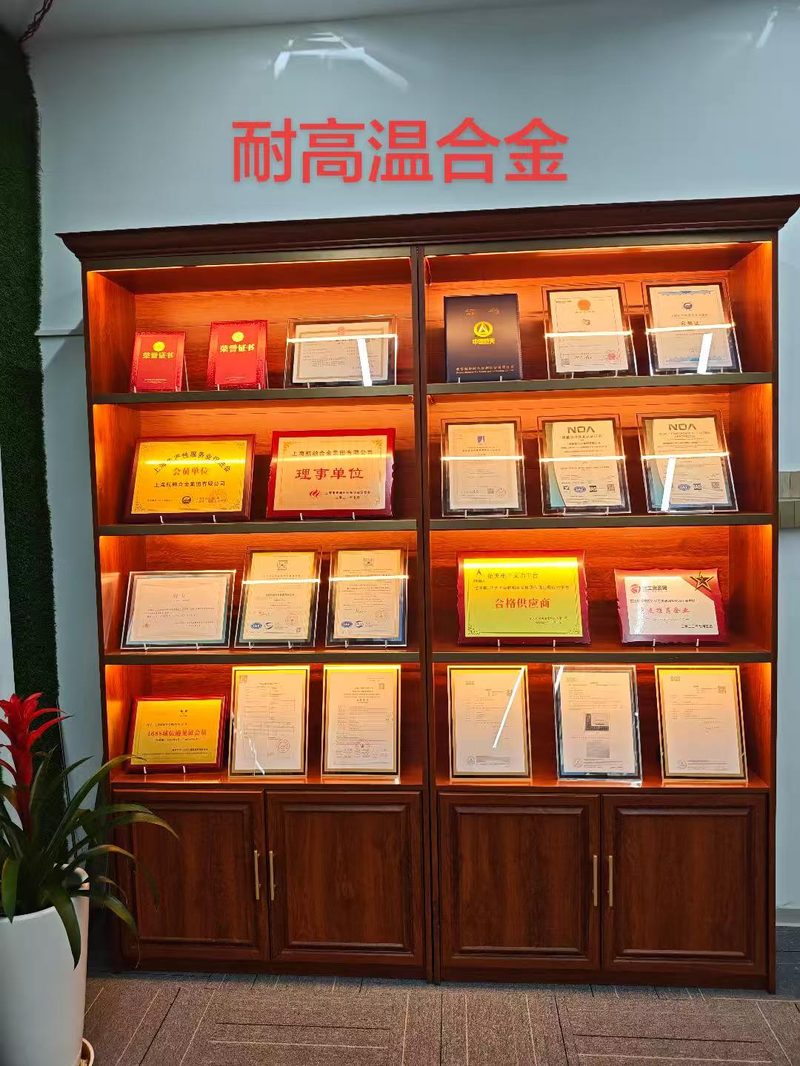
Quality Assurance and Certification
- Supplied to GOST 5632 and Russian aerospace specifications, or to AMS / BS equivalents where required.
- Every heat is delivered with EN 10204 3.1 certification: chemistry, room-temperature tensile, hardness and grain size.
- Stress-rupture testing at 750 °C can be added for critical rotating parts.
- Ultrasonic and dye-penetrant inspection available to customer specification.
Frequently Asked Questions
Is ХН77ТЮР truly interchangeable with Nimonic 80A?
For most engineering purposes yes — the composition windows overlap closely and the heat treatment is the same. Always confirm the acceptance standard, because Russian specifications differ from AMS/BS in the way they specify proof stress and rupture testing.
What is the difference between ЭИ437Б and ЭИ437БУ?
The У designation indicates a refined melting route (vacuum-arc or electroslag remelt) with tighter control of tramp elements, giving improved fatigue life for rotating parts.
Can it be supplied in bar and forging stock?
Yes — hot-rolled and forged round bar, disc forgings and section, in solution-treated or fully aged condition, with full traceability from melt to finished part.