
Hangbo Alloy Group
Shanghai · Est. 2012
A nickel alloy can pass every certificate check and still fail by intergranular attack if its grain boundaries were sensitized by heating. This guide explains sensitization, why Hastelloy C-276's very low carbon and silicon were designed to prevent it, and how ASTM G28 proves a heat is not susceptible — with the specifications and clauses that control the risk.
A nickel alloy can pass every composition and tensile check on its certificate and still fail by intergranular attack, because the failure is not about chemistry — it is about what happened to the grain boundaries during heating. Sensitization is the precipitation of carbides and intermetallic phases at the grain boundaries, which strips the adjacent metal of chromium and molybdenum and leaves it defenceless against corrosion along the grain edges. The result is a part that looks sound, passes mechanical tests, and then dissolves preferentially at its grain boundaries in service.
This guide is written for corrosion engineers, welding engineers and QA specialists who specify nickel-rich, chromium-bearing alloys such as Hastelloy C-276, C-22 and the Inconel family. It explains what sensitization is, why the very low carbon and silicon of C-276 exist to prevent it, and how ASTM G28 — the intergranular attack test — is used to prove a heat is not susceptible. Every statement ties to the published ASTM definitions; where a value is set by a specification we attribute it rather than invent it.
We write this as the manufacturer. Hangbo Alloy Group in Shanghai produces Hastelloy C-276 and related Ni-Cr-Mo alloys and reports the carbon and silicon of every heat on the certificate, because those two elements are the lever that controls sensitization risk. Hastelloy, Inconel and Incoloy are third-party trademarks defined by their UNS numbers and the applicable ASTM or EN specifications; the alloy is the standard, not the brand.
For the broader failure picture, our pillar guide on nickel alloy procurement pitfalls covers documentation and melting-route verification, and our Hastelloy C-276 composition guide gives the actual element limits.
Sensitization is a microstructural change, not a composition change. When a nickel-rich, chromium-bearing alloy is held or slowly cooled through a susceptible temperature window — broadly the range where chromium carbides form, roughly 550 to 850°C (1000 to 1560°F) — carbon diffuses to the grain boundaries and precipitates as chromium-rich carbides. The metal immediately next to each boundary is left depleted in chromium, and in molybdenum-containing alloys the boundary region can also lose molybdenum-rich phases.
That depleted zone no longer matches the bulk corrosion resistance of the alloy. In a corrosive environment, attack proceeds along the grain boundaries — intergranular attack (IGA) — while the grain interiors remain untouched. Macroscopically the metal may look unchanged or show a network of fine cracks; microscopically the boundaries have been eaten away. The damage is usually invisible until the component loses strength or leaks.
Hastelloy C-276 (UNS N10276) is the classic example of a sensitization-resistant Ni-Cr-Mo alloy, and its chemistry is deliberately built to avoid the mechanism above. The two governing elements are carbon and silicon.
| Element | C-276 limit (typical ASTM) | Role in sensitization |
|---|---|---|
| Carbon | 0.010 max | Low carbon leaves little to precipitate as grain-boundary carbides, so chromium depletion is minimal |
| Silicon | 0.08 max | Low silicon suppresses the formation of grain-boundary intermetallic phases and improves weld-heat-affected-zone resistance |
| Chromium | 14.5 – 16.5 | Provides the matrix corrosion resistance the boundary must not lose |
| Molybdenum | 15.0 – 17.0 | Provides pitting and crevice resistance, also affected by boundary precipitation |
| Tungsten | 3.0 – 4.5 | Reinforces reducing-environment resistance alongside molybdenum |
Because carbon is capped at 0.010 percent and silicon at 0.08 percent, a properly made heat of C-276 has very little driving force to sensitize during welding or a brief heat-treatment excursion. The design intent is that the alloy can be welded and put into service, or given a standard solution anneal, without the grain-boundary depletion that ruins lesser chemistries. This is also why a certificate that omits carbon or silicon, or reports them only as “in spec”, is inadequate for this grade — those two numbers are the whole story.
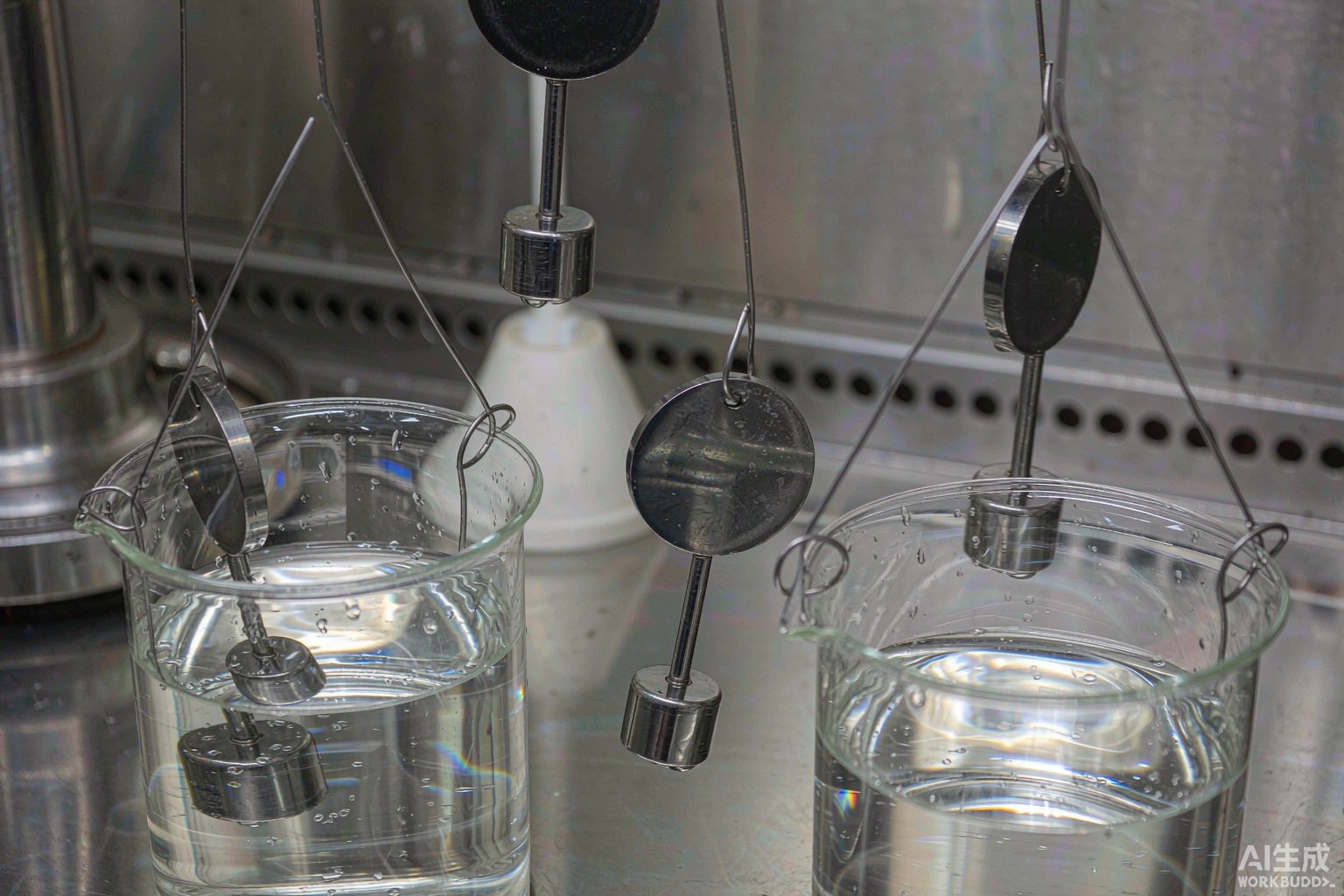
ASTM G28, “Standard Test Methods for Detecting Susceptibility to Intergranular Attack in Wrought, Nickel-Rich, Chromium-Bearing Alloys,” is the accepted way to demonstrate that a heat is not sensitized. It contains two practices, chosen by the referencing material specification.
| Practice | Test environment | What it reveals | Typical use |
|---|---|---|---|
| Practice A | Boiling ferric sulfate – sulfuric acid, for a defined exposure | Weight loss from intergranular attack; the practice most applied to Ni-Cr-Mo alloys such as C-276 | Referenced by C-276 product specs (e.g. ASTM B575 plate, B622 tube, B574 bar/forgings) |
| Practice B | Boiling nitric acid, for a defined exposure | Weight loss where chromium depletion is the governing mechanism | Applied where the referencing specification calls for it |
In both practices susceptibility is judged primarily by weight loss per unit area over the exposure, not by a pass/fail visual alone. The maximum permissible weight loss is set by the applicable product specification — for C-276 it is the limit written into ASTM B575, B622 or B574 as they reference G28 — and is expressed in grams per unit area over the test period. We do not quote a single number here because the limit belongs to the current edition of the referencing specification; confirm it against the standard you order to.
The practical point for a buyer is that G28 is a verification tool, not a routine receiving check on every bar. It is the evidence a responsible mill uses to qualify its heat-treatment and welding procedure, and the test a buyer can call for when sensitization is a credible risk in the service environment.
The reason C-276 is valued is that its low carbon and silicon let it avoid sensitization through the normal fabrications it sees. Two situations matter:
Our welding guide covers the heat-input and interpass controls that keep the heat-affected zone within specification, and the C-276 vs Inconel 625 comparison shows where C-276’s chemistry gives it the edge.
The controls are straightforward and should be written, not assumed. The table maps each risk to a clause.
| Risk | Specification clause | Verification |
|---|---|---|
| High carbon / silicon | Require reported C and Si within the C-276 limits; not just “in spec” | Reported composition on the certificate |
| Poor anneal | Require the standard solution anneal and rapid quench per the product spec | Heat-treatment record with furnace and chart |
| Sensitized weld | Control heat input and interpass temperature in the welding procedure | Welding procedure qualification |
| Undetected susceptibility | Call for ASTM G28 (practice per the product spec) where risk is credible | G28 test report with weight loss vs limit |
| Wrong grade | Specify UNS N10276 and the grade-specific ASTM spec | UNS and spec named on certificate |
Our own route keeps the grain boundaries clean: we start with a virgin prime charge, refine it by vacuum induction melting with electroslag or vacuum arc remelting, fully descale before forming, work and then apply the standard solution anneal specified for the grade, finish, and verify composition, mechanical, ultrasonic or penetrant, dimensional, marking and packing on every heat — reporting carbon and silicon so the susceptibility risk is visible on the certificate.
You do not need a metallography lab to stay safe; you need the right documents and one targeted test where the environment warrants it.
The economic argument for testing is straightforward. A single G28 sample per heat costs a fraction of the material value and takes days, while a sensitized component in service can cause a leak, a forced shutdown, or a weld repair in a confined or hazardous space that costs orders of magnitude more. For this reason the test is most valuable precisely where the environment is aggressive and the consequence of failure is high: hot concentrated acids, flue-gas desulfurisation, and any weld that cannot be easily removed for inspection. Specifying the test up front also changes supplier behaviour, because a mill that knows the heat will be checked has no incentive to trim the carbon or silicon or to short the anneal.
Use this table as a starting point. Always confirm the latest revision.
| Subject | Reference | What it controls |
|---|---|---|
| Intergranular attack test | ASTM G28 (Practices A and B) | Detects sensitization in nickel-rich Cr-bearing alloys |
| C-276 plate, sheet, strip | ASTM B575 | Chemistry, condition, references G28 |
| C-276 seamless tube and pipe | ASTM B622 | Chemistry, condition, references G28 |
| C-276 bar, rod, forging | ASTM B574, B564 | Chemistry, condition, references G28 |
| Composition detail | Our Hastelloy C-276 composition guide | Element limits including C and Si |
| Mill evidence | Our test reports and traceability process | What a complete certificate contains |
This article is technical guidance, not a substitute for the applicable ASTM specification or a metallurgical opinion for your specific service. Standards change; always verify against the current edition you order to.
Sensitization is the precipitation of chromium-rich carbides and sometimes intermetallic phases at the grain boundaries when the alloy is held or slowly cooled through a susceptible temperature range. The metal next to each boundary loses chromium and molybdenum, so corrosion then attacks preferentially along the grain boundaries — intergranular attack — even though the bulk chemistry is unchanged.
Because its chemistry is deliberately limited: carbon is capped at 0.010 percent and silicon at 0.08 percent, which removes the elements that drive grain-boundary carbide and intermetallic precipitation. With little carbon to precipitate, there is little chromium depletion at the boundaries, so the alloy resists intergranular attack through normal welding and heat treatment.
It is the standard method for detecting susceptibility to intergranular attack in wrought, nickel-rich, chromium-bearing alloys. Practice A uses a boiling ferric sulfate – sulfuric acid exposure and is the practice most applied to Ni-Cr-Mo alloys such as C-276; Practice B uses boiling nitric acid. Susceptibility is judged mainly by weight loss per unit area against the limit set by the referencing product specification.
Generally no, for corrosion service, because its very low carbon and silicon give it resistance to sensitization in the weld heat-affected zone, so it is commonly used in the as-welded condition. The welding procedure should still control heat input and interpass temperature, and any required post-weld treatment follows the applicable code or project specification.
Require the measured carbon and silicon on the certificate, confirm the standard solution anneal with rapid quench, and where sensitization is a credible risk call for ASTM G28 from an accredited laboratory and compare the weight loss to the limit in the referencing specification. Microscopic examination of a cross-section will show grain-boundary attack if it is present.
For this grade, not by itself. Carbon and silicon are the elements that control sensitization, so you need their actual measured values, not a compliance statement, plus the heat-treatment condition and the UNS number. A certificate that omits C and Si, or reports them only as conforming, hides the exact data that proves the alloy resists intergranular attack.
If a heat or weld is sensitized, a proper solution anneal followed by rapid quench can redissolve the boundary precipitates and restore corrosion resistance, provided the material is within chemistry and has not been excessively worked. Whether repair is permitted depends on the component, the code and the service; confirm with the applicable specification and a qualified metallurgist.
If you need to confirm a C-276 or other Ni-Cr-Mo heat is not sensitized, want the carbon and silicon controls written into your specification, or need help interpreting a G28 result, send us the grade, product form, dimensions, quantity and service environment. We will recommend the right test and heat-treatment requirement, confirm the alloy fits the service, and quote our own virgin-material, double-melted production with reported carbon and silicon and full heat-to-piece traceability. Typical response time is ten minutes, and we ship worldwide from Shanghai.
Email: serena@hangboalloy.com
Phone: +86 166 2109 2936
WhatsApp: +86 166 2109 2936
Send us the grade, product form, dimensions, quantity and service environment, and any G28 or certificate you already hold. We will recommend the right test and heat-treatment requirement, confirm the alloy fits the service, and quote our own virgin-material, double-melted production with reported carbon and silicon and full heat-to-piece traceability.