
Hangbo Alloy Group
Shanghai · Est. 2012
Commercially pure wrought nickel in UNS N02200 and low-carbon UNS N02201 — plate, seamless tube, bar, wire and forgings for caustic evaporation, food processing, synthetic fibre and electronic applications.
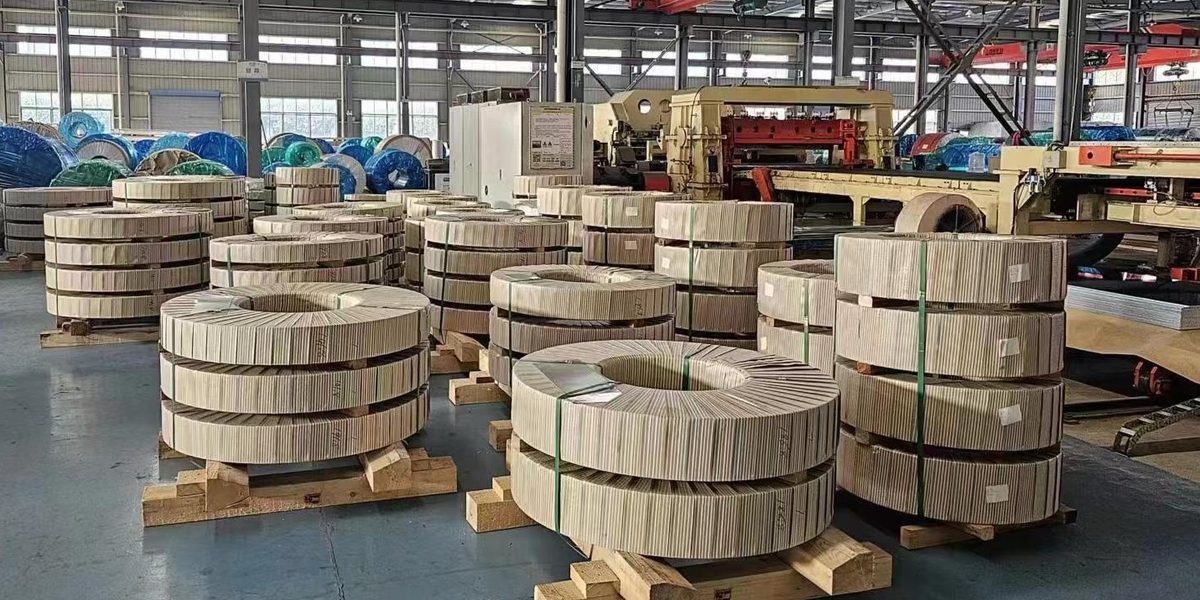
Nickel 200 (UNS N02200) and Nickel 201 (UNS N02201) are wrought commercially pure nickel grades containing a minimum of 99.0% nickel. The two grades share the same corrosion and mechanical profile at ambient temperature; the difference is carbon. Nickel 200 permits up to 0.15% carbon, while Nickel 201 is restricted to 0.02% maximum specifically so that the material can be used above approximately 315 °C without the precipitation of graphite at grain boundaries that embrittles the higher-carbon grade over time.
This is the material of choice for handling caustic soda at any concentration and temperature, because nickel forms a stable protective film in sodium hydroxide that stainless steel cannot match. Caustic evaporator tube, rayon and synthetic fibre spinnerets, food processing and fat hydrolysis vessels, salt production equipment, and electronic components that depend on nickel's magnetic and thermoelectric properties are all standard applications. Nickel 200 is also widely used as a plating anode and as a substrate for chemical process equipment where product purity matters more than strength.
Hangbo Alloy supplies both grades from the same mill source, so a fabricator can order Nickel 201 for the high-temperature zone of a caustic evaporator and Nickel 200 for the ambient pipework without changing melt documentation discipline. Guidance on grade selection is covered in our note on Nickel 200 vs Nickel 201.
Both grades are covered by a mature set of ASTM specifications and we stock or schedule against each:
Wire and welding wire are available to AWS A5.14 ERNi-1 for joining nickel to itself and for overlay on steel. Typical room-temperature mechanical properties for annealed Nickel 200 are 380 MPa minimum tensile strength, 105 MPa minimum yield and 40% minimum elongation; Nickel 201 is slightly lower in strength due to its finer carbon control.
The defining property of commercially pure nickel is its resistance to caustic alkalis. Nickel 200 and 201 are effectively unattacked by sodium and potassium hydroxide at all concentrations up to and including the molten state, which is why caustic evaporation and fusion vessels are traditionally nickel-clad or solid nickel. The alloy also resists neutral and alkaline salt solutions, dry chlorine and hydrogen chloride at moderate temperature, and organic acids under non-oxidising conditions.
It is not, however, an oxidising-acid material. Nitric acid, ferric chloride, cupric chloride and aerated ammoniacal solutions attack it rapidly, and it is not intended for oxidising chloride service. Where both oxidising and caustic media are possible, a chromium-bearing alloy is the correct specification — see our alloy selection guide for the boundary conditions.
Fabrication is straightforward. Both grades anneal at 700–925 °C depending on required softness, hot work between 650 °C and 1230 °C, and weld readily by GTAW, GMAW, and resistance methods using ERNi-1 filler. Because the material is soft and gummy, machining calls for sharp tools, generous rake and light but continuous cuts; free-machining sulphur-bearing cutting fluids should be avoided. Forming is excellent, with a bend radius close to zero in the annealed condition. Our precision strip programme covers the thin-gauge end for electronic and battery tab applications, and wire rod and coil stock covers the drawing route.
Each delivery is accompanied by a certificate stating the ASTM specification and edition, the grade, the heat number, the temper or annealing condition, and measured chemical and mechanical results. Chemical verification is by optical emission spectrometry with nickel-base calibration, with carbon determined by combustion analysis — critical for Nickel 201, where the 0.02% limit is the whole point of the grade.
Non-destructive testing is available to the level the duty requires: eddy current or hydrostatic testing to the supplementary requirements of ASTM B829 for tube and pipe, ultrasonic testing to ASME Section V for plate and bar, and dye penetrant on finished machined surfaces. Surface finish options include as-rolled, descaled and pickled, ground, and bright annealed, with roughness measured and reported where a product-contact surface is involved.
Hangbo Alloy holds ISO 9001:2015, GJB 9001C and GOST R certification, and third-party inspection through BV, SGS, TÜV, DNV or Lloyd's Register can be arranged on the purchase order. Heat identification is maintained through cutting, and off-cuts are separately identified so a fabricator can still trace every piece in a finished vessel.
For food and pharmaceutical contact surfaces we can supply additional documentation on surface finish and cleaning, and material is packed with interleaved protection and VCI paper in export seaworthy cases to prevent handling damage and contamination in transit.
Specify Nickel 201 for any service above approximately 315 °C. Nickel 200 contains up to 0.15% carbon, which precipitates as graphite at grain boundaries at elevated temperature and progressively embrittles the material. Nickel 201, limited to 0.02% carbon maximum, avoids that mechanism and is the standard choice for caustic evaporators, fusion pots and high-temperature salt handling.
Rod and bar are covered by ASTM B160, seamless pipe and tube by ASTM B161, plate sheet and strip by ASTM B162, seamless condenser and heat exchanger tube by ASTM B163, welded pipe by ASTM B725, welded tube by ASTM B730, forgings by ASTM B564 and wrought fittings by ASTM B366.
It is excellent in caustic alkalis and in neutral or alkaline salt solutions, but it is not suitable for oxidising acids such as nitric acid or for oxidising chloride media like ferric chloride. For reducing acid duty a molybdenum-bearing grade such as Hastelloy B-3 is normally specified, and for mixed acid duty a chromium-bearing grade such as Hastelloy C22.
Send us your grade, diameter, length, quantity, and any special requirements. Our team responds within 10 minutes during business hours.