
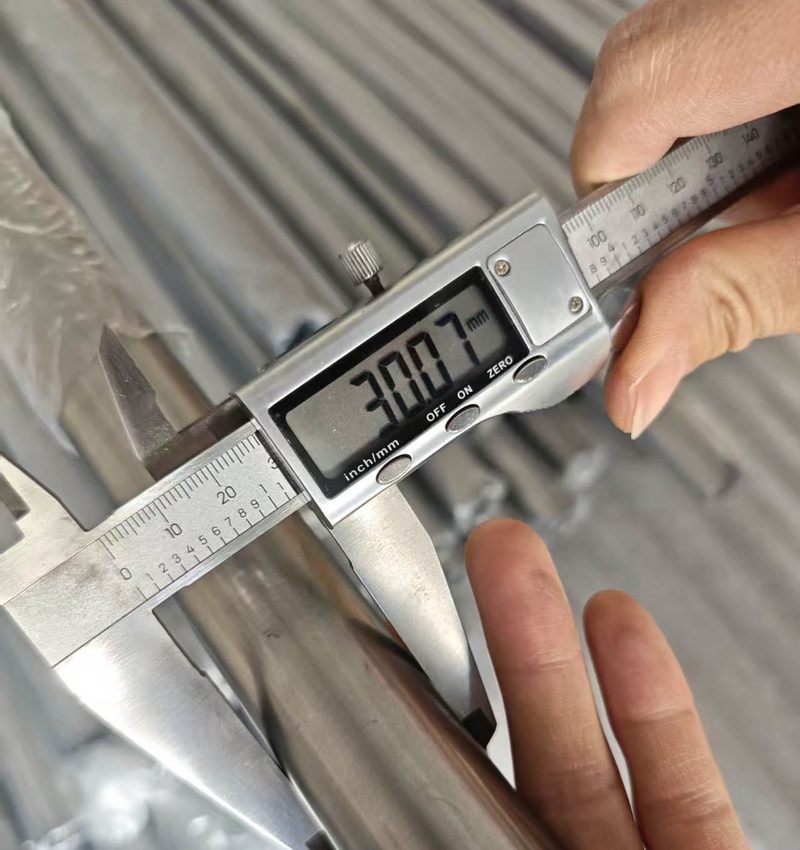
Overview
AISI 310S (Russian designation 20Х23Н18, Chinese designation 16Cr25Ni20Si2, EN 1.4845) is an austenitic heat-resistant stainless steel with high chromium (~25%) and nickel (~20%) content. It is the industry standard material for furnace equipment and high-temperature components operating continuously to 1100°C in oxidizing and mildly oxidizing atmospheres. The low carbon variant (≤ 0.08%) significantly reduces susceptibility to carbide precipitation and intergranular corrosion during high-temperature service.
Chemical Composition (ASTM A240)
| Element | AISI 310S (UNS S31008) |
|---|---|
| Carbon (C) | ≤ 0.08% |
| Chromium (Cr) | 24.0–26.0% |
| Nickel (Ni) | 19.0–22.0% |
| Manganese (Mn) | ≤ 2.00% |
| Silicon (Si) | ≤ 1.50% |
| Phosphorus (P) | ≤ 0.045% |
| Sulfur (S) | ≤ 0.030% |
| Density | 7.98 g/cm³ |
The low carbon content (≤ 0.08%) versus standard AISI 310 (C ≤ 0.25%) is the critical differentiator, dramatically reducing chromium carbide precipitation during welding and high-temperature service.
High-Temperature Oxidation Resistance
In oxidizing air environments, AISI 310S forms a dense, adherent chromium oxide (Cr₂O₃) protective scale that provides excellent oxidation resistance:
- Continuous service: Up to 1100°C in oxidizing air
- Intermittent cycling: Recommended upper limit of 1050°C to avoid thermal fatigue spallation
- Sulfur-containing environments (H₂S, SO₂): Maximum temperature derated to ~1000°C due to nickel sulfide attack
- Carburizing atmospheres: Moderate resistance; for severe carburization, nickel-based alloys are preferred
Physical Properties
| Property | Value |
|---|---|
| Density | 7.98 g/cm³ |
| Melting Range | 1370–1400°C |
| Thermal Conductivity (100°C) | 14.2 W/m·K |
| Coefficient of Thermal Expansion (20–1000°C) | 18.5 × 10⁻⁶ /°C |
Heat Treatment
AISI 310S is a solid-solution alloy — it does not precipitation-harden. The standard heat treatment is solution annealing:
- Temperature: 1040–1150°C
- Holding time: Approximately 1 hour per 25 mm of thickness
- Cooling: Water quench or rapid air cool
Purpose: Dissolve chromium carbides (Cr₂₃C₆) formed during welding or service, restoring full corrosion resistance. For welded critical structures, a stabilizing anneal at 870–925°C can be applied.
International Standards
| Standard | Designation |
|---|---|
| GOST (Russia) | 20Х23Н18 (GOST 5632-2014) |
| GB (China) | 16Cr25Ni20Si2 |
| AISI (USA) | 310S |
| UNS | S31008 |
| EN/DIN | 1.4845 (X8CrNi25-21) |
| ASTM (Product) | A240 (sheet), A312 (tube), A276 (bar), A182 (forgings) |
Weldability
AISI 310S welds well using standard methods (TIG, MIG, SMAW, PAW). Recommended filler metals: E310-15/E310-16 electrodes (SMAW), ER310 wire (TIG/MIG). Key considerations:
- High Cr/Ni content causes greater thermal expansion — plan for distortion control
- HAZ carbide precipitation possible — post-weld anneal recommended for critical applications
- Not prone to hot cracking with proper filler selection
- Welding to carbon steel not recommended due to thermal expansion mismatch
Furnace & Industrial Applications
- Petrochemical furnace tubes — radiant and convection sections
- Heat exchanger components — high-temperature shell and tube
- Combustion chamber liners
- Conveyor belts and rollers for continuous furnaces
- Muffles and retorts for heat treatment furnaces
- Industrial oven components
Cost Comparison
Approximate pricing (2024–2025):
- Sheet 2–5 mm: $4.5–7.0/kg
- Seamless tube: $8–15/kg
- Bar: $5–9/kg
- Forgings: $10–18/kg
AISI 310S costs approximately 1.3–1.8 times more than AISI 304 due to elevated Cr (25%) and Ni (20%). Compared to nickel-based alternatives like Inconel 601 ($15–25/kg) or RA330 ($8–12/kg), AISI 310S is the most economical choice for oxidizing service to 1100°C.
Fabrication, Welding and Machining Guidance
310S is forgiving to fabricate for a heat-resistant grade, but a few specifics determine whether a fixture survives its first thermal cycle.
| Operation | Recommended practice |
|---|---|
| Hot forming | 1150–900 °C, finish above 900 °C |
| Solution anneal | 1040–1120 °C, rapid cool |
| Welding (GTAW/GMAW) | ER310 filler for matching oxidation resistance |
| Dissimilar joints | ERNiCr-3 (Inconel 82) for carbon steel transitions |
| Machining | Low speed, sharp carbide, avoid work hardening |
| Embrittlement range | Avoid 550–850 °C (sigma phase) |
- Fully anneal after heavy cold work to restore ductility before the part enters service.
- Avoid prolonged service in the 550–850 °C band — sigma precipitation causes room-temperature embrittlement.
- Clean off all shop contaminants before first heating; sulphur and lead cause catastrophic oxidation attack.
For more demanding cyclic duty, see our comparison of heat-resistant alloy options.
Frequently Asked Questions
What is the maximum continuous service temperature for 310S?
About 1150 °C in air for light loads, and around 1035 °C for load-bearing components. Above this, oxidation and scale spallation accelerate rapidly.
How does 310S compare with Inconel 601?
310S is considerably cheaper and adequate for many furnace applications up to about 1000 °C. 601 lasts several times longer under thermal cycling because its alumina-rich scale resists spalling; above 1100 °C, 601 is usually the better value.
Is 310S magnetic?
No, in the annealed condition it is fully austenitic and non-magnetic. Cold work can induce slight magnetic response — the same behaviour as other austenitic stainless grades.