
Hangbo Alloy Group
Shanghai · Est. 2012
Inconel 601, AISI 310S and RA330 are the three alloys most quoted for furnace fixtures, but they are not interchangeable. This guide compares their real temperature ceilings, oxidation, thermal-shock and carburisation behaviour, and the service conditions where each — from a 1200°C tray to a cyclic carburising basket — is the right choice.
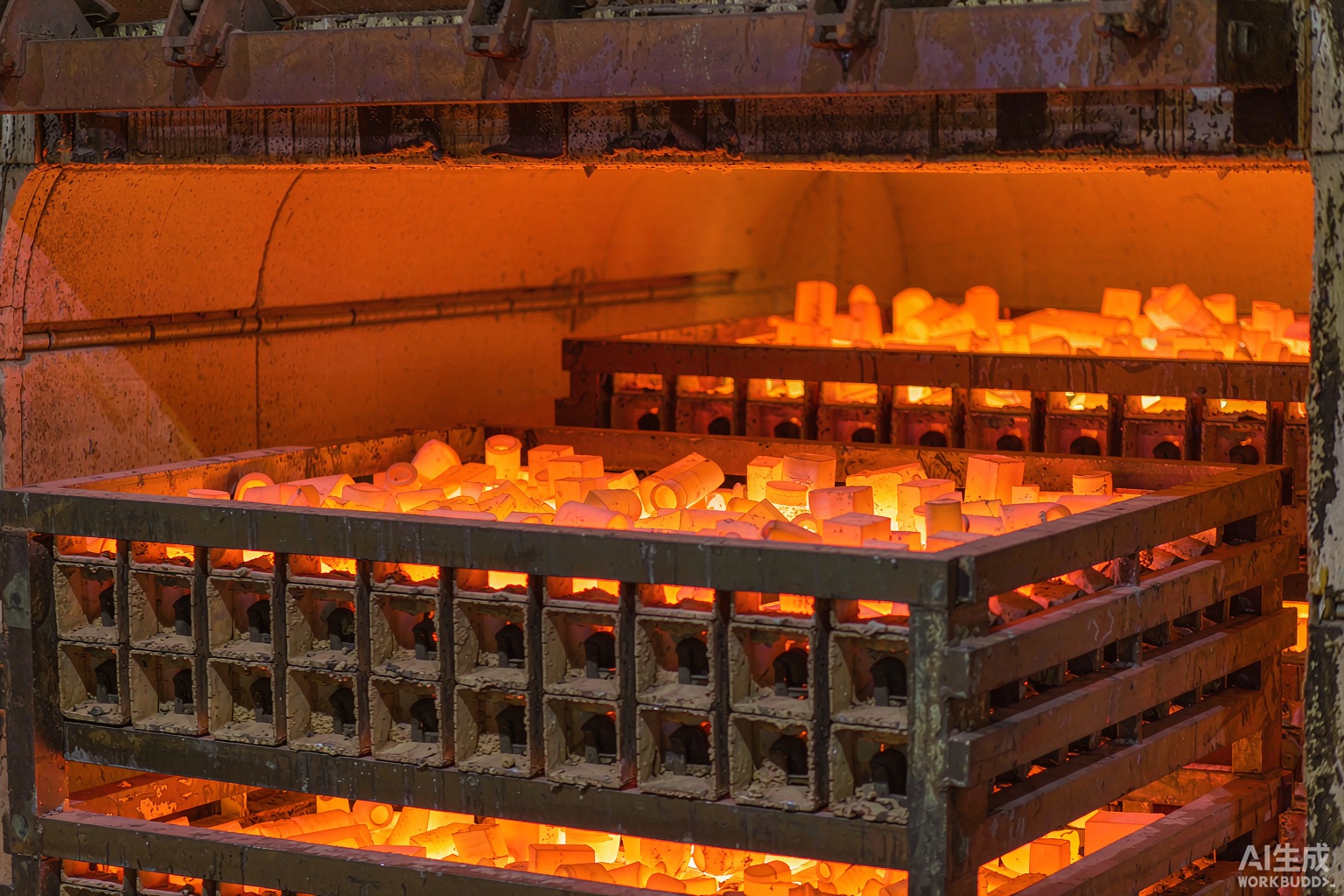
Choosing the alloy for furnace fixtures — trays, baskets, radiant tubes, muffles, supports and belts — is a balance of temperature ceiling, resistance to the furnace atmosphere, and cost. Three materials dominate the discussion: Inconel 601, AISI 310S stainless steel, and RA330. They are often quoted against each other, but they are not interchangeable, and the wrong pick either fails early in a hot, cyclic furnace or wastes budget on capability you do not need.
This guide is written for furnace designers, heat-treatment engineers and procurement buyers who specify fixture materials. It compares the three alloys’ real temperature ceilings, their behaviour under oxidation, carburisation and thermal shock, and the service conditions where each is the right answer. The temperature figures are the commonly cited continuous-service ceilings and should be confirmed against the applicable ASTM or EN specification and your furnace’s actual atmosphere.
We write this as a manufacturer of Inconel 601 and related high-temperature alloys. Hangbo Alloy Group in Shanghai produces these grades in bar, plate, seamless tube and forging form and reports the composition and condition of every heat. Inconel is a registered trademark of Special Metals Corporation and RA330 a trademark of its owner; the controlling definitions are the UNS numbers N06601, S31008 and N08330 and the applicable ASTM or EN specifications.
Our pillar guide on nickel alloy procurement pitfalls covers certification and melting-route verification, and our furnace fixture selection guide covers the broader material set.
Although all three are used for furnace fixtures, they sit in different alloy families, and that is the first thing to understand.
The practical question is not “which is best” but “which failure mode will my furnace impose” — steady high temperature, thermal cycling, or a carburising atmosphere — because each alloy answers a different one.
The differences in service come straight from the chemistry. The table shows the elements that matter for furnace fixtures.
| Element (%) | Inconel 601 (N06601) | AISI 310S (S31008) | RA330 (N08330) |
|---|---|---|---|
| Nickel | 58.0 – 63.0 | 19.0 – 22.0 | 34.0 – 37.0 |
| Chromium | 21.0 – 25.0 | 24.0 – 26.0 | 17.0 – 20.0 |
| Iron | Balance | Balance | Balance |
| Aluminum | 1.0 – 1.7 | — | — |
| Silicon | 0.5 max | 1.5 max | 0.75 – 1.5 |
| Carbon | 0.10 max | 0.08 max | 0.08 max |
The aluminum in 601 is the key: it forms a tenacious, adherent alumina scale that resists spalling at very high temperature. RA330’s silicon and nickel level give it hot strength and resistance to thermal shock and carburisation. 310S relies on chromium alone for its oxide scale, which is effective but less robust than 601’s alumina and less resistant to cyclic spalling than RA330.
The figures below are the commonly cited continuous-service ceilings in air. Always confirm against the current ASTM or EN specification and adjust for your actual atmosphere, because a carburising or sulfur-bearing environment lowers the usable limit regardless of alloy.
| Attribute | Inconel 601 (N06601) | AISI 310S (S31008) | RA330 (N08330) |
|---|---|---|---|
| Commonly cited continuous ceiling in air | About 1200°C (2190°F) | About 1095 – 1150°C (2000 – 2100°F) | About 1150°C (2100°F) |
| High-temperature strength | High | Lowest of the three | Good, with excellent hot ductility |
| Oxidation resistance | Excellent (alumina scale) | Good (chromia scale) | Very good |
| Thermal shock / cyclic resistance | Good | Fair | Excellent |
| Carburisation resistance | Good | Fair | Excellent |
| Relative cost | Higher | Lowest | Mid-to-high |
The ordering is clear: 601 wins on absolute temperature and oxidation, RA330 wins on thermal shock and carburisation, and 310S wins on price but loses on strength and ceiling. For a fixture running near 1150°C with frequent hot-cold cycles, 310S will distort and embrittle while RA330 keeps its shape; for a steady 1180°C oxidizing furnace, 601 outlasts both.
Matching alloy to duty is what saves money and downtime. The table maps the three to typical furnace-fixture duties.
| Duty | Best fit | Why |
|---|---|---|
| High-temperature trays and radiant tubes above ~1150°C | Inconel 601 | Highest ceiling and oxidation resistance |
| Cyclic furnaces, belts, baskets with frequent heating/cooling | RA330 | Best thermal-shock and hot-ductility performance |
| Carburising and hardening fixtures | RA330 | Strong carburisation resistance |
| Lower-temperature fixtures up to ~1100°C, cost-driven | AISI 310S | Adequate oxidation resistance at lowest cost |
| Muffles and retorts in oxidizing atmosphere | Inconel 601 or RA330 | Depend on temperature and cycling |
Our detailed profiles of Inconel 601, AISI 310S and RA330, plus the RA330 furnace fixtures guide, carry the full property detail for each.
Temperature is only the first filter. Four more factors decide the right alloy for a specific fixture:
A practical way to decide is to compare cost per operating cycle rather than cost per kilogram. A 310S basket that costs a third of an RA330 basket but lasts a fifth as long is the more expensive choice on a per-load basis, and the downtime to change it is rarely included in the price comparison. For furnaces running continuously above about 1100°C or through heavy thermal cycles, the nickel alloys usually win on total cost of ownership even though their purchase price is higher, which is why the cheapest quotation is rarely the cheapest fixture over its service life. The right question to ask the supplier is therefore not the unit price but the expected cycles before distortion or failure in your specific atmosphere.
Write the alloy by UNS number and condition so the fixture material is unambiguous, and require the evidence that proves it. The table turns each risk into a clause.
| Risk | Clause | Verification |
|---|---|---|
| Wrong alloy supplied | UNS number named (N06601 / S31008 / N08330) | UNS on certificate |
| Wrong condition | Solution-annealed condition per the grade’s ASTM spec | Condition stated on certificate |
| Substituted chemistry | Reported composition including Al (601) and Si (RA330) | Measured values on certificate |
| Untraceable melt | Heat number on every piece, certificate matches | Heat-to-piece identity |
| Hidden melting route | Melting route stated where required | Route on certificate |
In our production the alloy’s high-temperature behaviour is built in from the melt: a virgin prime charge refined by vacuum induction melting with electroslag or vacuum arc remelting, thorough descaling before working, controlled forging and rolling, the standard solution anneal the grade requires, finishing, and full checks — composition, mechanical, ultrasonic or penetrant, dimensional, marking and packing — with the heat number recorded so the fixture material is traceable to its origin.
Use this table as a starting point. Always confirm the latest revision.
| Alloy | Typical ASTM / EN specification | Note |
|---|---|---|
| Inconel 601 | ASTM B166/B167 (bar/tube), B168 (plate), B564 (forgings) | Aluminum-bearing Ni-Cr-Fe |
| AISI 310S | ASTM A240 / A312 and grade equivalents | Austenitic stainless, lower cost |
| RA330 | ASTM B511/B512/B536 and grade equivalents | Ni-Fe-Cr with Si for hot strength |
| Selection background | Our furnace fixture selection guide | Broader material comparison |
| Mill evidence | Our test reports and traceability process | What a complete certificate contains |
This article is guidance for engineers and buyers, not a substitute for the applicable ASTM, EN or project specification. Always verify the current edition and adjust for your furnace’s actual atmosphere and duty.
It depends on the duty. Inconel 601 has the higher temperature ceiling and the best oxidation resistance, so it suits steady high-temperature trays, radiant tubes and muffles near 1150 to 1200°C. RA330 has superior thermal-shock and carburisation resistance and excellent hot ductility, so it suits cyclic furnaces, belts and carburising fixtures. Match the alloy to the dominant failure mode, not to a single temperature number.
Yes, up to its commonly cited continuous ceiling of about 1095 to 1150°C in air, and it is the lowest-cost option. But it has the lowest high-temperature strength and poorer resistance to thermal cycling and carburising than 601 or RA330, so it tends to distort, sag and need more frequent replacement. For demanding or cyclic fixtures the nickel alloys are usually the better lifetime value.
The commonly cited continuous-service ceiling for Inconel 601 in air is about 1200°C (2190°F), supported by its aluminum-bearing chemistry that forms a stable alumina scale. The usable limit in your furnace may be lower if the atmosphere is carburising, sulfidising or otherwise aggressive, so confirm against the applicable specification and your actual duty.
RA330’s higher nickel content and added silicon give it strong hot ductility and resistance to the cracking that repeated heating and cooling induces. 310S, being a chromium-nickel stainless with lower nickel and no silicon optimisation, is more prone to distortion and embrittlement under cyclic thermal load, which is exactly the condition furnace fixtures see.
It is an austenitic stainless steel, not a nickel alloy, with roughly 25 percent chromium and 20 percent nickel. It is included in fixture comparisons because it is the common low-cost alternative, but it sits in a different alloy family from Inconel 601 and RA330 and should be specified and verified as AISI 310S, UNS S31008.
Specify the UNS number (N06601, S31008 or N08330) and the grade’s ASTM or EN product specification and condition, require the reported composition including the key elements (aluminum for 601, silicon for RA330), and require heat-to-piece traceability. Then confirm those values on the EN 10204 3.1 certificate before acceptance.
The high-temperature behaviour is governed mainly by chemistry and the solution anneal, but consistent cleanliness and chemistry still help. Where your project requires it, specify the melting route and require it on the certificate so the material is traceable to the heat, and call for third-party witnessing on critical fixtures.
If you are choosing between Inconel 601, RA330 and 310S for a tray, basket, radiant tube or belt, or want to confirm a quotation specifies the right UNS and condition, send us the duty, peak and cycling temperature, atmosphere, load and the form you need. We will recommend the alloy that fits the service, quote our own virgin-material, double-melted production with the correct solution anneal, and supply a certificate naming the UNS, composition and heat number. Typical response time is ten minutes, and we ship worldwide from Shanghai.
Email: serena@hangboalloy.com
Phone: +86 166 2109 2936
WhatsApp: +86 166 2109 2936
Send us the duty, peak and cycling temperature, atmosphere, load and the form you need. We will recommend the alloy that fits the service, quote our own virgin-material, double-melted production with the correct solution anneal, and supply a certificate naming the UNS, composition and heat number.