
Hangbo Alloy Group
Shanghai · Est. 2012
Grain size sets yield strength, fatigue and creep life in a superalloy, yet it is rarely written into the purchase order. This guide explains the Hall-Petch effect, how ASTM E112 numbers grain size, how processing controls it, and the exact callout to specify.
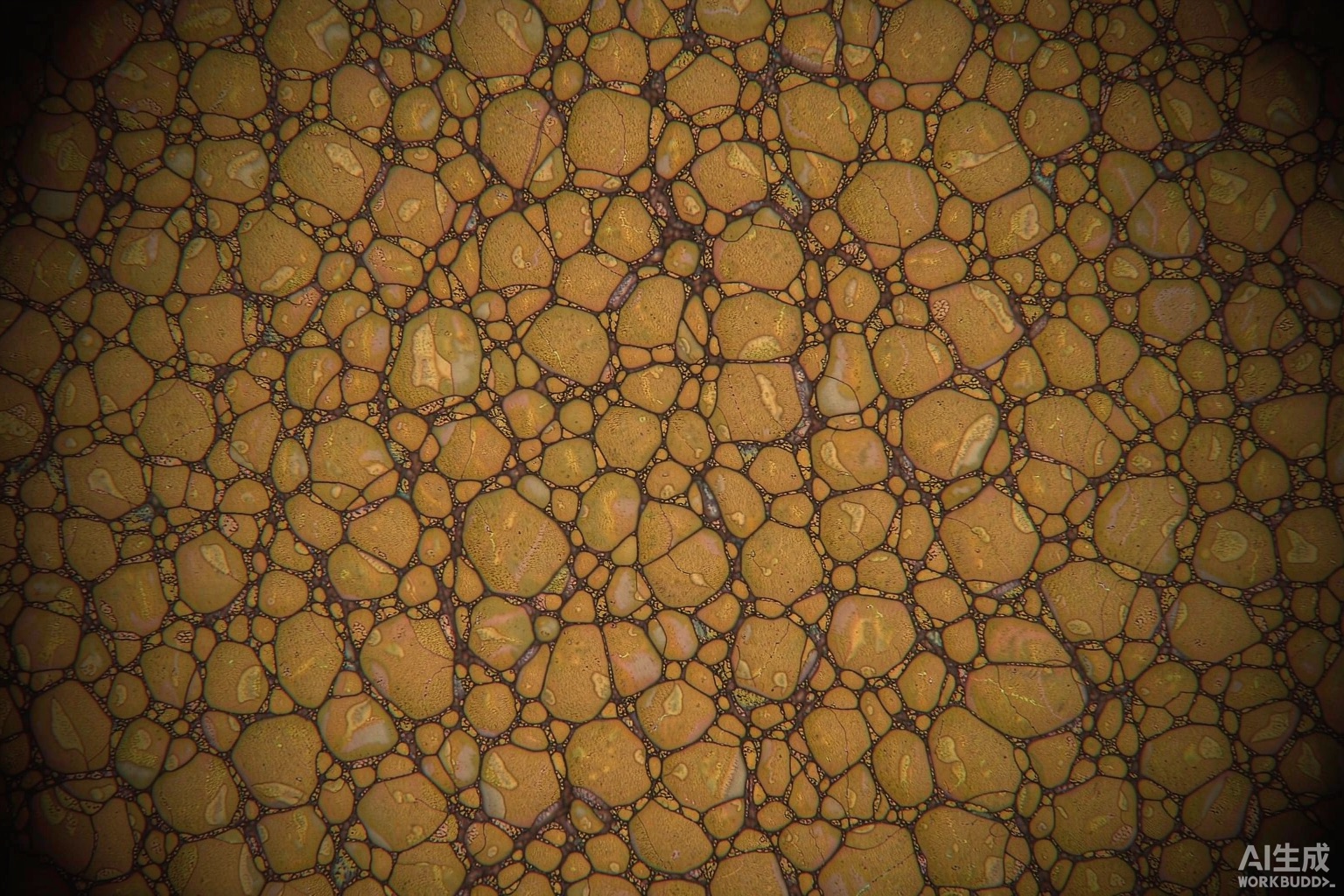
Grain size is the quiet variable that decides whether a superalloy part meets its strength, creep and fatigue targets. Two forgings of the same heat, the same composition and the same heat treatment can behave completely differently in service simply because one was worked and annealed to a fine, uniform grain and the other carries coarse, mixed or banded grain. Yet grain size is rarely written into the purchase order, so the control is left to the mill — and a mill optimizing yield has no incentive to refine it. This article explains why grain size governs superalloy performance, how ASTM E112 measures it, how it is controlled in processing, and exactly what to specify so the property you designed for is the property you receive.
We control grain size because we control the whole chain: our Hangbo Alloy Group melt shop and forging line take virgin charge through VIM+ESR or VIM+VAR melting, then work and recrystallize the material to a specified grain structure before heat treatment and finishing. Our Inconel 718 aerospace guide and age-hardening guide show what the grain structure supports, and our procurement pitfalls guide explains why undocumented process variables become unverifiable risk. The one-line rule: if grain size is not on the order, you have not actually specified the material — only its chemistry.
The direct answer: grain boundaries obstruct dislocation motion, so a finer grain (more boundary area per volume) raises yield and tensile strength and improves low-cycle fatigue resistance, while a coarser grain resists high-temperature creep and stress-rupture better — so the “right” grain size is the one matched to the dominant failure mode, not the finest one possible.
This is the Hall–Petch relationship in practice: strength rises as grain size falls. For a turbine disc that sees cyclic loading, a fine, uniform grain is preferred because it raises the fatigue origin threshold. For a component whose life is limited by creep at high temperature, a coarser, stable grain can outperform a fine one because grain boundaries are also the paths along which creep cavitation and sliding occur. The designer therefore has to choose, and the purchase order has to state the choice.
The reason grain size is so often overlooked is that it sits between chemistry and heat treatment — visible only under a microscope, never on a routine tensile certificate, and rarely named in a generic inquiry. A buyer who specifies UNS N07718 and a hardness range has said nothing about the grain that actually carries the load. That gap is exactly where inconsistent forgings come from, and why two “identical” lots can perform differently in the same die. Closing it costs nothing but a line on the order.
| Grain characteristic | Helps | Hurts | Typical application |
|---|---|---|---|
| Fine, uniform | Yield, tensile, LCF, impact toughness | High-temp creep life slightly | Disc, shaft, cyclic-load parts |
| Coarse, stable | Creep, stress-rupture resistance | LCF, ductility at low temp | High-temp static-load parts |
| Mixed / banded | Nothing | Everything — anisotropic, unpredictable | Avoid; reject |
| Abnormal (excessively large) | Rarely | Ductility, fatigue, forgeability | Avoid; sign of overheating |
ASTM E112 is the standard test method for determining average grain size in metals. It expresses grain size as a number G: the higher the number, the finer the grain. The relationship is geometric — each step in G roughly doubles the number of grains per unit area — so the difference between, say, G 4 and G 8 is a large change in boundary density, not a small one.
| ASTM grain size number G | Qualitative descriptor | Relative grain boundary area |
|---|---|---|
| 1 – 3 | Very coarse | Low |
| 4 – 6 | Coarse to medium | Moderate |
| 7 – 9 | Medium-fine to fine | High |
| 10 – 12+ | Very fine | Very high |
The standard provides several measurement routes because different microstructures suit different methods. The choice of method, and the plane and magnification at which it is applied, must be stated, because the same material can return a different G if the measurement is done inconsistently. That is why a grain-size callout on a certificate is meaningless without the method attached.
To make this concrete: a forged round evaluated on a transverse section through the centre will show a different apparent grain size than the same forging checked on a longitudinal edge, because forging elongates the grains in the working direction. A supplier who measures only the most favourable plane can report a finer number than the microstructure that actually governs the part. Requiring the measured plane — and, for critical rotating parts, both transverse and longitudinal — closes that gap. Our Rene 95 and Udimet 720 guides show how tightly grain structure is tied to disc integrity.
ASTM E112 describes comparison, planimetric and intercept procedures. The result is only as good as the sample preparation and the stated method.
| Method (ASTM E112) | How it works | Best for |
|---|---|---|
| Comparison (chart) | Compare microstructure to standard grain-size charts | Routine, uniform equiaxed grain |
| Planimetric (Jeffries) | Count grains in a known area | Accurate average, equiaxed grain |
| Intercept (linear / circular) | Count boundary intersections per line length | Elongated or worked grain, faster |
| Related practices | E1181 (duplex/ mixed), E1382 (intercept image analysis) | Mixed or non-equiaxed structures |
For superalloys with non-equiaxed or mixed grain (common after forging), the intercept or image-analysis route plus E1181 for duplex structures gives a more honest number than a chart comparison. Require the method, the measured plane (transverse vs longitudinal), the magnification and a micrograph on the report so the value is auditable. Our creep and stress-rupture guide and Waspaloy guide discuss how grain stability feeds high-temperature life.
The table below summarizes how grain size moves the properties a designer balances. None of these is absolute — precipitation hardening, chemistry and cleanliness also act — but grain size is the lever most often left uncontrolled.
| Property | Finer grain | Coarser grain |
|---|---|---|
| Yield / tensile strength | Higher | Lower |
| Low-cycle fatigue | Better (crack-initiation resistance) | Weaker |
| High-cycle fatigue | Generally better, surface-dependent | Variable |
| Creep / stress-rupture | Weaker at high temp | Stronger (stable coarse grain) |
| Ductility / toughness | Usually better | Can be lower |
| Machinability / finish | Better surface, less tearing | Risk of built-up edge |
| Superplastic forming | Required (very fine) | Not possible |
The practical takeaway for buyers: do not assume “fine is best.” A part whose life is creep-limited can be damaged by an over-refined grain, while a fatigue-limited disc can be damaged by a coarse one. The specification — your AMS or ASTM forging standard — names the range; your job is to require that range to be measured and reported.
Grain size also interacts with weldability and repair. A coarse or mixed grain near a welded joint can produce uneven heat-affected-zone response, and abnormal coarse grain in the parent metal is a known contributor to weld cracking in sensitive nickel alloys. For this reason grain-size control is not only a mechanical-property issue but a fabrication-reliability issue, and it is one more reason to keep the requirement on the order rather than leaving it to the mill’s default practice. Our welding guide covers how parent-metal condition affects the joint.
Grain size is set by the working and recrystallization sequence, not by the melt alone. The controllable levers:
Because these are process variables, the only way to guarantee them is to run them in-house and record them. Our round bar and forging programme and plate programme apply controlled working and recrystallization, and our machining guide notes that a uniform fine grain also machines more predictably.
A good example is Inconel 718, where a small amount of delta phase (δ, Ni₃Nb) precipitated at the grain boundaries during solution treatment pins them and prevents excessive growth, while too much delta or the wrong solution temperature lets abnormal coarse grains form. This is why the solution temperature, the prior worked condition and the final grain are inseparable in a precipitation-hardened alloy — you cannot specify one and ignore the others. Our Inconel 718M and Inconel 725 guides discuss related precipitation control in nickel alloys used for demanding service.
Turning grain size from a hope into a requirement means writing it down with method and acceptance.
| What to state | Why |
|---|---|
| Grain size range per ASTM E112 (e.g., G number band) | Makes the requirement auditable, not vague |
| Measurement method and plane | Prevents inconsistent or favourable measurement |
| Micrograph and report | Evidence the value was actually measured |
| Forging reduction / grain-flow requirement | Controls mixed or banded grain |
| Recrystallization / heat-treat condition | Locks the grain after working |
| Reference to AMS / ASTM forging spec | Uses the standard’s defined range |
For turbine-disc and rotating alloys, also reference the relevant aerospace material specification, which will name the permitted grain size and often a duplex-grain allowance. Our Rene 95 and Udimet 720 guides show how grain structure is tied to disc performance, and our test reports process shows the metallography package you should receive.
| Purpose | Standard to cite |
|---|---|
| Average grain size determination | ASTM E112 (comparison, planimetric, intercept) |
| Duplex / mixed grain size | ASTM E1181 |
| Intercept / image analysis | ASTM E1382 |
| Product grain requirement | Applicable ASTM / AMS forging or bar specification |
| Witnessing | Named third party (SGS / TÜV / BV / DNV) for critical parts |
Trademarks such as Inconel, Waspaloy, Rene and Udimet are owned by their respective companies; the grades are defined by their UNS numbers and ASTM / AMS product specifications. This article is guidance for specifiers, not a substitute for the current edition of the applicable standard.
ASTM E112 assigns a grain size number G; the higher the number, the finer the grain. Each step roughly doubles the number of grains per unit area, so the boundary density changes sharply between, say, G 4 and G 8. The number only means something when the measurement method, plane and magnification are also stated.
No. Finer grain raises yield strength and low-cycle fatigue resistance, but a coarser, stable grain resists high-temperature creep and stress-rupture better because grain boundaries are also creep paths. The correct grain size matches the dominant failure mode, which is why the specification names a range rather than “as fine as possible.”
Largely no. Grain size is set by the working and recrystallization sequence; once a part is coarse-grained or abnormally grained, normal heat treatment will not refine it, and overheating damage is permanent. That is why the control must be in the forging and anneal, not a later fix.
By ASTM E112 comparison with standard charts, planimetric grain counting, or intercept counting of boundary intersections, with image analysis (E1382) and duplex-grain evaluation (E1181) for non-equiaxed structures. The method and the measured plane must be reported, because the same material returns different values under different methods.
Because grain size was never written into the order, so the mill applied its own internal limit. Require a measured ASTM E112 value with the method, plane and a micrograph; without those, “acceptable” is undefined and unverifiable.
Yes. A uniform fine grain typically machines with a better surface finish and less tearing than a coarse or mixed grain, and it gives more predictable dimensional results. For difficult superalloys this is one more reason to specify and verify grain size.
For rotating, aerospace or high-temperature load-bearing parts, yes. Have SGS, TÜV, BV or DNV witness the metallography and accept against your stated ASTM E112 range so the result is verified rather than self-declared.
If you need a superalloy with a controlled grain structure for fatigue, creep or machining performance — or you want grain size written correctly into your next order — send us the grade, form, the dominant failure mode of your part, and any standard you must meet. We will confirm the ASTM E112 range and method to specify, advise the forging and heat-treatment route that delivers it, and quote our own virgin-material, double-melted production with full metallography and heat-to-piece traceability. Typical response time is ten minutes, and we ship worldwide from Shanghai.
Email: serena@hangboalloy.com
Phone: +86 166 2109 2936
WhatsApp: +86 166 2109 2936
Send us the grade, form, the dominant failure mode of your part (fatigue, creep or machining), and any ASTM or AMS specification you must meet. We will confirm the ASTM E112 range and method to specify, advise the forging and heat-treatment route that delivers it, and quote our own virgin-material, double-melted production with full metallography and heat-to-piece traceability.