
Hangbo Alloy Group
Shanghai · Est. 2012
Inconel 600 and 601 look almost identical on paper - both are nickel-chromium alloys built for heat and corrosion - but the small aluminium addition in 601 changes where each grade belongs. This comparison explains the one composition difference that matters, how it shifts oxidation and carburisation resistance, and how to pick the right grade without over-specifying.
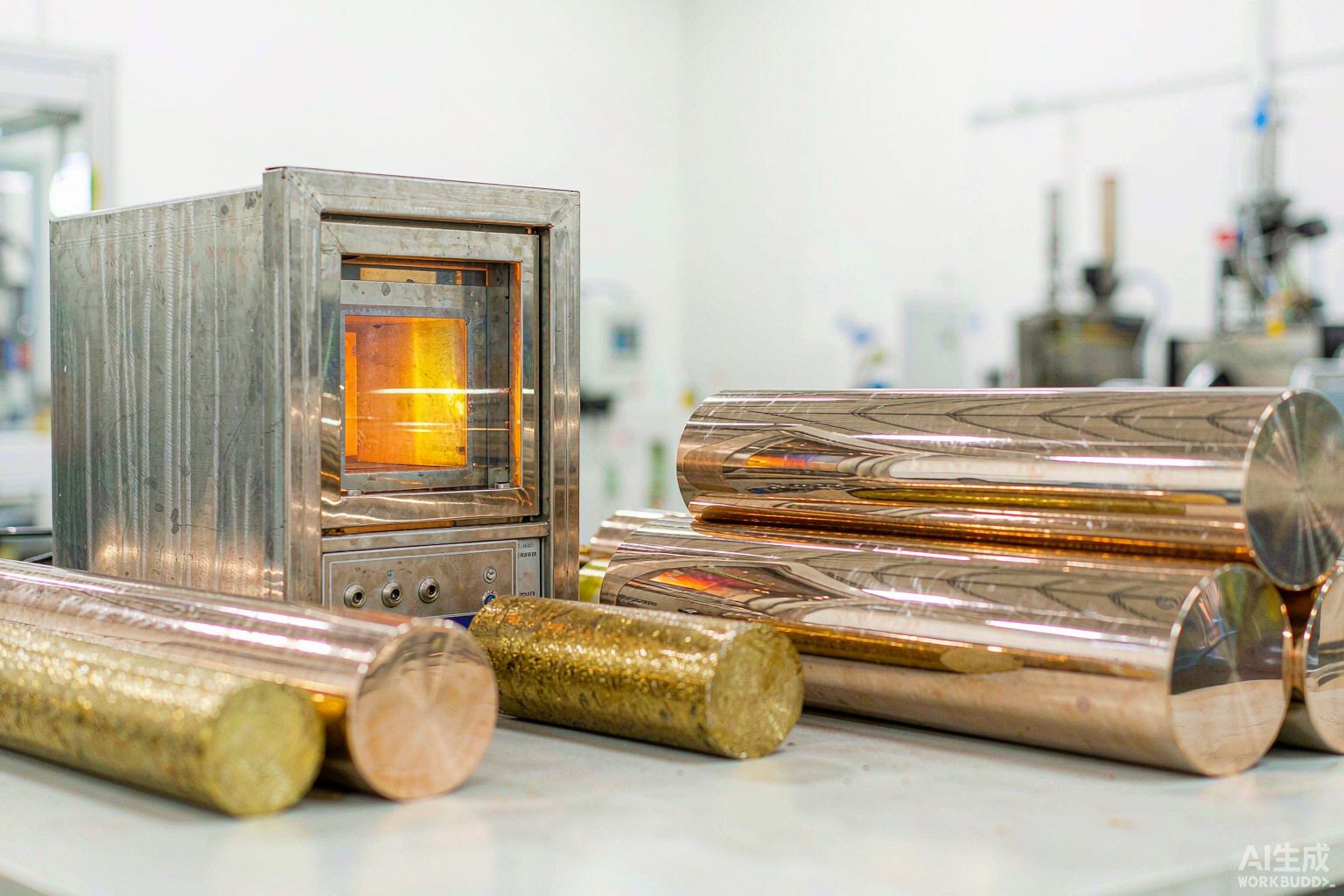
Inconel 600 and 601 are the closest of cousins in the nickel-chromium family: both are built for heat and corrosion, both weld and form well, and both show up on drawings for furnace parts, heat-treating equipment and chemical plant. The short answer to which to choose is one element - aluminium - that 601 carries and 600 does not, and that single addition decides where each grade belongs at high temperature. This comparison explains the difference plainly so you can specify the right grade instead of the familiar one.
We write this from the production side. Hangbo Alloy Group supplies both grades from Shanghai and sees buyers specify 601 by habit where 600 would do, or 600 where 601 is the only grade that survives the heat. Our interest is that the choice tracks the service, not the catalogue page.
For the wider grade-choice view, our procurement pitfalls guide maps the failure points around specification, and our 800 vs 800H guide covers a similar high-temperature decision.
Strip the specs to what changes behaviour and there is one line: 601 contains about 1.0 to 1.7 percent aluminium, 600 essentially none. The nickel and chromium are close between the two - both roughly 60 to 72 percent nickel with 14 to 25 percent chromium depending on the cut of the spec - so the base corrosion and strength character is similar. The short answer: the aluminium is the lever, and it pulls oxidation resistance up.
That matters because aluminium forms an alumina scale that is more stable at high temperature than the chromia scale chromium alone produces. Everything else people compare - the small iron or manganese differences - is second order next to that one addition. A buyer who remembers only one fact should remember this: no aluminium, 600; aluminium present, 601.
| Element | Inconel 600 (typical) | Inconel 601 (typical) | Effect |
|---|---|---|---|
| Nickel | 72 min | 58-63 | Base, corrosion backbone |
| Chromium | 14-17 | 21-25 | Oxidation, general corrosion |
| Aluminium | ~0 | 1.0-1.7 | Alumina scale, high-temp protection |
| Iron | 6-10 | bal | Cost, structure |
The table is the whole story in four rows. The chromium is even a touch higher in 601, which helps too, but the aluminium is the decisive line.
Above about 1000 degrees C, 601 simply outlasts 600 in air. The alumina-rich scale clings through thermal cycling where the chromia scale of 600 spalls and regrows, shedding metal each cycle. The short answer: in hot, moving, scaling air, 601 is the grade; 600 scales away faster and needs more wall thickness to compensate.
Below roughly 1000 degrees C the gap narrows until it barely matters for many duties, and 600 is the economical choice. The crossover is not a hard number - it moves with atmosphere, duty cycle and whether the part sees repeated heating and cooling - but the direction is fixed: hotter and more cyclic favours 601. Our furnace-fixtures guide shows 601 against other high-temperature contenders in that exact service.
For wet service the older grade is often the right one. 600 has a long track record in caustic soda, high-purity water and some reducing acids, where its chemistry and field history matter more than oxidation behaviour. The short answer: in aqueous corrosion, 600 is the established choice and 601 is rarely needed, because 601's advantage does not apply where there is no hot scaling air.
601 is not worse in corrosion - it is simply not chosen for water service, because you would pay for aluminium protection you never use. Specifying 601 for a tank in caustic solution is like specifying a heat shield for a swimming pool: harmless, but the spend buys nothing. The grade should follow the dominant exposure, and for wet duty that is usually 600.
Our MTC guide covers what a real certificate should show about chemistry, and our PMI guide explains why verifying the actual grade before use prevents the worse error of welding or installing the wrong alloy.
About 1000 to 1050 degrees C is the usual point where 601 earns its keep in air. Below it, 600 typically does the job at lower cost; above it, especially with thermal cycling, 601 is the safer spec. The short answer: let the service temperature and atmosphere decide, not a fixed habit.
For continuous service with little cycling, 600 can reach higher than its nominal limit with enough wall; for cyclic duty the spalling difference makes 601 the pragmatic pick well before the numbers say it is required. This is why furnace mesh, trays and radiant-tube supports are 601, while many static mild-heat parts stay 600.
| Service condition | Recommended grade | Reason |
|---|---|---|
| Air below ~1000 degrees C | 600 | Adequate scaling resistance, lower cost |
| Air 1000-1150 degrees C, cyclic | 601 | Alumina scale resists spalling |
| Carburising / nitriding atmosphere | 601 | Aluminium-rich scale blocks carbon pickup |
| Caustic / high-purity water | 600 | Long field track record, no hot scaling |
The two grades end up in different bins. 600 dominates chemical and nuclear water service, caustic handling, and moderate-heat hardware; 601 dominates furnace components, heat-treating fixtures, kiln liners and carburising equipment where the air is hot and aggressive. The short answer: if the part lives in hot scaling air, it is 601; if it lives in liquid or mild heat, it is 600.
| Service | Preferred grade | Why |
|---|---|---|
| Caustic / high-purity water | 600 | Track record, corrosion fit |
| Furnace trays, fixtures | 601 | Alumina scale, cyclic heat |
| Radiant tubes, kiln parts | 601 | Resists scaling and carburisation |
| Chemical process, mild heat | 600 | Cost, corrosion, adequate heat |
The bins overlap at the edges, which is exactly why the choice needs a service review rather than a default. A part that is mostly in water but sees an occasional hot purge may sit either side, and that is the case to discuss with the supplier rather than guess.
The two grades behave almost the same on the shop floor, which is why fabricators treat them as interchangeable even when the service does not. Both weld readily with the nickel-chromium family of fillers - ERNiCr-3 (82 class) is the common choice for 600, and 601 is usually welded with an overalloyed 601-class filler or with 82 where the joint allows. The short answer: the weld procedure that works for 600 carries over to 601, so the welding decision is rarely what separates them; the service temperature is.
Formability is the other shared trait. Both can be cold-formed, but they work-harden, so deep draws and tight bends need intermediate anneals to avoid cracking at the strain peak. Hot working sits in the typical nickel-alloy window of roughly 870 to 1150 degrees C followed by a rapid quench to keep the grain fine and the scale light. Because 601 runs hotter in service, its fabricated parts are more often delivered in the solution-annealed condition so the joint starts from a known, clean base - our heat-treatment guide explains why that anneal has to be verified, not assumed.
The one fabrication caution that differs is heat-tint cleanup after welding: 601's aluminium-rich surface can form a tenacious oxide that, left on, localises corrosion in some wet environments, so the weld area is often dressed back to bright metal before the part sees liquid service. It is a small step, but it is the kind of detail a fabricator skips when the two grades are treated as identical. For the welding controls themselves, our welding precautions guide lists the joint-cleaning, filler and heat-input rules that keep either grade sound.
601 usually costs a little more than 600, and the premium tracks the aluminium addition and the tighter melt control it demands. The short answer: pay the premium only where the hot service justifies it, because on a part that never sees high-temperature scaling the extra spend buys no performance. For high-volume furnace hardware the longer life of 601 often repays the difference; for a one-off mild-heat bracket it rarely does.
Both grades are widely stocked as plate, bar, sheet and tube, with 600 the deeper and older inventory because of its long caustic and nuclear-water history. Lead time is the practical differentiator: 600 in common sizes is often ex-stock, while a thick 601 forging or a specific tube size may need a mill slot. That is one more reason to confirm the grade against the service early rather than at order time, when a wrong spec can stall a build. Our MOQ and length guide covers how grade choice interacts with minimum-order traps on nickel alloy buys.
Both grades are covered by the same family of material standards - UNS N06600 for 600 and N06601 for 601, with ASTM B168 for plate and sheet, B166 for bar and B167 for tube and pipe, plus the AMS and EN equivalents. The short answer: the standard proves the chemistry; the service review proves the choice. A certificate that names N06601 but shows no aluminium is not 601, and our mill-test guide explains how to read that line.
Because the two UNS numbers are one digit apart, a typo or a careless substitution is easy to miss, which is whyPMI verification at receipt is worth it on a critical part. The standard gives you the target; the check confirms you received it.
One element: aluminium. 601 carries roughly 1.0 to 1.7 percent aluminium, where 600 has essentially none. Both are nickel-chromium alloys with similar nickel and chromium, so the base behaviour is close, but that aluminium gives 601 a tenacious oxide scale that resists scaling and carburisation far better at high temperature. Everything else between them is secondary to that addition.
Yes, clearly, above about 1000 degrees C. The aluminium forms an alumina-rich scale that is more stable than the chromia scale of 600 alone, so 601 holds its surface in hot, moving air where 600 would scale away faster. Below roughly 1000 degrees C the gap narrows and 600 is often adequate, which is why the choice tracks the service temperature more than the alloy family.
For many wet environments 600 is the longer-established choice and is widely specified for caustic and high-purity water service, where its chemistry and track record matter more than oxidation behaviour. 601 is not worse in corrosion, but it is rarely chosen for water service because its advantage - high-temperature oxidation - does not apply there. The practical rule: wet and moderate heat favours 600; hot and scaling favours 601.
Around 1000 to 1050 degrees C is the usual crossover, where 601's aluminium scale earns its keep in air. Below that, 600 usually does the job; above it, especially with thermal cycling or a carburising atmosphere, 601 is the safer pick. The exact number depends on atmosphere and duty cycle, so the service condition - not a fixed temperature - should drive the decision.
Better than 600, because the aluminium-rich scale also resists carbon pickup that would otherwise embrittle the part. It is a common choice for furnace components in carburising and nitriding service for that reason. 600 can be used there but scales and carburises sooner, so 601 is the grade when the atmosphere is aggressive and the part must last.
Not without review. They share formability and welding character closely enough that a fabricator may treat them alike, but substituting 600 where 601 was specified loses the high-temperature protection, and specifying 601 where 600 would do adds cost for an advantage you never use. Confirm the service before swapping, and verify the actual chemistry on the certificate - our PMI guide explains why that check matters.
If your drawing calls for 600 or 601 and you are not certain the grade matches the service, send us the temperature, atmosphere and corrosion exposure. We will tell you whether 600 is enough or 601 earns its aluminium, and quote our own production with chemistry verified against the exact UNS and spec you need. Typical response time is ten minutes, and we ship worldwide from Shanghai.
Email: serena@hangboalloy.com
Phone: +86 166 2109 2936
WhatsApp: +86 166 2109 2936
Send us the temperature, atmosphere (air, combustion gas, carburising) and the corrosion exposure, and we will tell you whether 600 is enough or 601 earns its aluminium, and quote our own production with chemistry verified against the exact spec you need.