
Hangbo Alloy Group
Shanghai · Est. 2012
The purchase price of nickel alloy is the smallest number in the transaction. This guide shows why the cheapest quote is usually the most expensive choice, how to run a metal-value sanity check, and which lifecycle costs to put in the business case.
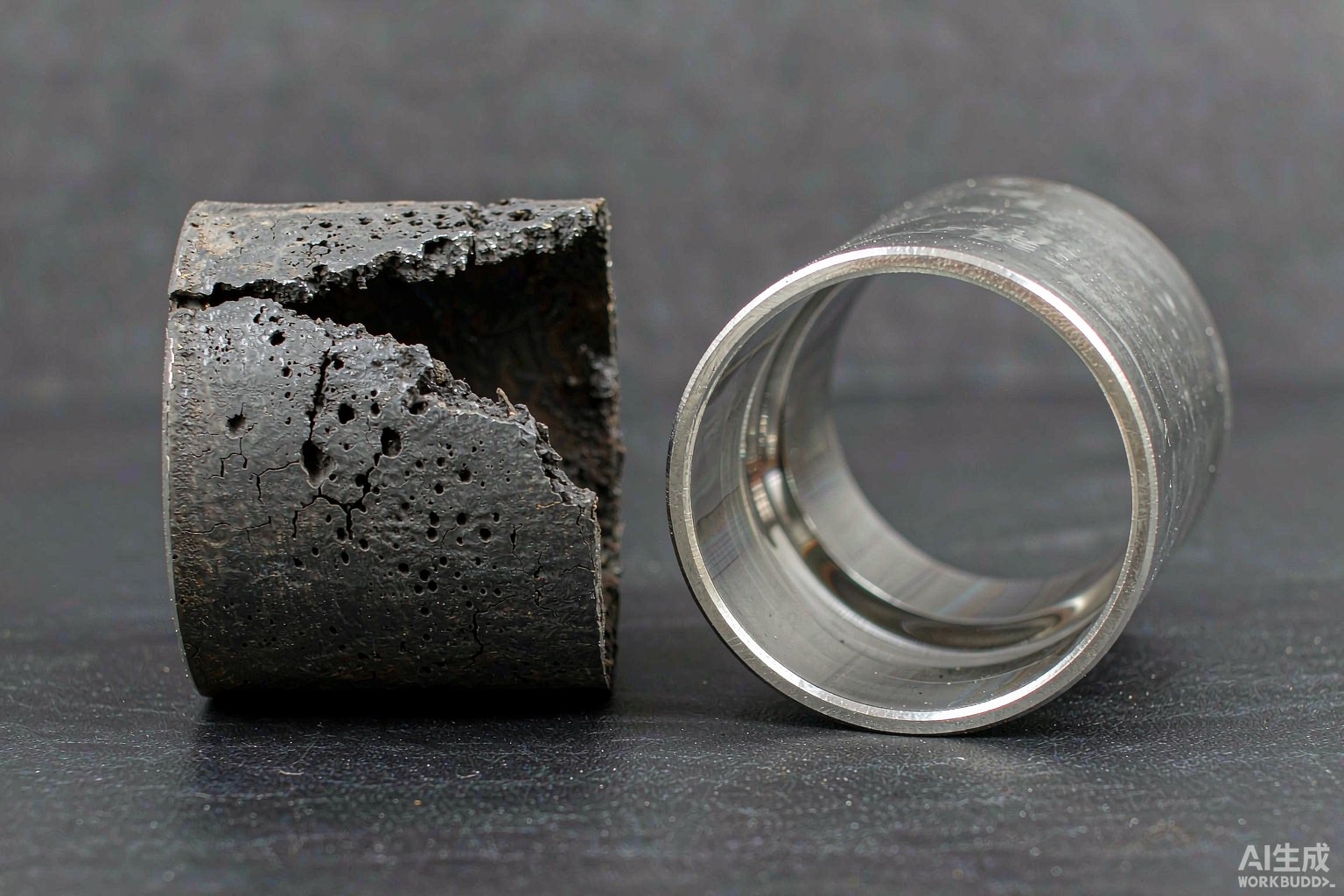
The purchase price of nickel alloy is the smallest and least important number in the transaction. The metal itself — nickel, molybdenum, chromium, niobium — sets a floor below which a genuine, newly melted, fully certified heat simply cannot be sold. Everything cheaper than that floor is cheaper for a reason you will pay for later: less nickel, substituted route, skipped heat treatment, sampled inspection, or material that is not the grade at all. Total cost of ownership (TCO) is the discipline of counting those later costs before you sign.
This guide is for procurement managers, project controllers and plant engineers who specify Inconel, Hastelloy, Incoloy, Monel, Nimonic and the high-temperature grades. It shows why the lowest quote is usually the most expensive choice, how to run a metal-value sanity check on any offer, and which lifecycle costs to put in the business case. Our procurement pitfalls guide lists the failure modes; this article puts a number on each one. The same counting discipline should extend to how the metal is weighed and billed, because per-kilogram leaks are a TCO line too — our nickel alloy weight billing guide covers the theoretical-mass, density and tolerance traps that inflate an invoice.
We write this as a manufacturer. Hangbo Alloy Group runs a vertical route in our Shanghai works: a 100% virgin prime charge is melted by VIM and double-refined by ESR or VAR, descaled before each working step, brought to the specified solution anneal or age condition per the governing ASTM or AMS grade, then released only after complete process control — composition by spectrometry and wet analysis, mechanical and impact testing, ultrasonic and penetrant inspection, dimensional checks, marking and export packing. Because every step is in our own works, our quote reflects real process cost, not a trader's margin on someone else's uncertainty. Our round bar and seamless tube programmes are priced on that transparent basis.
The reason is structural. Nickel alloy value is dominated by contained metal. If a supplier removes nickel and molybdenum to the low end of the permitted range, skips secondary remelting, shortens heat treatment and samples rather than scans inspection, the unit price falls — and every one of those cuts reduces service life, weldability or inspectability downstream. The saving is visible on the PO; the loss shows up as a failed weld, a leaked exchanger, a rejected inspection, or a part scrapped at final machining, none of which the original quote captured.
TCO reframes the decision from "what is the price per kilogram" to "what will this material cost me across receiving, fabrication, service life and claims." A part that costs 8 percent more but never fails is cheaper than a part that costs 8 percent less and fails once. The grades discussed here carry the property baselines in our Inconel 625 guide and Hastelloy C-276 guide.
Most of the real cost of a bad material decision is not on the invoice. The table lists where the money actually goes when a cheap lot turns out to be the wrong one.
| Cost category | What it covers | Typical trigger in nickel alloy buying |
|---|---|---|
| Receiving and verification | Independent analysis, NDT, third-party inspection | Low price forces you to verify what a trusted mill would already guarantee |
| Fabrication scrap and rework | Machining loss, welded repairs, rejected parts | Off-tolerance dimensions, seams, poor weldability |
| Schedule delay | Expediting, replacement lead time, idle labour | A hold or rejection stops the line |
| Reduced service life | Earlier replacement, downtime | Lean chemistry, wrong heat treatment |
| Failure and liability | Leak, rupture, environmental or safety event | Substituted grade in sour or pressure service |
| Claims and legal | Dispute, expert analysis, litigation | Untraceable heat, contested certificate |
Notice that the first row is the trap in reverse: a suspiciously low quote pushes you to spend on verification you would not need from a disciplined manufacturer. The pitfalls guide explains how each failure mode enters the chain.
Before evaluating any quote, calculate the contained-metal value of the grade from public composition limits and the market prices of nickel and molybdenum (and chromium where relevant). If a delivered quote sits at or below that metal value — before melting, forging, testing, certification, packing and margin — the material cannot be what it claims. This single arithmetic step defeats most impossible prices.
| Grade | Minimum contained nickel + molybdenum (approx.) | What a below-metal-value quote implies |
|---|---|---|
| Inconel 625 (UNS N06625) | ≥58% Ni + 8% Mo | Not the grade, not full size, not new melt, or not arriving |
| Hastelloy C-276 (UNS N10276) | ~57% Ni balance + 15–17% Mo | Substituted or re-certified lower grade |
| Monel 400 (UNS N04400) | ~63% Ni + ~31% Cu | Wrong alloy or diluted charge |
This is a screening test, not a specification. It tells you when to ask harder questions, not what the chemistry is. When the price looks impossible, request the measured composition and the melting route in writing before committing — the answer is usually informative. The offshore and subsea guide carries a twenty-year cost view that builds on the same logic.
One caveat: market metal prices move, so the check is a directional signal, not a precise threshold. A quote 5 or 10 percent below a transparent manufacturer is normal commercial variation; a quote 30 or 40 percent below the contained-metal value is not a bargain, it is a different product wearing the same name. The discipline is to treat any large gap as a question to resolve, not a saving to capture, before the PO is signed.
Put the following line items in the business case and the cheap quote stops looking cheap. Even rough numbers expose the decision.
| Lifecycle stage | Cost to include | Note for nickel alloy |
|---|---|---|
| Acquisition | Unit price × net quantity, Incoterm stated | Use price per usable kg, not per kg shipped random |
| Verification | Analysis, NDT, TPI, certificate type | Higher for low-trust suppliers — a hidden tax on cheap quotes |
| Fabrication | Scrap rate, weld repairs, machining allowance | Driven by chemistry, dimensions, surface |
| Installation | Delay, expediting, replacement lead time | A rejection can idle a whole site |
| Service | Years to first maintenance, downtime cost | Lean chemistry shortens this materially |
| End of life | Removal, disposal, liability reserve | Failure cost dwarfs the saving |
Our Monel 400 guide and the sour gas selection guide discuss where a thinner margin is genuinely unacceptable, because in those services the end-of-life line dominates the whole calculation.
A quote that lets you compute TCO looks different from a one-line price. It states the grade by UNS and specification, the product form and its standard, the condition or temper, the melting route, the certificate type, the NDT coverage, the dimensions with tolerance, the Incoterm, and the lead time. With those, you can compare like for like and see where a low price is cutting corners.
Where the supplier manufactures in-house — melting, forging, heat treatment, finishing and inspection under one quality system — the quote reflects real process cost and the traceability is native rather than assembled. Our facilities page shows the integrated route; our test reports and traceability page shows the evidence package behind each shipment.
| Quote line | What it protects |
|---|---|
| Grade + UNS + specification edition | Prevents silent substitution |
| Melting route stated | Confirms VIM+ESR/VAR, not air melt |
| Certificate type (3.1 / 3.2) | Sets verification burden and trust |
| NDT coverage and acceptance | Reveals sampled-vs-scanned cost removal |
| Dimensions with tolerance | Protects machining allowance |
| Lead time and Incoterm | Makes total delivered cost comparable |
When two quotes differ sharply, do not average them — ask what the cheaper one is not including. The gap is rarely random; it is a missing process or a missing assurance. For a wider risk view, see our welding guide on how poor material compounds fabrication cost.
A practical habit is to request every supplier to quote against the same written specification — same UNS, same product standard and edition, same condition, same melting route, same certificate type, same NDT coverage, same dimensions and tolerance, same Incoterm. When the specification is identical, the price spread shrinks to real differences in process cost and overhead, and the outlier that is 25 percent low is exposed as omitting something rather than charging less for the same thing. That single disciplining step converts a confusing set of bids into a genuine TCO comparison.
Before you award a nickel alloy order, run these steps:
Inconel 718 in aerospace and Nimonic in turbine service are where TCO thinking is non-negotiable, because a single failure cost is unbounded; our Inconel 718 guide and Nimonic 90 guide cover those consequences.
Inconel, Hastelloy, Incoloy, Monel, Nimonic and Haynes are registered trademarks of their respective owners; each grade in this article is defined by its UNS number and the applicable ASTM, EN or AMS specification.
This article is guidance for buyers, not a legal opinion or a substitute for the applicable standard. Specifications change; always verify against the current edition of the specification you order to.
It is the full cost of a material decision across acquisition, verification, fabrication, installation, service life and end-of-life, not just the unit price. Because nickel alloy value is dominated by contained metal and process, the cheapest quote often hides cuts that raise fabrication scrap, shorten service life or cause failure. TCO counts those later costs before you commit.
From the public composition limits, calculate the minimum contained nickel and molybdenum (and chromium where relevant) in the grade, multiply by their market prices, and compare to the delivered quote. If the quote sits at or below that metal value before melting, working, testing and margin, the material cannot be what it claims. Request the measured composition and melting route in writing before proceeding.
Not always, but a transparent manufacturer quote usually beats a suspiciously low trader quote once verification and risk are included. The test is whether the higher price reflects real process and traceability you can use, or simply a bigger margin. Compare like for like using the quote lines above, and weigh the cost of a failure in your service.
Verification and service-life impact. Buyers add the unit price and freight but forget that a low-trust supplier forces independent analysis and third-party inspection they would not need otherwise, and they rarely price the shorter life from lean chemistry or skipped heat treatment. For sour or pressure service, the failure and liability line is the one that dwarfs every saving.
Yes, scaled to consequence. A small order of Inconel 718 for sour-gas bolting can carry a failure cost far larger than its price, so TCO still favours a verified, traceable heat. For a small, non-critical, easily replaced part, the verification burden can be relaxed — but the metal-value check still applies to any price that looks impossible.
VIM followed by ESR or VAR removes dissolved gases, inclusions and volatile tramp elements that no later step can fix, improving cleanliness, weldability and fatigue life. Air-melt or single-melt material may be cheaper per kilogram but costs more in weld repairs, scrap and premature failure. The route should be named on the certificate so you can price the difference honestly.
Sometimes, when it reflects a genuine efficiency: an integrated manufacturer with low overhead, a planned heat that suits your quantity, or a standard condition rather than a special one. The point is to find out which it is. A quote that cannot explain its own low price, or that omits grade, route, certificate type and NDT, is cheap for a reason you will pay for later.
We quote on a transparent basis: grade by UNS and specification, product form and its standard, condition, melting route, certificate type, NDT coverage, dimensions with tolerance, Incoterm and lead time. Because we melt, forge, heat treat and inspect in our own works, the price reflects real process cost and includes native traceability rather than a trader's markup on uncertainty. Send us your specification and we will return a comparable quote.
If you are comparing nickel alloy quotes and want to know what the cheapest one is not including, send us the grade, form, dimensions, quantity, service environment and any competing quotation. We will run the metal-value check, explain the process and verification behind our own price, and quote our virgin-material, double-melted production with full heat-to-piece traceability so your TCO comparison is honest. Typical response time is ten minutes, and we ship worldwide from Shanghai.
Email: serena@hangboalloy.com
Phone: +86 166 2109 2936
WhatsApp: +86 166 2109 2936
Send us the grade, form, dimensions, quantity, service environment and any competing quotation. We will run the metal-value check, explain the process and verification behind our price, and quote our own virgin-material, double-melted production with full heat-to-piece traceability so your TCO comparison is honest.