
Hangbo Alloy Group
Shanghai · Est. 2012
The corrosion life of a nickel alloy part is largely set at the surface, during the first operations after melting. This guide explains why complete descaling and correct pickling prevent seams, laps and a depleted surface layer that initiate pitting and cracking.
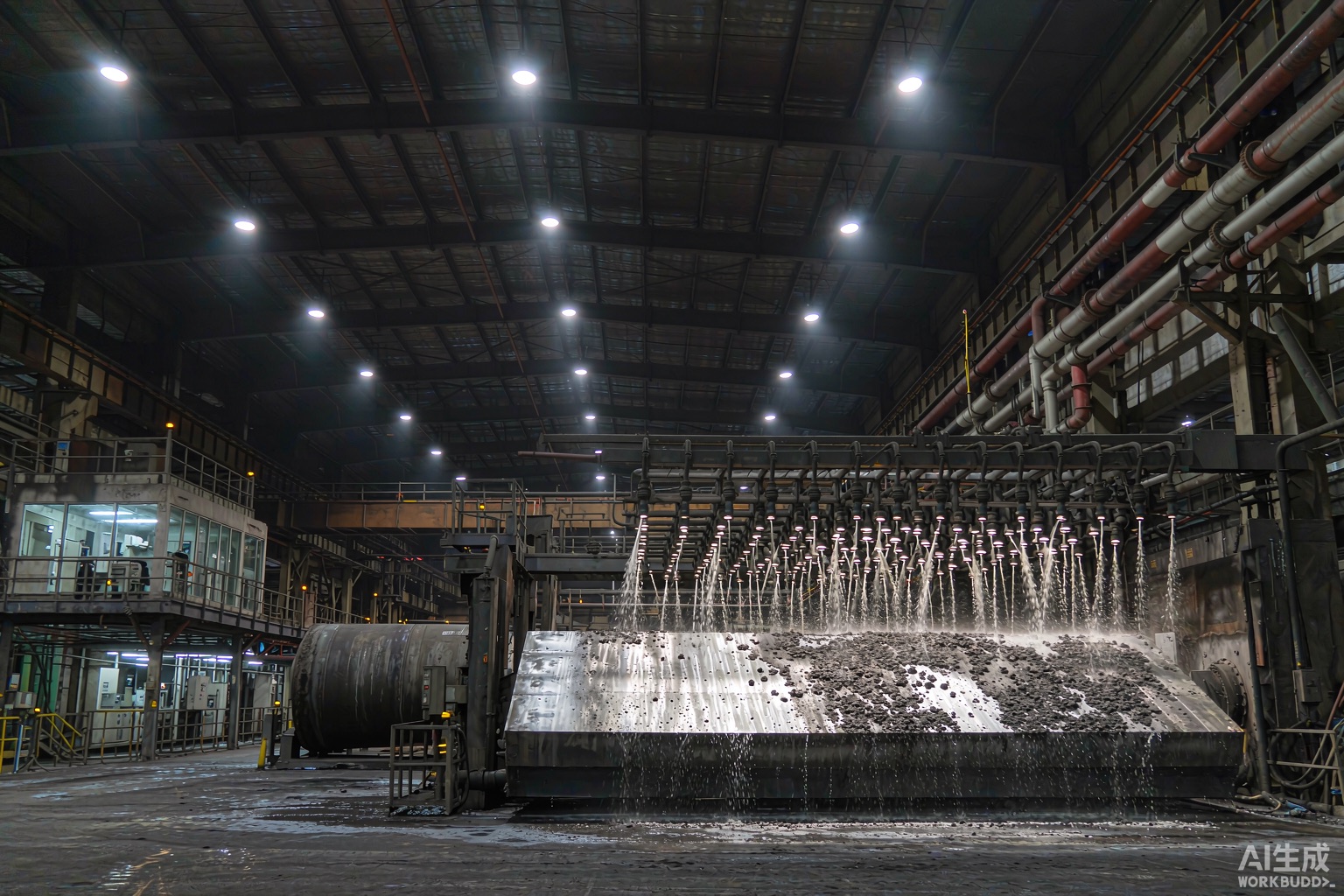
The corrosion life of a nickel alloy part does not begin when it reaches the plant — it is largely set at the surface, during the first few operations after melting. Every time the metal is heated for forging or rolling, a tenacious oxide scale forms on it. If that scale is not completely removed before the next pass, it gets rolled or forged into the surface as seams, laps and inclusions that no amount of finishing can hide, and that become the initiation points for pitting and cracking in service.
This technical guide is for metallurgists, QA engineers and procurement staff who specify Inconel, Hastelloy, Incoloy, Monel, Nimonic and the high-temperature grades. It explains why descaling and pickling matter, what the standard processes are, how residual scale and improper pickling damage corrosion resistance, and the checks that confirm a clean surface. Our procurement pitfalls guide notes surface cover-ups as a failure mode; this article explains the metallurgy behind that warning.
Surface quality is a process outcome, not a finishing step. Hangbo Alloy Group controls it from the start: we melt a 100% virgin prime charge by VIM and refine it by ESR or VAR, remove oxide scale thoroughly at every stage before further hot or cold working, apply the standard solution anneal or age cycle required by the applicable ASTM or AMS grade, and finish under full-process control that includes composition analysis, mechanical and impact testing, ultrasonic and penetrant inspection, dimensional checks, marking and export packing. Because descaling is built into the route rather than bolted on at the end, folded-in defects are prevented rather than ground over. The welding guide covers why a clean base surface also matters for sound welds.
Nickel-base and high-nickel alloys form chromium- and molybdenum-rich oxides when heated in air. These scales are abrasive, adherent and chemically different from the base metal. The danger is mechanical: during forging or rolling, soft scale particles can be pressed into the surface, and hard scale can score the pass and entrain non-metallic debris. The result is a seam or lap — a surface discontinuity that, even if later ground flush, remains a local site of composition change and stress concentration.
The second danger is chemical. A surface that retains scale or its residue after pickling carries depleted chromium and molybdenum at the very layer that must resist corrosion. In aggressive media this is exactly where pitting and crevice attack begin. Removing every trace of oxide, and then restoring a clean, passive surface by correct pickling, is therefore not cosmetic — it is a corrosion-engineering step.
The economic temptation to skip a descaling pass is real, because each pass costs time, acid, water treatment and labour, and none of it shows on the certificate. A mill under schedule pressure can be tempted to forge or roll over scale and fix the appearance later with heavy grinding. That trade is always false economy: the hidden defect is cheaper to prevent at the descaling stage than to find and reject at final inspection, and infinitely cheaper than a field failure. The disciplined route treats descaling as a required operation at every hot-working stage, not a discretionary finish.
Descaling is a family of operations matched to the alloy and the forming step. Mechanical removal (shot blasting, brushing, grinding) takes off bulk scale; chemical removal (acid pickling) dissolves the remaining film and conditions the surface; and in modern mills, controlled atmospheres or protective coatings during heating can suppress scale formation in the first place. The right route uses mechanical and chemical steps in sequence, never one alone.
| Method | What it removes | Best used | Risk if misused |
|---|---|---|---|
| Shot / grit blasting | Bulk adherent scale | After forging, before pickling | Embedded media if not cleaned |
| Grinding / machining | Local scale and seams | Spot defects, bar peeling | Can close a lap instead of removing it |
| Acid pickling | Residual oxide film, conditions surface | After mechanical descaling, final finish | Over-pickling, hydrogen uptake, intergranular attack |
| Bright annealing / protective atmosphere | Prevents scale formation | Final anneal of thin sections | Cost; not for heavy sections |
| Salt bath / molten salt descaling | Tight, adherent scale | Difficult alloys, complex shapes | Residue if not rinsed fully |
Pickling deserves respect: it is powerful but unforgiving. Over-pickling can attack grain boundaries, especially in sensitized or high-carbon material, and acid trapped in crevices causes continued corrosion unless thoroughly rinsed. The Inconel 625 guide and Hastelloy C-276 guide describe grades where surface condition is especially tied to corrosion performance.
The table maps each surface defect back to its scale-related root cause, because naming the mechanism is how you specify the control.
| Defect | How un-removed scale causes it | Service consequence |
|---|---|---|
| Seam | Scale folded into the surface during rolling, later closed by grinding | Reopens under bending, welding heat or pressure |
| Lap | Scale prevents fusion of two flow lines; they overlap instead | Local discontinuity, crack initiation |
| Inclusion stringer | Scale debris entrained and elongated | Reduced ductility, fatigue origin |
| Depleted surface layer | Scale residue leaves low-Cr/Mo skin after pickling | First site of pitting and crevice attack |
| Intergranular attack | Over-pickling of sensitized material | Loss of corrosion resistance at grain boundaries |
These are the same defects a receiving inspector finds as "surface seams" or "stringers" on an otherwise in-spec bar. They are not random; they are the visible memory of a descaling step that was skipped or rushed. Our C-276 vs 625 corrosion comparison shows how much surface condition can shift real performance.
Prevention means descaling at each hot-working stage, not a single wash at the end. A disciplined route strips scale after every forge and roll pass, picks the surface to a clean, uniform finish, rinses completely, and then inspects. The inspection is not optional: penetrant testing after final surface finish finds the laps and seams that grinding would otherwise hide.
The verification chain we use runs from a virgin prime charge melted by VIM and refined by ESR or VAR, through thorough oxide removal before each working step, the specified standard heat treatment, and full-process control: composition by spectrometry and wet analysis, mechanical and impact testing, ultrasonic and penetrant inspection, dimensional verification, marking and export packing. Because descaling is continuous, the final penetrant inspection checks a genuinely clean surface rather than one masked by grinding. Our facilities page shows where descaling and pickling sit in the works.
| Control point | What is checked | Acceptance |
|---|---|---|
| After each hot pass | Scale fully removed before next pass | No residual adherent oxide |
| After pickling | Uniform, bright, residue-free surface | No scale shadow, no trapped acid |
| After final finish | Penetrant inspection for seams/laps | Per product-spec acceptance |
| Surface finish | Roughness and condition per order | Within agreed Ra / visual class |
For strip and thin-wall tube the margin is smallest, because there is little section to lose; the Alloy 926 seawater guide and the heat-exchanger tube guide discuss why surface finish matters most where wall thickness is thin.
| Reference | What it governs for surface |
|---|---|
| ASTM B-spec product standards (B443, B446, B564, B622 etc.) | Surface finish, freedom from defects, repair limits |
| ASTM A480 / ASTM A999 general requirements | Surface condition and test methods for alloy products |
| ASTM E165 / E709 | Liquid penetrant and magnetic particle practice |
| EN 10204 3.1 / 3.2 | Certificate confirms the surface condition achieved |
| Customer visual / roughness class | Project-specific finish (e.g. pickled, bright annealed) |
Always state the required surface condition in the order — pickled, bright-annealed, machined, ground — and require penetrant inspection after final finish, not before, so a ground-over seam cannot pass. For welding consumables where surface cleanliness is also critical, see our ERNiCrMo-3 welding wire guide.
One more point worth stating plainly: the certificate can confirm a surface condition was achieved, but only if the order named it. A generic "free from harmful defects" clause is too vague to enforce, whereas "pickled finish, penetrant-inspected after final machining, no seams or laps permitted" is measurable at receiving. The tighter the stated requirement, the harder it is for a shortcut to hide behind a passing grade on paper. Our test reports and traceability page shows how surface condition is recorded alongside chemistry and mechanics.
Write these into the inquiry and purchase order:
Monel in marine service and Nimonic in turbine service are both sensitive to surface-initiated defects; our Monel 400 guide and Nimonic 90 guide discuss where surface quality governs life.
Inconel, Hastelloy, Incoloy, Monel, Nimonic and Haynes are registered trademarks of their respective owners; each grade in this article is defined by its UNS number and the applicable ASTM, EN or AMS specification.
This article is guidance for buyers, not a legal opinion or a substitute for the applicable standard. Specifications change; always verify against the current edition of the specification you order to.
Because oxide scale that is not removed gets folded into the surface during forging or rolling, becoming seams, laps and inclusion stringers that are local sites of changed composition and stress concentration. Even after grinding, those sites remain and open in service. Residual scale residue also leaves a chromium- and molybdenum-depleted skin at the exact layer that must resist corrosion, so pitting and crevice attack begin there.
No. Pickling dissolves residual oxide film and conditions the surface, but bulk adherent scale should be removed mechanically first; pickling alone on heavy scale is slow, uneven and risks over-attack. The correct route is mechanical descaling, then pickling, then thorough rinsing and inspection. Pickling is the finishing chemical step, not the whole process.
Yes, and this is a classic cover-up. Heavy grinding can close a surface opening and leave smeared metal that looks sound, but it does not remove the discontinuity underneath. Penetrant inspection performed after final finish, not before, is what catches a ground-over seam. Require the descaling method to be stated and prohibit grinding as a substitute for proper descaling.
Over-pickling can attack grain boundaries, especially in sensitized or higher-carbon material, causing intergranular attack and loss of corrosion resistance at the surface. Acid trapped in crevices continues to corrode unless fully rinsed. Controlled pickling time, correct acid mixture and complete rinsing prevent this; that is why pickling must be a controlled process, not an open-ended dip.
The corrosion-resistant grades where the passive film does the work — Inconel 625, Hastelloy C-276, Alloy 926 and similar — are most affected, because a depleted or defective surface layer directly reduces pitting and crevice resistance. Thin sections such as strip and heat-exchanger tube are the most vulnerable simply because there is little section to lose. Our corrosion comparison articles cover the performance impact.
Require the surface condition to be named on the certificate, require penetrant inspection after final finish at 100% coverage, and for critical parts specify EN 10204 3.2 with a named third party witnessing surface and NDT. Visually reject pieces showing seams, laps or stringers, and for thin-wall or sealing-face parts confirm the agreed roughness or visual class.
Strongly. Welds on a surface carrying scale, oil or oxide residue are prone to porosity, lack of fusion and hot cracking, because contaminants release gas and interfere with fusion. A clean, descaled and pickled base surface is a precondition for sound nickel-alloy welding. Our welding guide details preparation practice.
We remove oxide scale thoroughly at every stage before further hot or cold working, because folded-in scale becomes seams and laps, and then we apply the specified standard heat treatment and full-process control including penetrant inspection after final finish. Because descaling is continuous in our route rather than a single end wash, the final inspection checks a genuinely clean surface. Our test reports and traceability page records the surface condition achieved.
If you need nickel alloy with a verified, descaled and pickled surface — especially for thin-wall tube, strip, sealing faces or weld-critical parts — send us the grade, form, dimensions, required finish and service environment. We will specify the descaling and pickling route, quote our own virgin-material, double-melted production with full heat-to-piece traceability, and confirm the surface condition on the certificate. Typical response time is ten minutes, and we ship worldwide from Shanghai.
Email: serena@hangboalloy.com
Phone: +86 166 2109 2936
WhatsApp: +86 166 2109 2936
Send us the grade, form, dimensions, required finish and service environment. We will specify the descaling and pickling route, quote our own virgin-material, double-melted production with full heat-to-piece traceability, and confirm the surface condition on the certificate.