
Hangbo Alloy Group
Shanghai · Est. 2012
Free iron and copper on a nickel alloy surface do not change the mill certificate, but they cause pitting and weld cracking that the documents never reveal. This guide explains the ferroxyl and copper spot tests and the clauses that keep a mixed shop from downgrading your alloy.
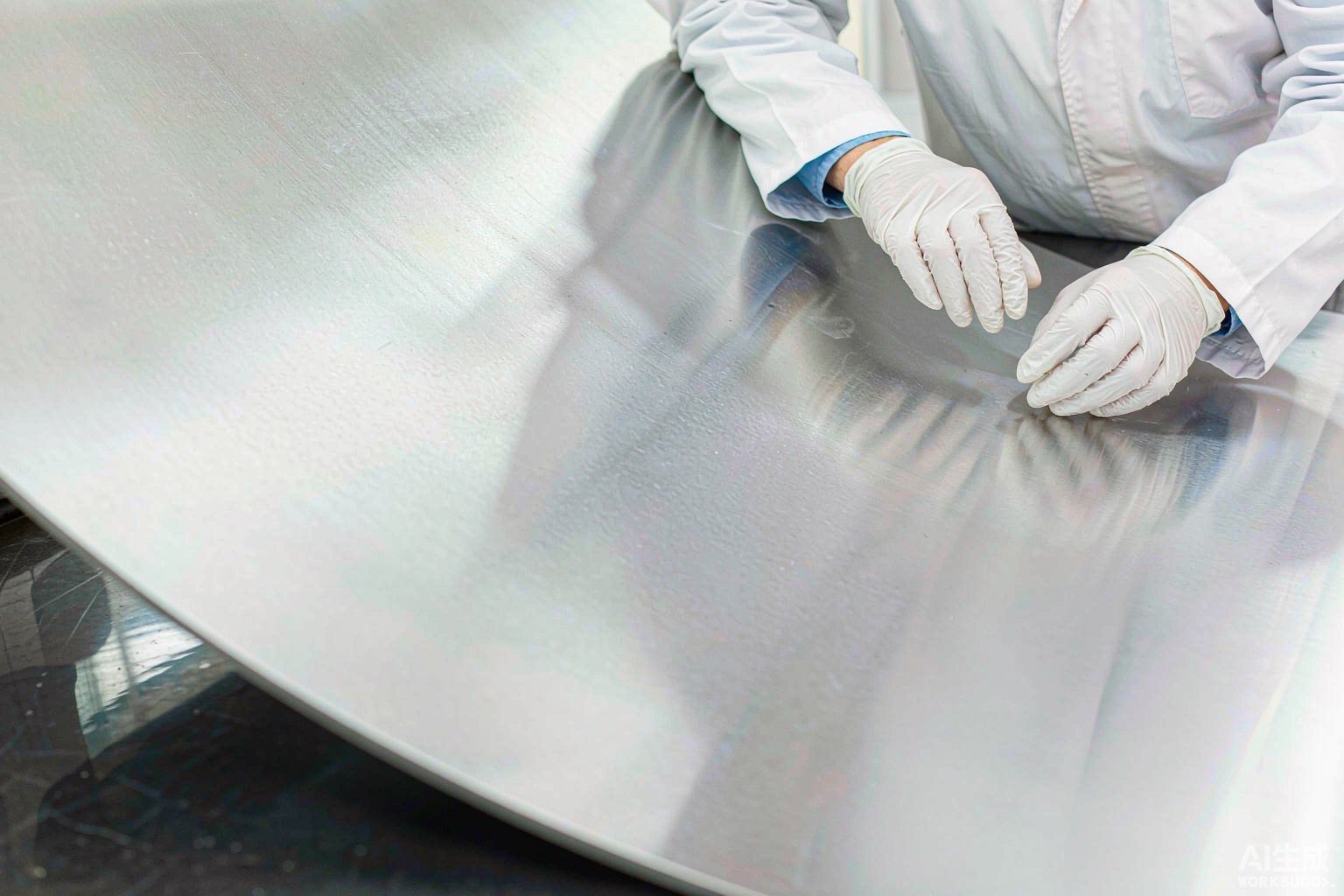
The most expensive nickel alloy in the world is worthless if its surface carries the wrong metal. Iron and copper picked up during handling, fabrication or storage do not change the mill certificate, but they change how the material behaves the moment it is welded, heated or exposed to corrosive service, and none of that shows up in the tensile or chemistry report. Surface contamination is the quiet failure mode that passes every standard test and then cracks on the first weld pass.
This guide is written for buyers, welding engineers and QA staff who specify Inconel, Hastelloy, Incoloy, Monel and related nickel alloy plate, bar, pipe and fittings for corrosion, high-temperature, sour and pressure service. It explains the two contamination types that matter most, free iron and copper, how each one attacks the material, the simple field tests that expose them, and the purchase-order and receiving controls that keep a mixed shop from quietly downgrading your alloy.
At Hangbo Alloy Group we process nickel and high-temperature alloys in Shanghai in dedicated, segregated lines kept free of carbon steel and copper contact, with pickling, passivation and a ferroxyl free-iron verification step built into our finishing routine, so the surface that leaves our plant is the surface that enters your weld. Because we both finish and weld these alloys, we see precisely where contamination is introduced and how to prove it is absent.
For related topics, our separate guides cover welding nickel alloys, machining nickel alloys, Monel 400 properties and our nickel alloy versus stainless steel selection guide. The complete set of purchasing traps is in our nickel alloy procurement pitfalls guide.
Free iron and copper are both surface contaminants, but they fail the material in opposite ways, and confusing them leads buyers to test for the wrong thing. Free iron, usually embedded carbon-steel particles from tools, rust, racks or mixed storage, creates local galvanic cells that destroy corrosion resistance and seed pitting exactly where the particle sits. Copper, picked up from copper-bearing tools, wire brushes, sling fittings or copper-slag blasting media, causes liquid-metal embrittlement and cracking when the part is welded or heated.
The economic trap is that both are invisible to the documents. A mill test certificate reports the chemistry of the bulk heat, which is untouched by a few microns of surface iron or copper, so the paper says the material is perfect while the surface is already compromised. You only learn the truth when a weld fissures or a vessel pits inside its first service year, by which point the heat number and the supplier have been forgotten.
Contamination also travels. A bar that was dragged across a carbon-steel rack, then pickled without verification, can carry iron into your shop and onto every part cut from it. The control therefore has to be about the process the supplier ran, not the analysis on the certificate.
Free iron means metallic iron particles embedded in or smeared onto the nickel alloy surface, typically from carbon-steel tools, chains, racks, rusty storage, or steel-shot blasting. Because iron is anodic to nickel and its alloys in most environments, each particle becomes a tiny galvanic cell that drives localised pitting and rust staining, and it concentrates exactly at the particle, so the damage is both severe and hard to predict.
The detection method is simple and field-proven. The ferroxyl test, referenced in ASTM A380 and ASTM A967 for stainless and nickel-alloy surfaces, wipes the surface with a potassium ferricyanide solution; free iron turns the wipe blue where it reacts. A water-break test tells you whether the surface is clean enough to passivate at all, because a surface that repels water uniformly is free of oils and particulates. Neither test requires a laboratory, and both can be performed at receiving.
| Contamination source | How it gets onto the alloy | Failure it causes | Detection |
|---|---|---|---|
| Carbon-steel tools, brushes | Transfer during cutting, grinding, handling | Local pitting, rust bloom | Ferroxyl spot test (blue) |
| Rusty racks, chains, slings | Contact in storage and transit | Scattered iron specks | Ferroxyl wipe, full surface |
| Steel-shot blasting | Embedded shot in the surface | Deep pitting at shot sites | Ferroxyl plus visual |
| Mixed storage floor | Drag across steel debris | Random contamination | Water-break plus ferroxyl |
Specify that the material is processed and stored in a dedicated nickel-alloy area segregated from carbon steel, that only non-ferrous or ceramic tools are used, and that a ferroxyl free-iron check is performed and passed before despatch, with the result recorded. Our machining guide for nickel alloys explains why surface preparation drives every later operation, including the passivation step that only works once the oxide is fully removed.
Copper contamination behaves nothing like iron. A film or smear of copper on a nickel alloy surface does not pit; it waits. When the part is welded, brazed or heated above the copper melting point, the copper wets the grain boundaries and causes liquid-metal embrittlement, opening fissures that no pre-weld visual inspection would have predicted. The source is almost always a copper-bearing tool, a copper sling fitting, a brass brush, or copper-slag abrasive used in a mixed shop.
Detection is again a simple spot test. A copper sulfate or ammonium hydroxide based swab, the copper spot test described in ASTM A380, turns the surface where copper is present, and it is sensitive enough to catch a smear invisible to the eye. Because the failure is catastrophic and appears only at welding, the test must be done before welding, not after a crack has already formed.
| Copper source | Where it appears | Failure mode | Detection |
|---|---|---|---|
| Copper sling fittings, hooks | Contact marks on plate and bar | LME cracking on heating/welding | Copper spot test |
| Brass or copper brushes | Smear along ground edges | Grain-boundary fissures | Copper spot test, full edge |
| Copper-slag abrasive | Embedded along blasted face | Widespread embrittlement | Copper spot test, mapped |
| Copper-containing markers | Local stamp or mark area | Local crack at that spot | Copper spot test, marked area |
Require that the supplier confirms the absence of copper-bearing tools and abrasives in the finishing line, and specify a copper spot test on the as-received surface before any welding begins in your shop. Our welding guide for nickel alloys covers the fit-up and cleanliness steps that prevent weld cracking from surface causes rather than metallurgical ones.
Understanding the entry points is the cheapest defence, because most of them are choices a supplier makes to save handling cost. A shop that processes carbon steel and nickel alloy on the same floor, with the same slings and the same shot, will contaminate the expensive material no matter how good its chemistry is. The contamination is a property of the process, not the heat.
| Process step | Contamination risk | Control that removes it |
|---|---|---|
| Storage and transit | Iron from steel racks, rust, mixed floor | Dedicated nickel-alloy area, covered racks |
| Cutting and grinding | Iron smear from steel tools, wheels | Non-ferrous or ceramic tools, segregated wheels |
| Surface finishing | Iron or copper embedded by blasting | Approved non-metallic or nickel-compatible media |
| Pickling and passivation | Residual iron if not verified | Ferroxyl check before despatch, recorded |
The single most powerful clause you can write is the segregation requirement: the alloy must be processed, handled and stored in an area and with tooling dedicated to nickel and high alloys, never shared with carbon steel or copper-bearing equipment. A supplier who cannot promise this has already told you what their surface looks like.
Both contaminants are caught with inexpensive field tests, and the discipline is to perform them at the right moment: at receiving, and again immediately before welding. The table pairs each contaminant with its test and the clause that enforces it.
| Contaminant | Field test | What a pass looks like | Write this into the order |
|---|---|---|---|
| Free iron | Ferroxyl (potassium ferricyanide) wipe, ASTM A380/A967 | No blue reaction anywhere on the surface | Free-iron ferroxyl check passed and recorded pre-despatch |
| Copper | Copper spot test, ASTM A380 | No copper reaction on the surface | Copper spot test clean before welding; no copper tools |
| Oils, particulates | Water-break test | Water sheets uniformly, no beading | Surface clean and verifiable before passivation |
| Both, combined | Receiving inspection plus pre-weld re-check | Both tests clean at both stages | Inspection at receiving and at weld set-up |
These checks cost almost nothing and become impossible to perform meaningfully after the material is welded, heated or installed. The control that prevents contamination is the same one a disciplined mill runs on its own product: dedicate the area and tooling, verify the surface, and keep the heat identity on the piece so a contaminated lot can be traced back and quarantined.
Use this table as a starting point when specifying surface cleanliness. Inconel, Hastelloy, Incoloy, Monel and the pure-nickel grades are defined by UNS numbers and ASTM or AMS product specifications, and the cleaning references below are the ones most often cited for finished surfaces.
| Concern | Reference practice | What it covers |
|---|---|---|
| Cleaning, descaling, passivation | ASTM A380 | Surface cleaning and the ferroxyl and copper tests |
| Chemical passivation | ASTM A967 | Passivation verification including free-iron test |
| Free iron | Ferroxyl test (within A380/A967) | Detects embedded or smeared iron |
| Copper | Copper spot test (within A380) | Detects copper film or smear |
| Surface finish quality | ASTM B600 (nickel alloys) | Descaling and cleaning of nickel alloy surfaces |
Inconel, Hastelloy, Incoloy and Monel are registered trademarks of their respective owners; the grades are defined by their UNS numbers and the applicable ASTM or AMS specifications, not by the trade name. This article is buying guidance, not a legal opinion or a substitute for the current edition of the standard you order to.
Put these into every inquiry or purchase order for nickel alloy that will be welded, heated or used in corrosive service:
Because the certificate reports the chemistry and mechanical properties of the bulk heat, while contamination is a few microns of foreign metal on the surface. The bulk analysis is untouched, so the paper reads perfectly even when the surface carries iron or copper that will later pit or crack the part. The only way to catch it is a surface test such as the ferroxyl or copper spot test, performed on the piece itself.
The ferroxyl test wipes the surface with a potassium ferricyanide solution that turns blue where free iron is present, and it is referenced in ASTM A380 and ASTM A967 for stainless and nickel-alloy surfaces. Use it at receiving and again before welding or passivation on any nickel alloy that was handled, cut or stored in a mixed shop, because free iron seeds pitting exactly where the particle sits.
Yes. Copper on a nickel alloy surface does not pit; it waits until the part is welded, brazed or heated above the copper melting point, then causes liquid-metal embrittlement that opens fissures along grain boundaries. A smear invisible to the eye is enough, which is why a copper spot test before welding is the control that matters, not a visual inspection.
Pickling and passivation remove oxide and free iron from the surface, but only if the surface was properly descaled first and the result is verified. They will not remove embedded steel shot or a copper smear that sits in a ground or blasted pocket, and they do nothing if the supplier never ran the test. Require a ferroxyl check after pickling and a copper test before welding to prove the step actually worked.
The segregation requirement: the alloy must be processed, handled and stored in an area and with tooling dedicated to nickel and high alloys, never shared with carbon steel or copper-bearing equipment. A supplier who can commit to dedicated lines and non-ferrous tooling has already controlled most of the risk; one who cannot has told you what their surface looks like.
The need scales with consequence. A small fitting in sour or pressure service that will be welded needs both tests as much as a large vessel, because a single contaminated part can fail the whole joint. For non-welded, non-corrosive decorative use the risk is lower, but the ferroxyl test is so cheap that specifying it everywhere costs almost nothing and removes the argument later.
Run the ferroxyl and copper spot tests on the as-received surface the day you start fabrication, keep the heat number tied to the test result, and quarantine any piece that reacts before it reaches the welder. Combined with a purchase-order clause requiring the supplier to have already passed the same tests, this catches contamination at receiving rather than as a crack in the completed weld.
If you have seen pitting or weld cracking you suspect came from surface contamination, or you want a supplier who can prove the surface is clean before it ships, send us your specification. Tell us the grade, the product form and dimensions, the quantities, the service environment and whether the part will be welded, and any standard your project requires — we will tell you which surface tests to demand, confirm whether the grade really suits the environment, and quote our own virgin-material, double-melted product finished in dedicated, segregated nickel-alloy lines with ferroxyl free-iron and copper spot verification built in. Typical response time is ten minutes, and we ship worldwide from Shanghai.
Email: serena@hangboalloy.com
Phone: +86 166 2109 2936
WhatsApp: +86 166 2109 2936
Send us the grade, product form and dimensions, the quantities, the service environment and whether the part will be welded, plus any specification you were offered by another supplier. We will tell you which surface tests to demand, confirm whether the grade really fits your application, and quote our own virgin-material, double-melted product finished in segregated nickel-alloy lines with ferroxyl free-iron and copper spot verification.