
Hangbo Alloy Group
Shanghai · Est. 2012
Perfect nickel alloy leaves the mill bright and certified and arrives at your dock rusted and pitted. The cause is almost never the metal — it is the packaging, the container and weeks of ocean transit. This guide maps the three mechanisms that destroy nickel alloy in freight and gives you the exact packing specification and purchase-order clauses that stop it.
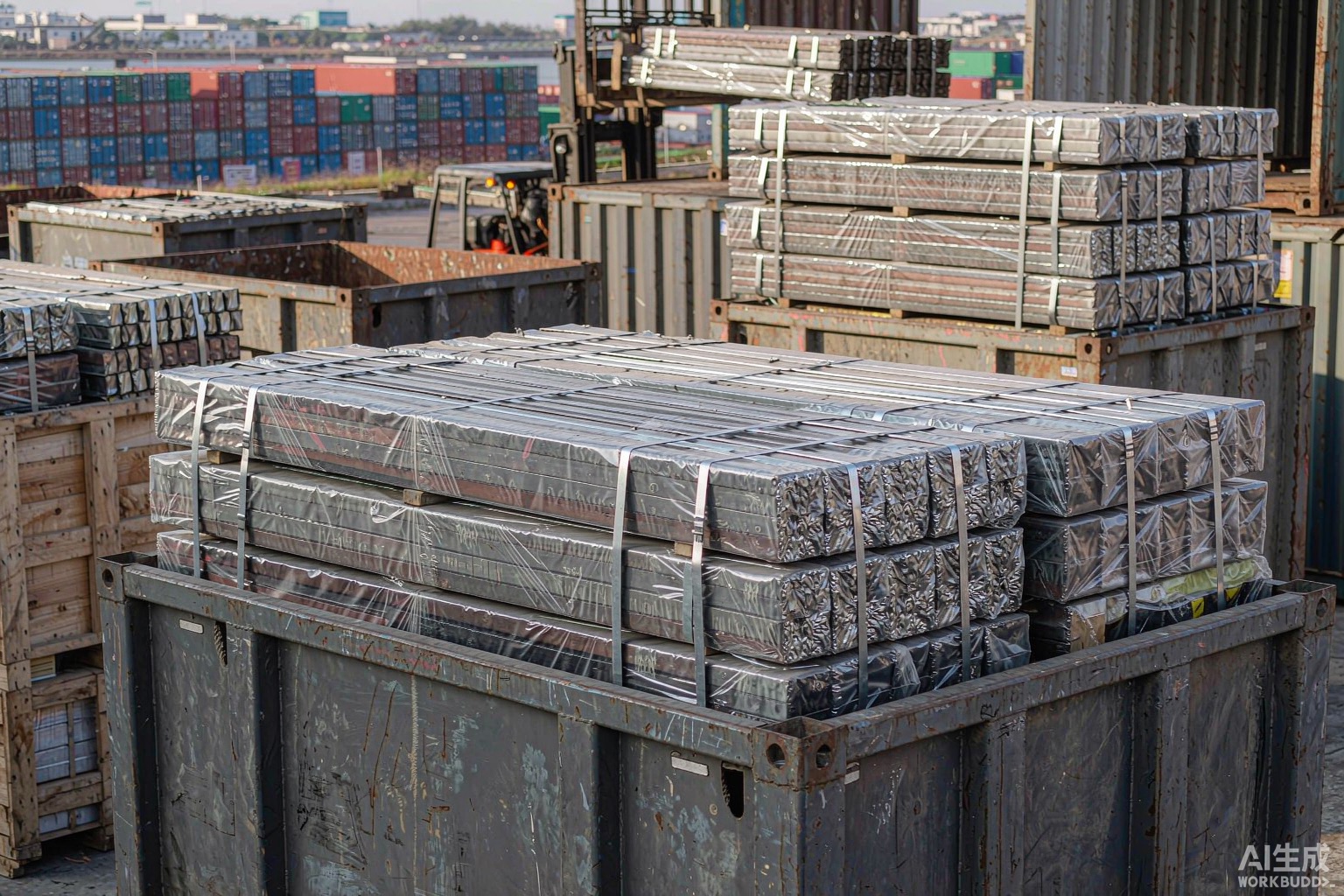
Nickel alloy leaves a Chinese mill as bright, clean, fully certified material and arrives at an overseas receiving dock stained with rust, etched with chloride marks or pitted along the length of the bar. The cause is almost never the metal. It is the packaging, the container and the weeks of ocean transit that quietly turn a perfect supply chain into a rejected shipment. For procurement managers this is the most frustrating failure mode in the book, because the certificate is perfect and the material is ruined.
This guide is written for buyers, QA engineers and project expeditors who specify Inconel, Hastelloy, Incoloy, Monel, Nimonic and the rest of the high-temperature and corrosion-resistant family in bar, seamless tube, plate, strip, forging and welding-wire form. It explains the three physical mechanisms that destroy nickel alloy in transit, shows you how to tell arrival corrosion apart from mill defects, and gives you the exact packaging specification and purchase-order clauses that stop it. Every control here can be written into an inquiry this week.
We write this from the production side. Hangbo Alloy Group is a Shanghai nickel alloy manufacturer that melts, forges, rolls and finishes its own material and packs it for export from our own warehouse, so the packaging decision is ours to make and document. Our interest is simple: material that arrives rusted is material the customer blames on us regardless of where the fault lay, so we build corrosion protection into the export specification rather than leaving it to the freight forwarder. Grade names such as Inconel, Hastelloy and Monel are third-party trademarks defined by their UNS numbers and the applicable ASTM or EN specifications; the alloy is the standard, not the brand.
If you are building a complete inbound specification, our pillar guide on nickel alloy procurement pitfalls covers every stage from melting route to after-sales, and our offshore and subsea selection guide covers what these alloys must survive in service.
Nickel alloy arrives corroded because ocean transit exposes bare or thinly protected metal to three ingredients it cannot tolerate: chlorides, liquid water and dissimilar-metal contact, for weeks at changing temperature and humidity. None of these are present at the mill, so a receiving inspection that finds rust blames the supplier when the real fault was the crate.
The economics are the root cause. Export-grade protection — VCI paper, desiccant, sealed barrier wrapping, individual end caps, ISPM-15-compliant crating and pre-load photography — adds visible cost that a low quotation quietly removes. The material still ships, still clears customs, and only fails at your dock, long after the supplier has been paid and the claim window has closed. The pattern repeats because the buyer rarely specifies the protection in writing, so the cheapest option is the default.
The good news is that arrival corrosion is the most preventable failure mode in nickel alloy procurement. Unlike a substituted melting route or a trimmed composition, packaging is something you can describe precisely on the purchase order and verify with photographs before the container is sealed. The rest of this guide gives you that specification.
The table below is the quick map of how nickel alloy is damaged in transit. Each line is expanded in the sections that follow, with the detection method that separates a packaging fault from a mill fault.
| # | Damage you see on arrival | Root cause | Where it enters the chain | How to detect it | How to prevent it |
|---|---|---|---|---|---|
| 1 | Uniform reddish rust on bright bar surfaces | Condensation (“container rain”) from humidity cycling | Container loading and voyage | Moisture indicator cards, desiccant weight, interior humidity log | Barrier wrapping, desiccant, sealed crate, dry container |
| 2 | Etched, branching marks and pitting | Chloride contamination from dunnage, seawater ingress or road salt | Packing materials, port handling | Chloride test strips on crate and surface | Chloride-free dunnage, VCI, sealed barrier |
| 3 | Localized deep rust at one contact line | Galvanic coupling with steel strapping or a dissimilar fitting | Packing and crating | Inspect contact points, isolate metals | Non-metallic separators, plastic end caps |
| 4 | Rust starting at the cut end of tube or bar | Open, unprotected end faces wick moisture | Finishing and packing | Check end faces first on arrival | End caps, end welding or plug sealing |
| 5 | Staining, fingerprint corrosion, crevice rust under labels | Residual process fluid, salted timber, trapped moisture under tape | Mill finish and packing | Inspect under labels and tags | Clean, dry surfaces; neutral packaging; breathable yet sealed wrap |
| 6 | Scratched or dented surfaces that then rust | Improper dunnage, shifting load, loose strapping | Container loading | Pre-load and post-voyage photos | Engineered dunnage, lashing, load photos |
Three independent mechanisms account for essentially all transit corrosion of nickel alloy. Understanding which one you are looking at changes who pays and what you write next time.
Mechanism 1 — Chloride attack. Chloride is the single most aggressive species for nickel alloys. It arrives from seawater spray during port handling, from timber treated with salt, from road de-icing salt tracked into a container, or from PVC or rubber that off-gasses acidic chloride vapour in a sealed space. Even a few parts per million on the surface is enough to initiate pitting on a passive alloy such as Inconel 625 or Hastelloy C-276. The signature is branching etch marks and isolated deep pits rather than a uniform film.
Mechanism 2 — Container rain. A standard dry container breathes. Daytime heat drives moist air up; nighttime cooling condenses it on the steel walls and ceiling, and the water runs down onto the cargo. Over a four-week voyage across the equator this cycle repeats dozens of times. Unless the material is inside a sealed moisture barrier with enough desiccant to hold the internal relative humidity below roughly 40–50 percent, condensation will form on the metal.
Mechanism 3 — Galvanic and contact corrosion. Bare nickel alloy packed against carbon-steel strapping, a steel crate wall or a mixed shipment of stainless and carbon steel develops a galvanic cell in the presence of moisture, and the less noble metal locally corrodes. The same effect appears where a wet label, a steel staple or a forgotten tool rests against a bright bar surface for weeks.
Choosing the right protective system is a trade-off between cost, voyage length and the value of the cargo. The table ranks the common options by what they stop and where they fall short.
| Protection method | Stops | Does not stop | Best use |
|---|---|---|---|
| VCI (volatile corrosion inhibitor) paper wrap | Surface oxidation and light humidity corrosion on individual pieces | Bulk liquid water, chloride vapour from outside | Individually wrapped bars, plates, forgings |
| VCI film / shrink wrap | Humidity and handling scratches when sealed | Chloride already present inside the wrap | Bundles and small lots |
| Silica-gel or clay desiccant | Container rain inside a sealed barrier | Nothing if the barrier is breached | Inside barrier bags and sealed crates |
| Polyethylene moisture barrier bag | External humidity and chloride vapour entirely | Requires desiccant to manage residual air | High-value or long-voyage shipments |
| End caps, end plugs, end welding | Wicking corrosion at tube and bar ends | Sidewall corrosion | All seamless tube and hollow sections |
| Sealed wooden crate, ISPM-15 timber | Mechanical damage, shifting, contamination | Internal condensation if not also desiccated | Finished and machined parts, export to biosecure markets |
The reliable system for a long ocean voyage is layered: clean dry material, individual VCI wrap, placement inside a sealed polyethylene barrier with calculated desiccant, then the whole lot in a crate or container with non-metallic separation from steel and moisture-indicator cards visible at opening. A single layer rarely survives a four-week equatorial crossing.
No amount of wrap saves material loaded into a wet, contaminated or poorly lashed container. The loading step is where most arrival damage is actually decided.
| Control | Why it matters | What to write on the order |
|---|---|---|
| Container inspection before loading | Detects prior moisture, salt residue, holes | “Clean, dry, odor-free container; floor and walls inspected and photographed before loading” |
| Desiccant quantity by volume | Holds interior below corrosion threshold for the voyage | “Minimum desiccant per cubic metre of contained air, with moisture-indicator cards” |
| Engineered dunnage and lashing | Prevents shifting that scratches and dents surfaces | “Load secured against racking; non-staining dunnage only” |
| Separation of grades and heats | Keeps heat identity and prevents mixed contamination | “Each heat in its own marked package; no commingling” |
| Pre-seal photography | Proves condition at stuffing, supports any claim | “Photographs of packed load and sealed container supplied with documents” |
| Fumigation and biosecurity compliance | Avoids methyl-bromide residue and customs rejection | “ISPM-15 compliant timber; fumigation certificate if required” |
The most important skill at the receiving dock is distinguishing a packaging fault from a manufacturing fault, because the remedy and the responsible party are completely different. A mill defect such as a seam, inclusion or out-of-spec chemistry is intrinsic to the metal and shows uniformly; transit damage is environmental and shows a pattern tied to the environment.
Work through this short protocol on arrival:
Where intergranular or chloride stress-corrosion concern exists, reference the appropriate ASTM corrosion practice for the grade rather than judging by appearance alone, and keep the evidence chain intact until the dispute is closed.
Verbal requests such as “pack it well” protect no one. The specification must be written, measurable and tied to the voyage. The table below turns each risk into a clause you can paste into a purchase order or packing instruction.
| Risk | Specification clause | Verification at your dock |
|---|---|---|
| Container rain | Sealed polyethylene barrier with desiccant sized to container volume; humidity below 50% at opening | Moisture cards, dry interior, no condensation |
| Chloride attack | Chloride-free dunnage and timber; VCI wrap; no PVC contact | Chloride test strips negative on surfaces |
| Galvanic corrosion | Non-metallic separation from steel; plastic end caps; no steel strapping contact | No corrosion at metal contact points |
| End wicking | End caps, plugs or end welding on all tube and hollow stock | End faces clean on opening |
| Contamination | Clean, dry surfaces; neutral packaging; labels that do not trap moisture | Inspect under labels and tags |
| Loss of evidence | Pre-load and sealed-container photographs supplied with the certificate | Photos received with shipping documents |
At our mill the protection is built into the same process that makes the metal. We charge only virgin prime raw material, refine it through vacuum induction melting followed by electroslag or vacuum arc remelting, strip oxide scale completely before working, then forge, roll, heat-treat and finish to the ordered condition, and finally apply composition, mechanical, ultrasonic or penetrant, dimensional, marking and packing checks. The packaging step is simply the last of those checks, and for export it is specified per the customer’s route rather than left to the forwarder.
Put these into every nickel alloy inquiry that will travel by sea and most arrival-damage disputes disappear:
Packaging is mostly governed by the customer specification and the carrier’s rules, but a few standards frame the corrosion and inspection side. Confirm the current edition and any project-specific addendum before you order.
| Subject | Reference | What it covers |
|---|---|---|
| Corrosion testing of nickel alloys | ASTM G28 (practices A and B for Ni-Cr-Mo alloys) and related ASTM G-series practices | Intergranular and specific corrosion evaluation of the grade |
| Product specifications | ASTM B166/B167, B443, B444/B622, B564, B574, B637 and grade-specific standards | Material, condition and marking requirements for each form |
| Wood packaging | ISPM-15 (IPPC) for treated timber | Biosecurity compliance for export crates |
| Traceability | EN 10204 3.1 / 3.2 certificate | Heat-to-piece identity preserved through packing |
| Mill test evidence | Our test reports and traceability process | What a complete certificate and packing record contains |
This article is guidance for buyers, not a legal opinion or a substitute for the applicable standard or your carrier’s conditions of carriage. Specifications change; always verify against the current edition you order to.
Yes. Corrosion resistance is a property of the alloy in a specific environment, not immunity. A passive film on Inconel or Hastelloy is defeated by chlorides, liquid water and galvanic contact, exactly the conditions inside a damp container. The grade being “stainless” does not protect it from weeks of condensation and salt.
Photograph the sealed container and crate before opening, read the moisture-indicator cards, run chloride test strips on the dunnage and wet surfaces, and map whether the corrosion follows an environmental pattern such as end-wicking or contact lines. Retain the wrapping and dunnage as evidence. A piece of the same lot kept in proper packaging staying clean is strong proof.
Usually not on its own. VCI protects against surface oxidation and light humidity but does not stop bulk condensation or chloride that enters from outside. For a multi-week equatorial crossing, combine individual VCI wrap with a sealed moisture barrier and calculated desiccant, and separate the metal from steel.
Size the desiccant to the volume of contained air inside the barrier or container, not to the weight of metal, because it must hold the internal relative humidity below the corrosion threshold for the whole voyage. State a minimum grams-per-cubic-metre value and require visible moisture-indicator cards so the condition is verifiable at opening.
Cut ends are exposed cross-sections with no protective oxide skin and they wick moisture by capillary action along the bore or grain. They are the first point to corrode in a damp environment. End caps, plugs or end welding close that path and are the cheapest insurance on hollow stock.
It depends on the contract and the evidence. If you specified the packaging in writing and have pre-load and sealed-container photographs plus retained dunnage, the fault and remedy are clearer. If the order only said “export packing”, the lowest-cost option was the default and recovery is harder. Write the specification and assign responsibility in the purchase order.
Inspect on arrival every time for high-value or critical-service lots, and sample for routine ones, but always photograph the sealed container and read the moisture cards. The cost of a two-minute check is nothing next to a rejected heat of Inconel 625, and the photographs are the only evidence you will have if a dispute arises weeks later.
If you have lost a shipment to transit corrosion, want a packaging specification written for your route and climate, or need a second opinion on a claim, send us the grade, product form, dimensions, quantity, destination and any packing requirement your client imposes. We will recommend a protection system that survives the voyage, confirm the alloy fits the service, and quote our own virgin-material, double-melted production with full heat-to-piece traceability and pre-load photographs. Typical response time is ten minutes, and we ship worldwide from Shanghai.
Email: serena@hangboalloy.com
Phone: +86 166 2109 2936
WhatsApp: +86 166 2109 2936
Send us your grade, product form, dimensions, quantity, destination and any export-packing requirement your client demands. We will recommend a packaging specification that survives the route, confirm the alloy fits the service, and quote our own virgin-material, double-melted production with full heat-to-piece traceability and pre-load photographs.