
Hangbo Alloy Group
Shanghai · Est. 2012
Nickel alloy is made to order, and the two levers a supplier can pull without touching the chemistry are length and minimum order quantity. This guide maps the random-length, split-bundle and MOQ traps and gives the exact purchase-order wording that closes each one.
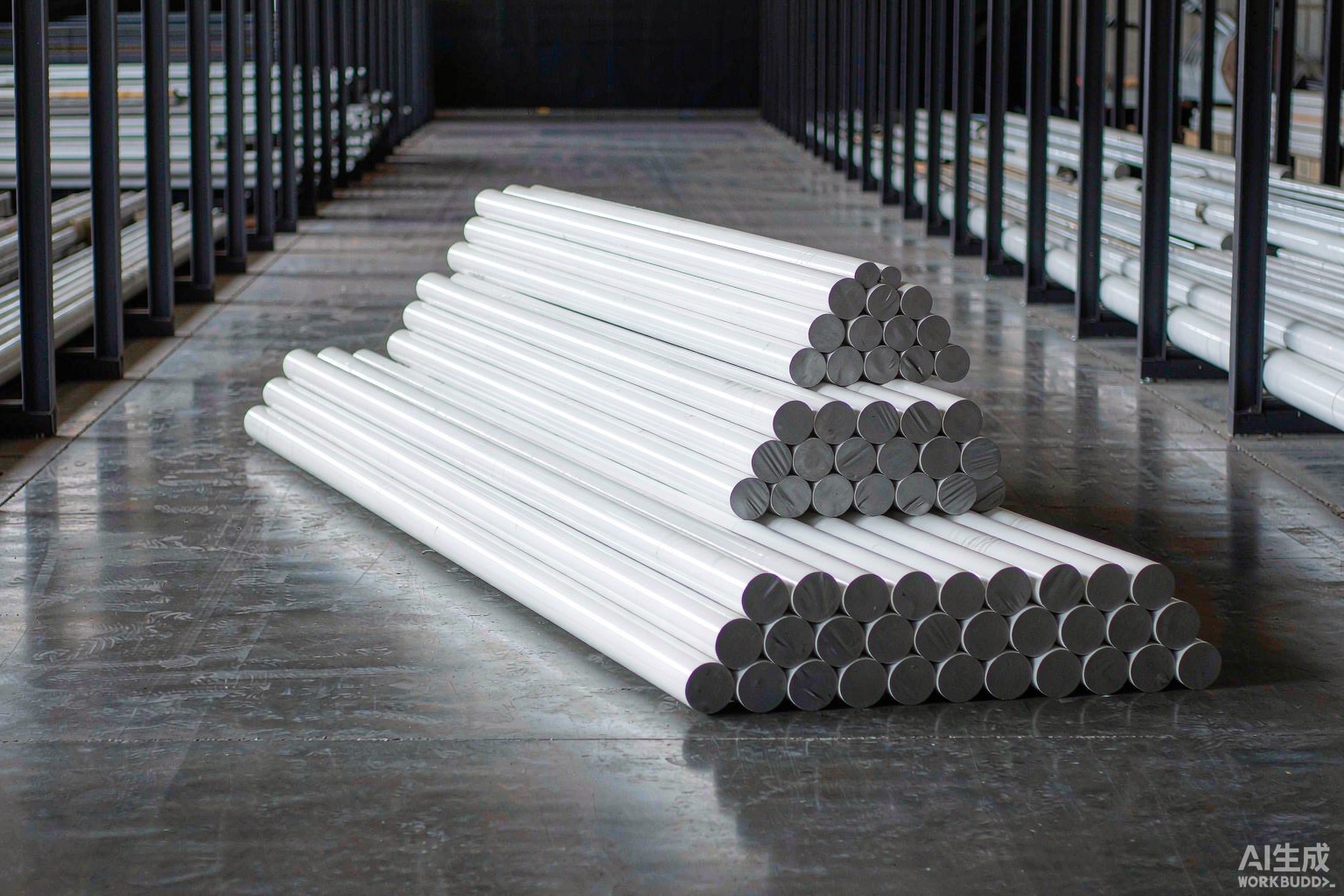
Nickel alloy is almost never sold the way carbon steel is: by the kilogram off the rack. It is made to order, and the two levers a supplier can pull without ever touching the chemistry are length and minimum order quantity. Random lengths, split bundles, oversized saw cuts and MOQ games quietly move cost and risk from the seller onto your shop floor, your scrap bin and your project schedule.
This guide is for procurement managers, fabricators and project buyers who order Inconel, Hastelloy, Incoloy, Monel, Nimonic and the high-temperature grades in bar, plate, tube, strip and forging form. It explains how length and MOQ traps work, what they cost you in real terms, and the exact purchase-order wording that closes each one. Our broader nickel alloy procurement pitfalls buyer's guide covers certificate and melting-route risk; this article stays on quantity, length and bundling. Bundling and weight also meet at the scale, and our weight billing guide explains how tolerance overage and tare padding inflate the mass you are charged.
We write this as a manufacturer, not a trader. Hangbo Alloy Group makes the material you order in our own Shanghai works: a virgin prime charge is melted by VIM and refined by ESR or VAR, descaled thoroughly before it is worked, given the standard solution anneal or age cycle the applicable ASTM or AMS grade requires, and finished under complete process control covering composition by spectrometry and wet analysis, mechanical and impact testing, ultrasonic and penetrant inspection, dimensional verification, marking and export packing. Because we make to length ourselves, we can quote fixed lengths and cut-to-size without the warehouse games described below. Our round bar programme and seamless tube programme are built around customer-specified dimensions.
Nickel alloy is expensive partly because the raw charge is expensive, but also because it is processed in long, heavy forms and then cut. The cheapest thing a supplier can do is ship you what they already have — random mill lengths, leftover bundles, off-cuts assembled into your quantity — and call it fulfilment. The cost you absorb is invisible on the invoice.
Random lengths cost you three ways. First, you pay for feet you cannot use: a 5.8 m (19 ft) bar where your parts are 1.2 m (3.9 ft) long yields more butt-ends than a 6.2 m (20.3 ft) bar cut to a multiple. Second, you pay cutting and handling labour to sort and trim what arrives. Third, you carry scrap value out the door at the price of prime material. None of this shows on a certificate, which is exactly why it survives as a sales tactic.
MOQ games work the other direction. A supplier quotes a low unit price but attaches a minimum order far above your need, or bundles grades and sizes you did not ask for to reach it. The headline price is real; the effective price, once you have paid for material you cannot use, is not.
Each trap below has a physical signature you can write into the order and verify at receiving. The table pairs the trap with the control that neutralises it.
| Trap | What happens | Cost to you | Detection / control |
|---|---|---|---|
| Random mill lengths | You receive varied 3–7 m (10–23 ft) bars instead of fixed lengths | Butt-end scrap, extra cutting, schedule slip | State exact cut lengths and permitted minus tolerance |
| Split / mixed bundles | One "lot" contains several heats and lengths | Untraceable pieces, mixed properties | Require single-heat bundles, heat on every piece |
| Over-length saw cut | Each piece cut long, you absorb the trim loss at full price | Paid scrap, thicker kerf loss | Specify net length with minus-only tolerance |
| MOQ padding | Minimum order forced above your need, or bundled extras | Capital tied in unused stock | Agree firm quantity; refuse substitute items |
| Bundle-count rounding | Piece count rounded up, you pay for phantom bars | Overpayment by piece count | Require piece-by-piece packing list with weights |
The split-bundle trap deserves special attention because it breaks traceability. Our test reports and traceability page explains why single-heat identity protects you; once a bundle mixes heats, the certificate can only describe one of them honestly.
Random length is a legitimate mill term — many specifications define it as a range, for example 2–6 m (6.5–19.7 ft) — and it is fine when you actually want it. The trap is when random is supplied where fixed was needed, or where the random range is quietly widened so the supplier ships only their longest leftovers. A fabricator cutting 1.5 m (4.9 ft) parts from random 3–7 m (10–23 ft) bar will scrap a far higher fraction than from fixed 6.1 m (20 ft) multiples.
The control is to specify lengths as a number with a tolerance band, and to state who owns the off-cut. If you order "12 pieces × 2.0 m (6.6 ft) −0 / +50 mm (2 in)", the supplier cuts to your plan and you receive usable stock. If you order "approximately 24 metres (79 ft) of bar", you receive whatever they have, and the shortest pieces become your scrap.
| Order wording | What you receive | Yield on 1.5 m (4.9 ft) parts | Risk |
|---|---|---|---|
| "24 m (79 ft) random length" | Mix of 3–7 m (10–23 ft) bars | High butt-end loss, variable | You absorb all trim scrap |
| "16 × 1.55 m (5.1 ft) −0/+30 mm (1.2 in)" | Fixed cut lengths | Nearly 100% usable | Low; supplier owns kerf |
| "6 m (19.7 ft) multiples, no shorts" | Full long bars | You cut in-house | Moderate; you pay cutting labour |
For tube and pipe the same logic applies to fixed versus random lengths; our Inconel 625 seamless pipe manufacturing article explains how length is planned at the mill.
Minimum order quantity is a legitimate production constraint — a melt and a heat treat furnace have a floor — but it is also a lever. Three patterns recur: the inflated MOQ that forces you to over-buy, the MOQ met by padding with a different size or temper, and the "economy lot" that bundles your grade with leftover stock of another.
The defence is to agree a firm net quantity in your unit of use (pieces, kilograms, metres) and to state that the order is satisfied only by the specified grade, form and condition. Then require a packing list that reconciles to the certificate by piece count and weight. A nickel versus stainless selection guide helps you confirm you are even buying the right family before quantity games begin.
| MOQ pattern | How it presents | What to require |
|---|---|---|
| Inflated minimum | "MOQ 2 tonnes (2.2 tons), you need 400 kg (880 lb)" | Firm quantity; ask whether a smaller melt is possible or split delivery |
| Padding with other sizes | Extra diameters added to reach MOQ | "No substitute sizes; order satisfied only by specified items" |
| Bundled other grades | Leftover Hastelloy mixed into an Inconel order | Grade-by-grade packing list; single grade per bundle |
| Price break bait | Huge discount above an unreachable quantity | Compare effective price at your real quantity |
When a grade is genuinely needed in quantity, planning ahead with the mill matters; our Inconel 625 guide and Hastelloy C-276 guide give the property baselines to size the order correctly.
Length and quantity are commercial terms more than metallurgical ones, but the product standards still give you hooks: they define length classes, permitted minus tolerances, and how bundles and test lots are formed. Using them in the order removes ambiguity.
| Standard / term | What it governs | How to use it |
|---|---|---|
| ASTM B446 / B443 / B564 length classes | Randoms vs fixed lengths, tolerance bands | Name the class and your required length explicitly |
| ASTM B880 general requirements | General conditions for nickel alloy products | Reference it so commercial terms are covered |
| EN 10204 3.1 / 3.2 | Certificate matches the actual lot | Require certificate to reconcile to the packing list |
| Incoterms and unit of sale | What "delivered" and the price unit mean | State price per kg (lb) net, FOB or CIF as agreed |
| Bundle and test-lot definition | One heat per test lot where required | Require single-heat bundles for critical service |
A mill that runs its own melting and finishing lines can plan length at the order stage rather than shipping warehouse remainders, which is the structural reason length traps are rarer with a manufacturer than with a trader.
Write these into every inquiry and purchase order for nickel alloy:
Plate and sheet carry the same trap in different clothing — off-thickness rolled at the thin end of tolerance. Our Monel 400 guide and the offshore and subsea selection guide discuss where dimensional margin is non-negotiable.
Inconel, Hastelloy, Incoloy, Monel, Nimonic and Haynes are registered trademarks of their respective owners; each grade in this article is defined by its UNS number and the applicable ASTM, EN or AMS specification.
This article is guidance for buyers, not a legal opinion or a substitute for the applicable standard. Specifications change; always verify against the current edition of the specification you order to.
Yes, when you cut parts in-house and can use variable lengths efficiently, random mill length is cheaper because the supplier skips cutting labour. The problem is only when random is supplied where fixed was needed, or where the random range is widened to clear the supplier's shortest leftovers. Specify exactly what you want and you keep the savings without the scrap.
It depends on your part length and the random range, but the loss is rarely zero. Cutting 1.5 m (4.9 ft) parts from a 3–7 m (10–23 ft) random range can leave 10–20 percent as butt-ends at the price of prime material, plus cutting labour. Fixed multiples planned to your part length push usable yield toward 100 percent. Always compare effective cost per usable metre, not headline price per kilogram.
It reflects the floor of a melt and a heat-treatment load, not an arbitrary rule. A genuine manufacturer can often plan a heat to your need or combine it with a compatible order. Be cautious when a trader quotes a MOQ far above your requirement and then offers to "pad" it with other sizes or grades — that is a commercial trap, not a production constraint.
Require single-heat bundles and permanent heat identification on every individual piece, with a certificate that matches exactly that heat. A mixed bundle can only be honestly certified for one of its heats, which is why mixed bundles break traceability and should be rejected for critical service.
For cut lengths, agree the price per net kilogram (or pound) of the material you specified, with the off-cut and kerf ownership stated, so you are not paying prime price for scrap you discard. For fixed pieces, a per-piece price with the length fixed removes ambiguity entirely. Always state the Incoterm so freight and risk are clear.
Often. A headline price looks attractive until you discover it applies only above an inflated minimum, or only to random lengths that generate scrap, or only when padded with sizes you did not want. Read the commercial terms, not just the unit price, and require them written into the purchase order.
Yes. Because we manufacture in our own works, we plan length at the order stage and can supply fixed cut lengths, cut-to-size plate and tube, and single-heat bundles with permanent marking. Our round bar and seamless tube programmes are built around customer-specified dimensions, and the packing list reconciles to the certificate by piece and weight.
Hold the shipment and notify the supplier in writing before any pieces are used. A packing list that does not reconcile to piece count and weight, or a bundle that mixes heats, is grounds to reject the lot and to question the certificate's accuracy. Keep the photographs and the discrepancy note as your claim evidence.
If you are scoping a nickel alloy order and want fixed lengths, cut-to-size supply or a realistic minimum that fits your project rather than a warehouse remainder, send us the grade, form, dimensions, quantity and service environment. We will plan the heat and length to maximise your usable yield, quote our own virgin-material, double-melted production with full heat-to-piece traceability, and state the commercial terms clearly in writing. Typical response time is ten minutes, and we ship worldwide from Shanghai.
Email: serena@hangboalloy.com
Phone: +86 166 2109 2936
WhatsApp: +86 166 2109 2936
Send us the grade, product form, dimensions, quantity and service environment. We will plan the heat and length to maximise your usable yield, quote our own virgin-material, double-melted production with full heat-to-piece traceability, and state the commercial terms clearly in writing.