
Hangbo Alloy Group
Shanghai · Est. 2012
A superalloy can pass chemistry and still crack in the forge or weld because of parts-per-million tramp elements that come from the raw charge. This guide explains why a virgin prime charge is the only reliable defence, what Pb, Bi, Sn and Sb do, and how to require the control.
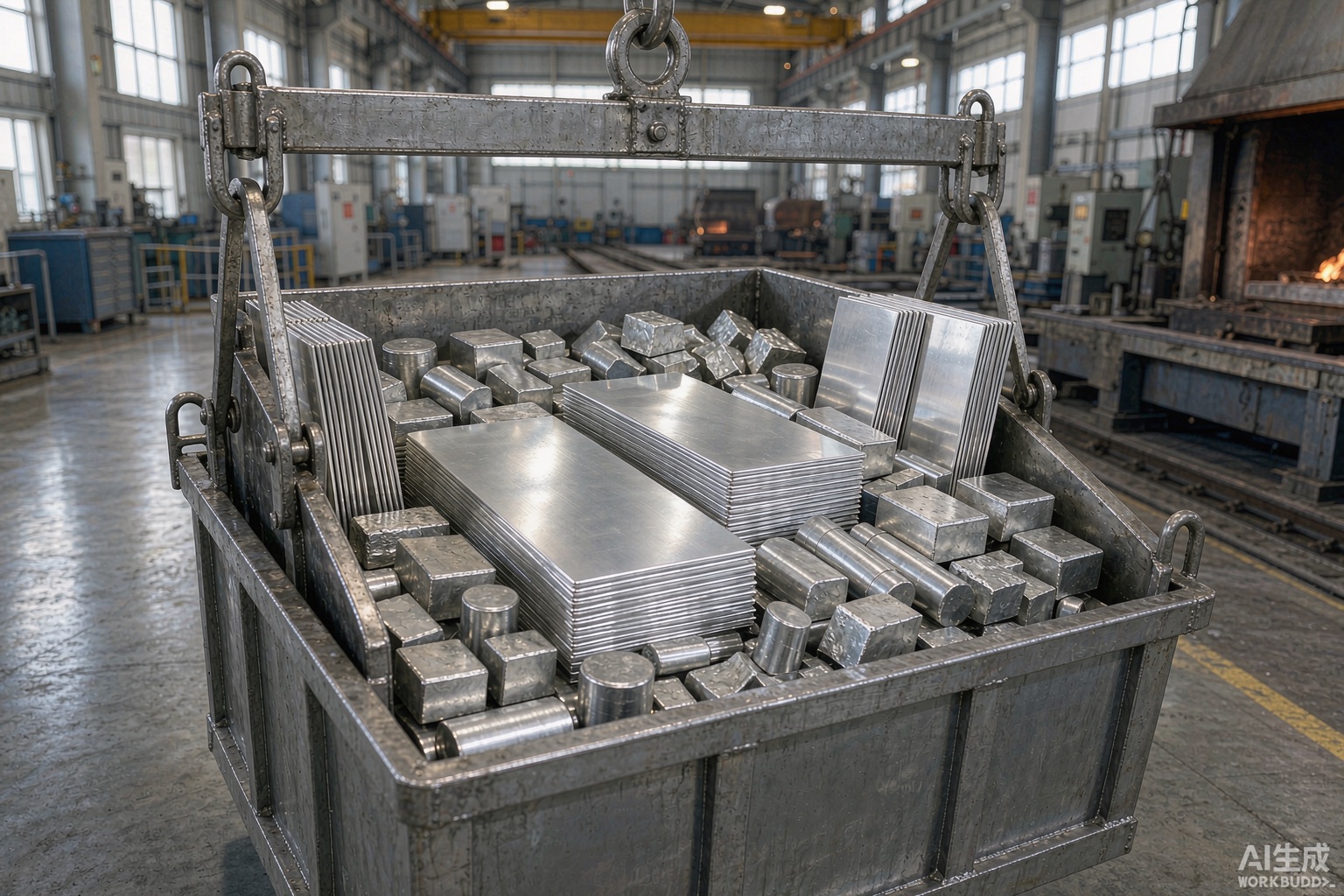
A superalloy can be poured to the correct UNS chemistry, double melted, and still fail in fabrication because of a handful of elements measured in parts per million. These tramp elements — lead, bismuth, tin, antimony, arsenic and a few others — come almost entirely from the raw charge, not from the melt process. If the charge was scrap of unknown origin, they are already in the liquid metal, and no later step reliably removes them.
This guide explains why a virgin charge is the only dependable defence against tramp elements, what those elements do to hot working and welding, and how to require the controls that keep them out. The lesson is simple: the cleanliness of a nickel alloy is decided before the first electrode is switched on, at the raw-material weigh-out. It is also the part of the chain a buyer can control most directly, by requiring the charge origin in writing before the heat is poured. Charge origin and melt-shop origin are two halves of the same traceability question; our melt-shop verification guide explains how to confirm where the ingot was actually poured, not just what it is made from.
We start every heat at Shanghai Hangbo Alloy Group Co., Ltd. from a 100 percent virgin prime charge, with every incoming lot analysed before it enters the melt shop and revert segregated by grade. Our Inconel 625 guide and Hastelloy C-276 guide give the chemistry the charge must produce, and our procurement pitfalls guide places the charge at the root of the failure chain.
Nickel alloy is expensive enough that recycling is normal — but not all recycling is equal. "Home revert" is the mill's own clean cropping and reject material of known grade, and it is safe when segregated. "External scrap" or "purchased revert" is bought-in metal of uncertain history, and it is the usual carrier of tramp elements, because the low-melting impurities that wreck a superalloy are exactly what survives ordinary recycling.
Secondary remelting cleans gas and inclusions, but it cannot un-mix a tramp element that is already dissolved. VAR evaporates a few of the most volatile ones, yet the dependable control is to keep them out at the weigh-out. That is why a virgin prime charge — electrolytic nickel and high-purity alloying additions — is the baseline for corrosion- and weld-critical grades.
| Charge type | Tramp risk | When it is acceptable |
|---|---|---|
| Virgin prime (electrolytic Ni, pure additions) | Lowest | Corrosion, welded, sour, rotating service |
| Segregated home revert | Low, if graded and analysed | Non-critical, known-grade reuse |
| Unsegregated external scrap | High and unknown | Rarely, with full incoming analysis |
The damaging tramps are low-melting or surface-active elements that segregate to grain boundaries and the last liquid to freeze. Superalloy specifications limit them to single-digit ppm or sub-ppm levels because that is all it takes to cause harm.
| Element | Typical spec limit | Why it is controlled |
|---|---|---|
| Lead (Pb) | Single-digit ppm or less | Severe hot shortness, liquation cracking |
| Bismuth (Bi) | Sub-ppm | Extreme grain-boundary weakening |
| Tin (Sn) | Low ppm | Hot ductility loss, weld cracking |
| Antimony (Sb) | Low ppm | Reheat and strain-age cracking aid |
| Arsenic (As) | Low ppm | Hot working and creep penalty |
| Silver, selenium, tellurium | Very low | Surface-active grain-boundary embrittlers |
The exact maxima vary by grade and by the applicable ASTM or AMS specification, so always read the limit from the standard you order to rather than treating the table above as a universal number. The point is the order of magnitude: these are ppm problems, invisible to a quick XRF check.
The chemistry certificate can look identical whether the charge was virgin or scrap, because tramp elements are not part of the grade definition. What changes is the risk you cannot see.
| Aspect | Virgin prime charge | Uncontrolled scrap charge |
|---|---|---|
| Tramp-element loading | Known, from pure inputs | Unknown, may exceed limits |
| Traceability of origin | Full, to the ingot | Often lost at the yard |
| Hot-workability | Predictable | Risk of cracks and bursts |
| Weldability | Consistent | Liquation cracking risk |
| Cost | Higher raw-material cost | Lower, the source of the temptation |
The cost gap is the whole motive. Scrap-based melting lowers the raw-material bill, and because the certificate's main-element chemistry still passes, the saving is invisible until the part cracks in the forge or the weld. Our nickel alloy vs stainless guide frames why this margin is structural to the alloy family.
Tramp elements do their damage at the two hottest moments in the metal's life: hot working and welding. Both are when the grain boundaries are most exposed.
| Failure | Caused by | Where it appears |
|---|---|---|
| Hot shortness | Low-melting films at grain boundaries (Pb, Bi) | Forging and rolling cracks, edge bursts |
| Weld liquation cracking | Grain-boundary melting in the heat-affected zone | HAZ fissures during and after welding |
| Reduced hot ductility | Sn, Sb, As segregation | Difficult fabrication, reject rate up |
| Lower creep / fatigue life | Boundary embrittlement | Premature service failure |
Because the weld heat-affected zone reaches the alloy's solidus locally, any low-melting impurity that collected at the boundary melts first and opens a fissure. This is why welding a scrap-charged heat can fail even when the base metal looked fine — the defect is at the micrometre scale. Our welding guide and the ERNiCrMo-3 wire guide cover keeping the joint clean.
The control is boring and absolute: analyse everything before it melts, and keep grades apart.
| Control | What it does | Evidence for the buyer |
|---|---|---|
| Virgin prime charge | Starts clean by definition | Charge statement on the certificate |
| Incoming lot analysis | Every charge lot screened before use | Raw-material analysis record |
| Revert segregation by grade | Stops cross-contamination | Segregation procedure |
| Finished-heat tramp check | Confirms limits were met | ICP / GDMS tramp report |
| VAR where specified | Evaporates the most volatile tramps | Route stated on the certificate |
For sour and pressure service the consequence is highest, and our sour-gas guide explains why a clean charge is non-negotiable there.
You cannot see the charge, so require it in writing and request the analysis that proves it.
| Require on the PO | What it proves |
|---|---|
| "100% virgin prime charge" statement | The heat started clean |
| Incoming raw-material analysis | Each lot was screened |
| Tramp-element limits (Pb, Bi, Sn, Sb, As) | The harmful ppm were capped |
| Finished-heat tramp report on request | The heat met the limits |
| Melting route (VIM+ESR/VAR) | Volatile tramps further reduced |
A supplier who will not state the charge origin, or who answers "confidential", is telling you they cannot show it was controlled. That alone is reason to look elsewhere.
Because tramp elements sit at ppm and sub-ppm levels, field PMI cannot see them; only laboratory trace analysis can. The workhorse is inductively coupled plasma optical emission spectrometry (ICP-OES) for most metallic impurities, supported by glow-discharge mass spectrometry (GDMS) when the lowest detection is needed. Combustion and inert-gas fusion handle the gaseous elements oxygen, nitrogen and hydrogen that accompany a poor melt.
| Element group | Method | Detects |
|---|---|---|
| Pb, Bi, Sn, Sb, Ag, As | ICP-OES / GDMS | ppm and sub-ppm metallic tramps |
| Cu, Zn, Cd (if relevant) | ICP-OES | Cross-contamination markers |
| O, N, H | Combustion / inert-gas fusion | Residual gases from melting |
The buyer does not run these; the mill does, on the incoming charge and the finished heat. What you do is require the tramp-element report on the order and read it against the limits in the applicable standard, so the cleanliness is documented rather than assumed. Our Hastelloy C-276 composition guide shows where these limits sit relative to the main chemistry.
The damage appears in two recurring patterns. The first is fabrication rejection: a forging or bar that looked fine cracks during hot working because low-melting films let the grain boundaries separate, and the whole lot is scrapped at the most expensive point in the chain. The second is weld failure: the heat-affected zone liquefies along boundaries during welding and opens fissures found only at radiographic or dye-penetrant inspection, or worse, in service.
| Pattern | Where it shows | Root cause |
|---|---|---|
| Hot-work cracking | Forge, roll, extrude | Hot shortness from Pb / Bi |
| Weld liquation cracks | HAZ during or after welding | Boundary melting from tramps |
| Reduced service life | In service, later | Boundary embrittlement |
Both patterns trace back to the charge, which is why the control belongs at the weigh-out and why a scrap-based heat is a liability you discover after payment. Our welding guide ties clean metal to a sound joint.
Even a mill that uses mostly virgin metal generates its own cropping and reject material, and that home revert is safe only if it is kept strictly separate by grade. Mixing one high-temperature nickel grade's off-cut into a corrosion grade's bin is itself a route to tramp and cross-contamination, because alloying additions from the wrong grade become uncontrolled impurities. The discipline is simple: every return is analysed and tagged to its UNS before it re-enters the melt, never as anonymous "nickel scrap". This is exactly the practice we follow, and it is the difference between recycling that helps and recycling that hurts.
As with every failure mode, the cheapest control is written before melting. State the charge and the tramp limits explicitly so a scrap-based heat breaches the purchase order rather than your shop floor.
| Clause | Wording intent |
|---|---|
| Charge origin | "100% virgin prime charge" stated |
| Incoming analysis | Every lot analysed before melting |
| Tramp limits | Pb, Bi, Sn, Sb, As from the standard |
| Finished-heat report | Tramp report on request |
| No equivalent | No substitute charge without approval |
With these clauses, the supplier who planned to use unknown scrap must either change the plan or breach the contract. Either way, the risk stays with them, not with your receiving inspection.
In sour-gas and high-pressure hydrogen service, material cleanliness is not a nicety but a licence to operate. Trace impurities that would be tolerated in a decorative part can tip a susceptible alloy into sulphide stress cracking or hydrogen-induced cracking at the wellhead. That is why NACE MR0175 / ISO 15156 and the project's own specifications often imply tight control of the whole melt route, and why a virgin charge plus double melting is the baseline rather than the premium for downhole and tree components.
The practical buyer treats the tramp-element report as part of the pressure-integrity certificate, not an optional extra. If a supplier cannot produce it, the part does not go downhole — full stop. The cost of a clean charge is trivial next to the cost of a failed sour-service component and the production lost around it. Our sour-gas selection guide explains the service side of the same requirement.
| Need | Reference | Note |
|---|---|---|
| Tramp-element limits | Applicable ASTM B-spec or AMS for the grade | Read the ppm maxima from the standard |
| Trace analysis | ICP-OES / glow-discharge / GDMS | For Pb, Bi, Sn, Sb, Ag |
| Charge control | Mill's incoming-inspection procedure | Request the procedure summary |
| Root-cause model | procurement pitfalls guide | "Raw material arbitrage" failure |
This article is metallurgical guidance, not a legal opinion or a substitute for the applicable standard. Tramp-element limits vary by grade and specification; always verify against the current edition you order to.
Trademark note: Inconel, Hastelloy, Incoloy, Monel, Nimonic and Haynes are trademarks of their respective owners; the grades covered here are defined by their UNS numbers and the applicable ASTM or EN standards, not by the brand names.
Essentially no. Once lead, bismuth, tin or antimony are dissolved in the liquid metal they cannot be refined out by normal melting; only a few of the most volatile ones evaporate during VAR under vacuum. The dependable control is to exclude them at the raw charge, which is why a virgin prime charge is the baseline for critical grades.
External or unsegregated scrap carries unknown history, and the low-melting impurities that wreck a superalloy survive ordinary recycling. Home revert that is graded and analysed is safe; bought-in scrap of uncertain origin is the usual carrier of lead, bismuth and tin.
Not directly. Tramp elements are not part of the grade definition, so the main-element chemistry can pass while the ppm impurities exceed limits. That is why you must require the charge statement and a tramp-element report separately, not rely on the composition certificate alone.
They segregate to grain boundaries and form low-melting films. During hot working that causes hot shortness and forging cracks; during welding the heat-affected zone reaches the solidus locally and the boundary melts, opening liquation cracks. Both appear after delivery, often as fabrication rejects or premature service failure.
Yes, virgin inputs cost more than scrap, and that is the temptation to substitute. For corrosion, welded, sour or rotating service the clean charge prevents cracks and failures that cost far more than the saving, so it is worth it wherever consequence is high.
No. Handheld XRF cannot see lead, bismuth, tin or antimony at the ppm levels that matter; those need laboratory trace analysis such as ICP-OES or glow-discharge mass spectrometry. Require the tramp-element report from the mill rather than relying on field PMI.
Require a 100% virgin prime charge statement on the purchase order, incoming raw-material analysis of every lot, tramp-element limits from the applicable standard, and a finished-heat tramp report where justified. Specify VIM+ESR or VIM+VAR, and refuse any supplier who will not state the charge origin.
If you need nickel alloy you can weld and forge without tramp-element surprises, send us the grade, product form, dimensions, quantity and service environment. We will quote our own 100 percent virgin-charge, double-melted production with incoming lot analysis and a tramp-element report on request, and supply the EN 10204 certificate stating the route and charge. Typical response time is ten minutes, and we ship worldwide from Shanghai.
Email: serena@hangboalloy.com
Phone: +86 166 2109 2936
WhatsApp: +86 166 2109 2936
Send us the grade, product form, dimensions, quantity and service environment. We will quote our own 100 percent virgin-charge, double-melted production with incoming lot analysis and a tramp-element report on request, and supply the EN 10204 certificate stating the route and charge.