
Hangbo Alloy Group
Shanghai · Est. 2012
A nickel alloy certificate can name a manufacturer, an address and a country while the metal was actually melted elsewhere, consolidated through brokers and re-certified before it reached you. This guide explains why origin and melt shop matter, how a traded heat becomes “mill-made” on paper, and the documentary and audit steps that prove what you were sold.
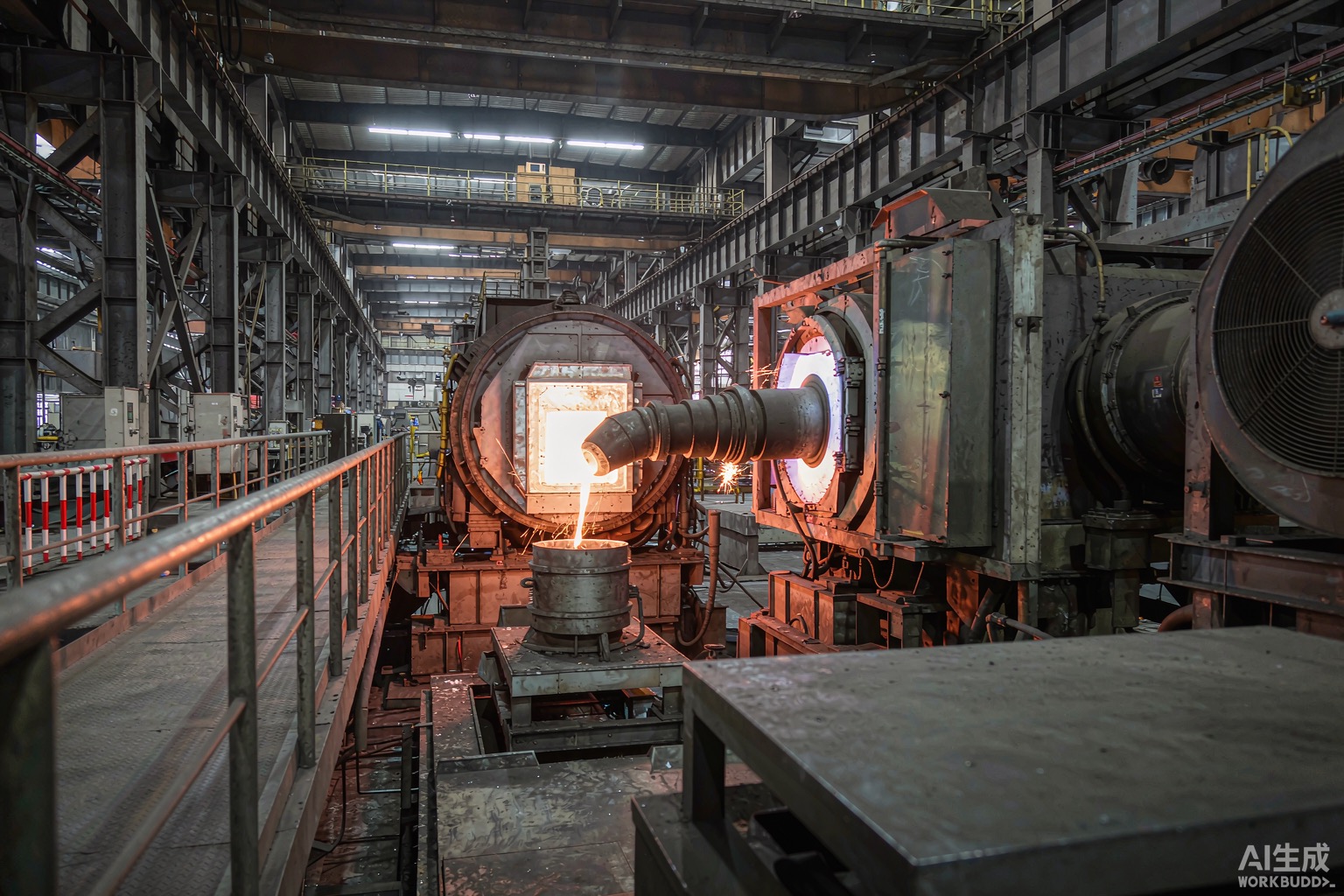
A nickel alloy certificate can name a manufacturer, an address and a country, while the metal inside the bundle was actually melted somewhere else, consolidated through brokers, and re-certified more than once before it reached you. Origin and melt-shop falsification is the quietest form of substitution, because the chemistry may be perfectly correct and the paper may look complete — only the story of where the metal was born is wrong. This guide explains why country of origin and melt shop matter, how a traded or re-certified heat gets passed as mill-made, and the documentary and audit steps that prove what you were actually sold.
We write this as a producing mill. Hangbo Alloy Group operates vacuum induction and electroslag or vacuum-arc remelting in Shanghai and can show the furnace, the heat number and the melt log for every heat we ship, because origin is not a marketing claim for us — it is a record we generate. Buyers who learn to verify origin stop accepting metal whose provenance they cannot defend to a client, a regulator or an insurer.
The broader framework is in our complete procurement pitfalls guide, and the question of whether your seller is even a mill is covered in our trading-company versus real-mill guide; this article focuses specifically on where the metal was melted.
Origin is not paperwork trivia: for many nickel alloy applications the melt source is a technical and legal requirement, not a preference, so a falsified country of origin can void a contract, fail a client audit or breach a regulated supply chain. The reason is that melting route, raw-material controls and traceability are all tied to the shop that poured the heat.
Four situations make origin non-negotiable. Nuclear-grade and certain aerospace specifications require the melt source to be named and controlled. Defence and some infrastructure projects impose country-of-origin rules that a re-certified import cannot satisfy. Sour-service and pressure-equipment clients increasingly ask for the melt shop so they can assess tramp-element and cleanliness history. And your own customer may simply require a mill certificate from a named plant, which a broker-sourced heat cannot honestly provide.
The practical point is that origin fraud is rarely about patriotism and almost always about cost: a heat melted in one location and re-sold through several layers is cheaper to assemble than one made and documented end to end by a single responsible mill.
A heat becomes “mill-made” on paper through a chain of small misrepresentations, each of which is easy to miss if you only read the top line of the certificate. Understanding the chain is what lets you break it.
The first move is the manufactured-in versus melted-in swap: a certificate names a finished-product plant in a preferred country while the ingot was actually melted elsewhere and merely cut, peeled or forged at that plant. The second is re-certification: stock that already changed hands two or three times is issued a fresh certificate by the latest holder, who becomes the “manufacturer” of record despite never melting anything. The third is the broker shield: each layer in the chain signs its own document, so no single paper names the original melt shop, and the question “where was this actually melted?” is answered with a shrug.
None of this requires bad chemistry. The alloy can be exactly UNS N06625, fully in specification, and still be a traded heat with a hidden origin — which is precisely why origin checks must be documentary and auditable, not assumed from the grade.
A credible origin claim is built from specific fields that name the melt shop, not vague statements of compliance. The table shows what a defensible certificate chain contains and what a traded heat typically omits.
| Document field | What a true mill-made heat shows | What a traded heat usually lacks |
|---|---|---|
| Manufacturer name and plant address | Matches the melt shop that poured the heat | Finished-goods address only; melt shop absent |
| Country of melt (not country of final work) | Stated explicitly, per heat | Ambiguous or omitted |
| Furnace identity and heat number | Named furnace, unique heat number, melt date | Heat number only, no furnace, no date |
| Melting route | VIM + ESR / VIM + VAR stated | Unspecified or generic |
| Certificate issuer | The melting mill's own inspection body | A trading entity several steps from the melt |
| Chain of previous certificates | Single, continuous mill certificate | Re-issued papers with no original |
| Retained sample and melt log reference | Available on request | Not offered |
The countermeasure is to require the country of melt and the melt shop name as explicit, per-heat fields — not just a manufacturer's letterhead — and to require that the certificate issuer be the same entity that performed the melting. Our mill test certificate verification guide explains how to read the certificate chain for exactly this gap.
Documents can be re-keyed, but a physical melt shop and its records cannot be conjured. A short audit — or even a targeted evidence request — separates a real mill from a mailbox faster than any certificate review.
A responsible mill can show you the furnace with its serial number, the heat record with the exact heat number you were quoted, and process video or photographs of that heat in progress. It can also point to retained samples and a melt log that references your specific heat. A trading company or a broker will offer none of these, or will describe the detail as confidential. The contrast is the whole test.
You do not need a site visit to run this check. A written request for the furnace identity, the melt log entry for your heat number, and one photograph of the heat being poured is usually enough: a genuine mill answers within days, while a trader stalls, redirects or invents reasons the records are unavailable.
Certain patterns recur on heats that changed hands several times before reaching you. None is proof by itself, but together they are a strong signal to suspend and verify.
| Signal | What you observe | Why it matters |
|---|---|---|
| Certificate issuer differs from order mill | The signing company is not the plant you specified | Somebody between you and the melt re-issued the paper |
| No country of melt field | Only a “made in” or manufacturer address appears | Final work location is being used as origin |
| Price far below mill-direct quotes | Quoted under producers that actually own melting | Margin came from a traded, not melted, source |
| Vague or missing furnace identity | “Produced in our works” with no furnace number | No physical anchor to a real melt |
| Reluctance to share melt-shop evidence | Photos, video or log “confidential” | A real mill has no reason to hide its own heat |
| Inconsistent heat dates | Certificate predates the enquiry yet claims new material | Stock re-certified from older inventory |
Several of these overlap with our virgin versus scrap melt guide and our VIM + ESR vs VIM + VAR guide, because a hidden melt source usually also hides the melting route and the raw-material controls behind it.
Origin fraud is defeated by making the melt shop name a contract requirement and then verifying it, rather than inferring it. The table maps each risk to its control.
| Risk | Control | Evidence you receive |
|---|---|---|
| Melted-in versus manufactured-in swap | Require country of melt and melt-shop name as explicit fields | Per-heat origin statement on the certificate |
| Re-certified stock | Require the original mill certificate, not a re-issue | Continuous certificate chain to the melt |
| Broker shield | Require the certificate issuer to be the melting entity | Single responsible manufacturer of record |
| Untraceable furnace | Require furnace identity, heat number and melt date | Anchor to a physical melt event |
| Hidden melting route | Require VIM + ESR / VIM + VAR to be named | Route stated, matched to the grade and use |
| Unverifiable claim | Request furnace photo, melt log and retained sample | Physical proof the heat existed |
For high-consequence orders, convert the paper into a witnessed record: have a third-party inspector named in the order confirm the origin fields and, where the project demands it, visit or remotely audit the melt shop before material moves.
Use these references when writing origin and melt-shop requirements. Always confirm the current edition of any specification you cite, and add any project-specific country-of-origin rule your client imposes.
| Requirement | Reference | What it supports |
|---|---|---|
| Certificate authenticity and issuer | EN 10204 3.1 / 3.2 | Route to a named, witnessed inspection body |
| Melting route and chemistry | UNS numbers and ASTM product specifications (B446, B574, B637, B564, etc.) | Ties grade to a defined melt and chemistry |
| Sour-service melt controls | NACE MR0175 / ISO 15156 | Basis to require named melt source for H2S service |
| Nuclear and aerospace melt source | Material specifications with melt-source clauses (e.g. ASTM B/AE, AMS series) | Contractual right to demand the melt shop |
| Country-of-origin rules | Project, client or regulatory requirements (defence, infrastructure) | Legal basis to reject a re-certified import |
If your client imposes a specific origin rule, write it into the purchase order as a conformance condition, not a preference — our equivalent-grade substitution guide shows how a loose specification lets exactly this kind of swap become “compliant”.
Add these to every inquiry and purchase order where origin matters, and most traded-heat risk closes before shipment:
No. A traded or re-certified heat can be exactly the right UNS grade and fully in specification while still having a hidden or falsified origin. Chemistry proves the alloy; it does not prove where the ingot was melted or who poured it. Origin must be established from per-heat documentary fields and, where it matters, from audit evidence of the melt shop.
Country of manufacture usually means where the product was finished — cut, peeled, forged or heat-treated — while country of melt means where the ingot was actually poured from liquid metal. A bar can be finished in one country from an ingot melted in another, so a “made in” line on a certificate is not proof of melt origin. Require the country of melt specifically.
Only if it references and is backed by the original mill certificate, with the full chain intact and the issuer identified. A fresh certificate with no original behind it, issued by an entity that never melted the metal, is exactly how a traded heat becomes “mill-made” on paper. Always ask for the original mill document.
Request the furnace identity and serial number, the melt-log entry for your exact heat number, and a photograph or video of that heat in progress, plus a retained-sample reference. A genuine mill answers readily because those records exist; a trader stalled or calls the detail confidential, which is itself the answer.
Because origin is linked to melting route, raw-material controls and traceability. A hidden melt source often also hides whether the material was double melted, whether virgin prime charge was used, and whether tramp-element controls were applied — all of which affect weldability and service life even when chemistry passes.
Yes, especially where the consequence justifies it. A named inspector can confirm the origin fields on the certificate, witness that the issuer is the melting entity, and for critical orders audit or remotely verify the melt shop before material moves, turning an origin claim into a signed, defensible record.
Require the country of melt and melt-shop name as explicit per-heat fields, require the certificate issuer to be the melting entity, require the original mill certificate rather than a re-issue, and state that any country-of-origin rule your client imposes is a conformance condition. Together these make a silent melt-source swap a contract breach rather than a quiet substitution.
If a quotation names a mill you cannot verify, or you need help turning a vague origin statement into a proper requirement, send us the grade, product form, dimensions, quantity and any certificate you were offered. We will tell you which origin and melt-shop fields to demand, confirm whether the claimed source is consistent with the alloy and route, and quote our own Shanghai-melted, double-remelted production with furnace identity, heat number and full traceability. Typical response time is ten minutes, and we ship worldwide.
Email: serena@hangboalloy.com
Phone: +86 166 2109 2936
WhatsApp: +86 166 2109 2936
Send us the grade, product form, dimensions, quantity and any certificate you were offered by another supplier. We will tell you which origin and melt-shop fields to demand, confirm whether the claimed source is consistent with the alloy and melting route, and quote our own Shanghai-melted, double-remelted production with full traceability.