
Hangbo Alloy Group
Shanghai · Est. 2012
A welded nickel-alloy tube sold as seamless hides a longitudinal weld — a preferred site for cracking and leaks in heat exchangers, sour lines and subsea service. This guide shows the eddy-current, UT and macro-etch checks plus the ASTM designations that prove what you received.
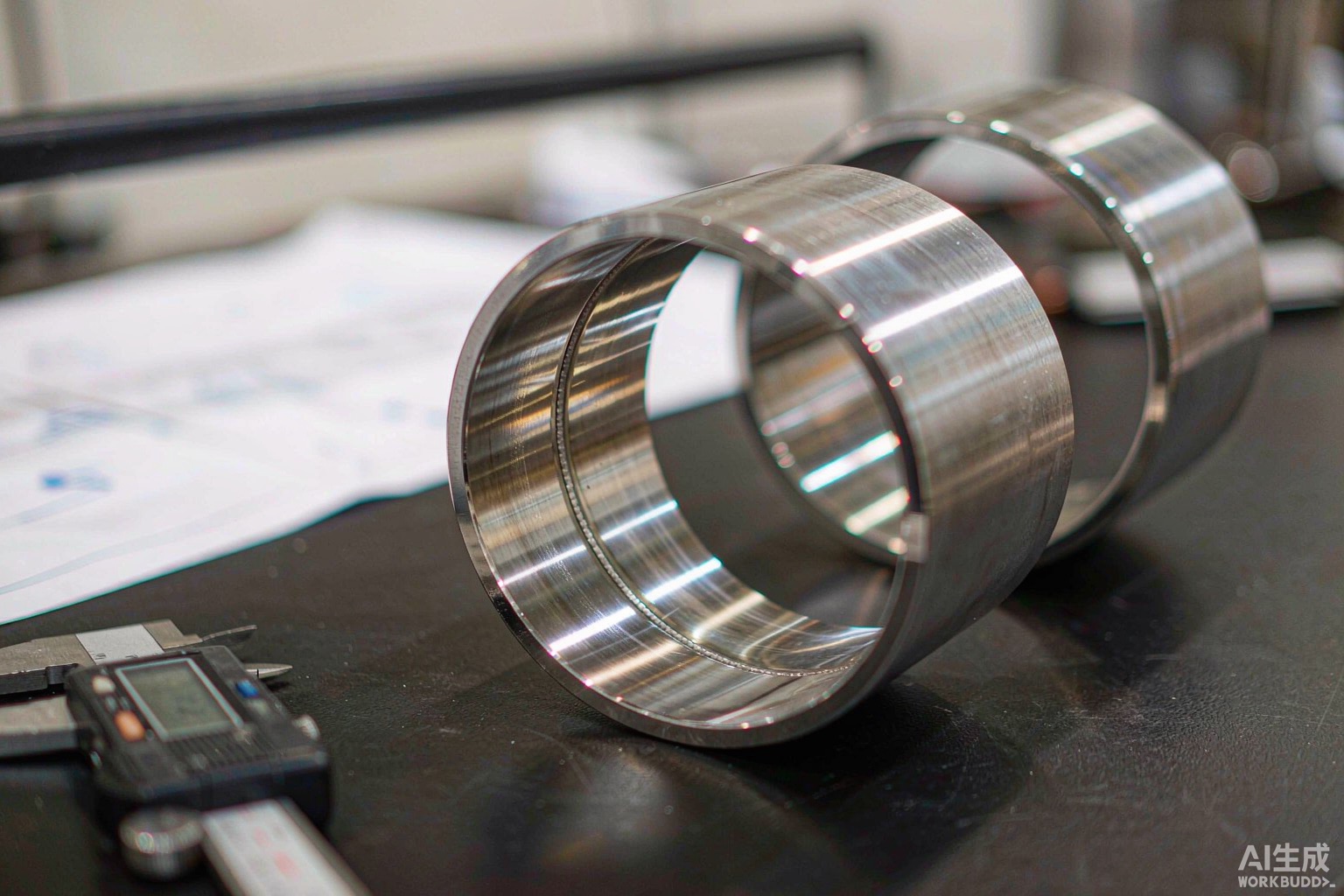
A welded nickel-alloy tube sold as seamless is one of the oldest substitution tricks in the trade, because the two can look almost identical once the seam is dressed and the tube is pickled. The danger is that a longitudinal weld is a preferred site for corrosion, cracking and leak — exactly where you least want one, in a heat-exchanger bundle, a downhole string or a sour-gas line.
This guide shows why the distinction matters, how a welded tube is actually made versus a seamless one, and the specific tests and documents that prove what you received before it goes into service. The key point: chemistry will not save you here, because welded and seamless tube are the same alloy — the proof is in the seam, the standard and the microstructure.
We produce genuine seamless nickel-alloy tube and pipe by piercing and elongating a double-melted billet, with no weld seam at any stage. Our process runs from a virgin charge through VIM and then ESR or VAR remelting into forging, piercing, extrusion or cold drawing, and every tube is NDT-scanned before dispatch. Our seamless pipe manufacturing guide walks the route end to end, and our procurement pitfalls guide maps the wider chain.
Seamless tube is made from a solid billet that is pierced and worked into a hollow, so it has no longitudinal joint. Welded tube is made from strip or plate rolled into a round and joined by a longitudinal weld. That weld, even when dressed flush, is a metallurgical discontinuity: it has a different solidification structure, a heat-affected zone, and a higher chance of inclusions or lack-of-fusion defects than the parent metal.
In service the seam is where chloride stress-corrosion cracking, pitting and fatigue most readily start. For many heat-exchanger and pressure applications the specification calls for seamless precisely to remove that seam. Substituting a welded tube silently removes the margin the design relied on.
| Property | Seamless tube | Welded tube |
|---|---|---|
| Longitudinal seam | None by definition | One longitudinal weld, dressed or not |
| Uniformity of wall | Even, within tolerance | Can vary across the seam |
| Preferred failure site | None specific | The weld and heat-affected zone |
| Typical use | Pressure, heat exchanger, sour service | Less critical, lower-pressure service |
The manufacturing route is the only thing that decides whether a tube is seamless, and the route leaves traces an inspector can find. Welded tube starts as flat strip; seamless starts as a pierced billet.
| Step | Seamless route | Welded route |
|---|---|---|
| Starting form | Double-melted billet | Cold-rolled strip or plate |
| Forming | Pierce, elongate, roll, draw or extrude | Roll strip into a round, butt-weld the seam |
| Seam treatment | None needed | Weld, then dress/flush and pickle |
| NDT | UT / ET on the body | Eddy current on the seam is essential |
| Tell | Continuous grain flow, no seam line | Seam line visible after etching; weld macrostructure |
After pickling and bright annealing a dressed seam can be hard to see by eye, which is why visual inspection alone is never enough. The standard the tube was bought to is the first clue: seamless and welded forms have different ASTM numbers.
The reliable methods do not rely on appearance. Use at least two of them on receipt.
| Method | What it finds | How to apply it |
|---|---|---|
| Eddy current (ET) | The longitudinal seam and seam defects | 100% length scan; a continuous seam signal is the giveaway |
| Ultrasonic testing (UT) | Seam lack-of-fusion, inclusions | Body scan; compare seam zone signal to parent |
| Macro-etch / cross-section | Weld microstructure definitively | Cut one sample, etch, view under low power |
| Hydrostatic test | Through-wall leaks at the seam | Per the product specification pressure and hold |
| Standard on the PO | Seamless vs welded designation | ASTM B444/B423/B167 = seamless; B704/B705/B626 = welded |
| Marking | "SMLS" vs "Welded" on the tube | Confirm the stencil matches the order |
The single most decisive check is a macro-etched sample. A seam is impossible to hide under etching, and the weld's cast structure is unmistakable next to the worked parent metal. Our heat-exchanger tube guide covers why seamless is usually specified for bundles.
The paperwork often tells the story before you cut a sample. Watch the product specification and the test records.
| Clue | What it means |
|---|---|
| PO says seamless, certificate cites a welded standard | The tube was welded; mismatch is the proof |
| Only "tested, acceptable" with no ET coverage | Seam may never have been scanned |
| No flattening or reverse-bend test recorded | Welded-tube proof tests omitted |
| Heat number spans a long coiled strip history | Consistent with strip-derived welded tube |
Require the exact ASTM product specification — seamless or welded — to be named on both the purchase order and the mill certificate, and require the NDT method and coverage to match that form. For seamless tube, eddy current or ultrasonic examination to the applicable practice should be stated explicitly.
Some services forgive a seam; others do not. The risk rises with pressure, corrosivity and temperature swing.
| Service | Risk if welded sold as seamless | Our guide |
|---|---|---|
| Heat-exchanger and condenser tubes | High — seam cracks under thermal swing | tube selection |
| Sour gas and downhole | High — sulfide stress cracking at the seam | sour-gas guide |
| Offshore and subsea | High — seawater fatigue at the seam | offshore guide |
| Low-pressure, ambient, non-critical | Lower — still must match the spec | Specify the form either way |
For these critical services, our seamless tube and pipe programme is built around the piercing route with full NDT, and our Inconel 625 vs Incoloy 825 comparison helps where a specific grade is in question.
Both eddy current and ultrasonic testing find a longitudinal seam, but they work on different principles and suit different tube. Eddy current induces a circulating current in the tube wall and reads the disturbance a seam or near-surface defect causes; it is fast, needs no couplant, and is the standard for welded-tube seam inspection. Ultrasonic testing sends a sound beam into the wall and reads the echo from a lack-of-fusion or inclusion; it reaches deeper and sees the volumetric defects a seam may hide.
| Method | Best for | Limit |
|---|---|---|
| Eddy current | Surface and near-surface seam, full-length speed | Less sensitive to deep, tight defects |
| Ultrasonic | Volumetric lack-of-fusion, inclusions | Needs couplant, near-surface blind zone |
For receiving inspection of a tube claimed seamless, run eddy current for the seam line and ultrasonic for body soundness, and keep the calibration records. Either method alone can miss the other's class of defect, so the two together are the practical proof rather than a single glance.
Welded tube is cheaper to make because it starts from strip and skips the pierce-and-extrude route, so a supplier offering "seamless" at a welded price is not offering a discount — they are offering a different, cheaper product. The trade is the seam itself and the inspection it demands.
| Aspect | Welded | Seamless |
|---|---|---|
| Starting form | Strip or plate | Double-melted billet |
| Process steps | Roll, weld, dress, pickle | Pierce, elongate, draw or extrude |
| Cost driver | Lower conversion cost | Higher conversion plus NDT |
| Risk if substituted | Seam in a seamless specification | None specific |
If your specification calls for seamless and the price looks like welded, the saving is the seam. Confirm the form on the certificate before you accept the number, and remember the heat-exchanger guide reasons through why seamless is usually specified for bundles.
The substitution is caught at the dock, not in service, if the receiving inspection is written down. Make the steps mandatory so the check is repeatable and auditable.
| Step | Action |
|---|---|
| 1. Match the form | PO says seamless; certificate must say seamless |
| 2. Scan the body | 100% eddy current or UT per the standard |
| 3. Macro-etch a sample | Confirm there is no longitudinal seam |
| 4. Check the stencil | "SMLS" present where required |
| 5. Hydrostatic where specified | Per the product specification |
| 6. Reconcile | Heat number and count to the packing list |
A procedure like this turns a vague worry into a repeatable check, and it gives you the evidence to reject and claim if a welded tube ever arrives where seamless was ordered. For critical service, specify EN 10204 3.2 with witnessing as described in our certificate verification guide.
After welding, the seam is ground flush and the tube is pickled or bright-annealed, so a casual look will not find it. But the dressing leaves subtle traces an experienced inspector reads, and those traces are what should trigger the definitive tests. A dressed seam often shows a faint linear shadow or a slightly different etch response after pickling, and the wall thickness can dip across the seam line because material was removed there during grinding.
| Tell | What to look for |
|---|---|
| Etch response | Seam line etches slightly differently after pickling |
| Wall profile | Local thin spot across the seam after dressing |
| Surface finish | Faint linear band versus uniform parent metal |
| Bend test | Seam opens or flattens differently from the parent |
None of these is proof alone, which is why they are clues to trigger eddy-current and macro-etch checks, not substitutes for them. The honest defence is the test: a macro-etched sample makes the seam unmistakable, and a flattening or reverse-bend test specified for welded tube will expose a poor weld that a dressed surface hides. Require these on the order so the supplier cannot rely on the dressing to pass a visual.
The cleanest control is upstream, in the words you write before anyone melts anything. A precise order removes the ambiguity a supplier could otherwise exploit, and it turns a quality dispute into a contractual one you can win.
| Clause | Wording intent |
|---|---|
| Form named | "Seamless" with the exact ASTM specification and edition |
| Certificate form | The same form printed on the mill test certificate |
| NDT named | 100% eddy current or UT, with standard and acceptance level |
| Macro check | One sample macro-etched on receipt |
| No equivalent | No substitute form without written approval |
With these clauses, a welded tube cannot be delivered where seamless was ordered without breaching the purchase order. Pair the clause with the receiving procedure above and the substitution stops at the dock rather than in service.
| Form | Example ASTM specs (nickel alloys) | Note |
|---|---|---|
| Seamless pipe & tube | B444 (Inconel 625), B423 (Incoloy 825), B167 (Inconel 600), B163 (condenser tube) | "SMLS" required for pressure service |
| Welded tube | B704 / B705 (Inconel 625), B626 (welded), B619 / B626 family | Seam ET is mandatory |
| Forgings & fittings | B564 and grade-specific specs | Seamless by nature of forging |
Always confirm the latest revision and any supplementary NDT requirements your project adds, and require the form to be printed on the certificate.
This article is inspection guidance, not a legal opinion or a substitute for the applicable standard. Specifications change; always verify against the current edition of the specification you order to.
Trademark note: Inconel, Hastelloy, Incoloy, Monel, Nimonic and Haynes are trademarks of their respective owners; the grades covered here are defined by their UNS numbers and the applicable ASTM or EN standards, not by the brand names.
No. Welded and seamless tube are the same alloy, so chemical analysis and PMI read identically. The distinction is the longitudinal weld, which only shows up under eddy current, ultrasonic testing, a macro-etched cross-section, or the product specification named on the certificate.
Cut one sample, etch it and view the cross-section and length under low magnification. A seam is impossible to hide after etching, and the weld's cast structure is obvious next to the worked parent metal. Eddy current or ultrasonic scanning of the full length is the practical receiving check.
Common seamless nickel-alloy tube specs include ASTM B444, B423, B167 and B163; welded tube specs include B704, B705 and B626. The form must be named on both the order and the certificate — "nickel alloy tube" alone does not tell you.
Yes in critical service. Even a sound weld has a different solidification structure and heat-affected zone than the parent metal, and that is where chloride stress-corrosion cracking, pitting and fatigue start. Many specifications call for seamless precisely to remove the seam.
No. A hydrostatic test finds through-wall leaks at the test pressure; it does not confirm the absence of a seam, which can be tight at test pressure and fail later. Pair it with eddy current or UT and a macro check.
For lower-pressure, less-corrosive or non-critical services, welded tube of the correct grade can be perfectly acceptable — provided you ordered it knowingly and the seam was properly welded and NDT-scanned. The problem is only when welded is supplied where seamless was specified.
Name "seamless" with the exact ASTM specification and edition on the PO, require the same form printed on the certificate, require 100% eddy current or UT with the standard named, and macro-etch a sample on receipt. For pressure or sour service, specify EN 10204 3.2.
If you need genuine seamless nickel-alloy tube, or you want to verify whether tube you were offered is truly seamless, send us the grade, dimensions, quantity, service environment and any certificate. We will confirm the right form and standard, quote our own pierced-and-drawn seamless production from virgin, double-melted billets with full NDT, and supply the EN 10204 certificate that names the seamless specification. Typical response time is ten minutes, and we ship worldwide from Shanghai.
Email: serena@hangboalloy.com
Phone: +86 166 2109 2936
WhatsApp: +86 166 2109 2936
Send us the grade, dimensions, quantity, service environment and any certificate you were offered. We will confirm the right form and standard, quote our own pierced-and-drawn seamless production from virgin, double-melted billets with full NDT, and supply the EN 10204 certificate that names the seamless specification.