
Hangbo Alloy Group
Shanghai · Est. 2012
The most important unknown in a nickel alloy purchase is whether the company quoting you actually makes the metal. This guide gives the specific questions, documents and physical evidence that separate a real mill — with its own VIM, ESR or VAR melt shop and laboratory — from a trading company, plus the red flags that should stop an order.
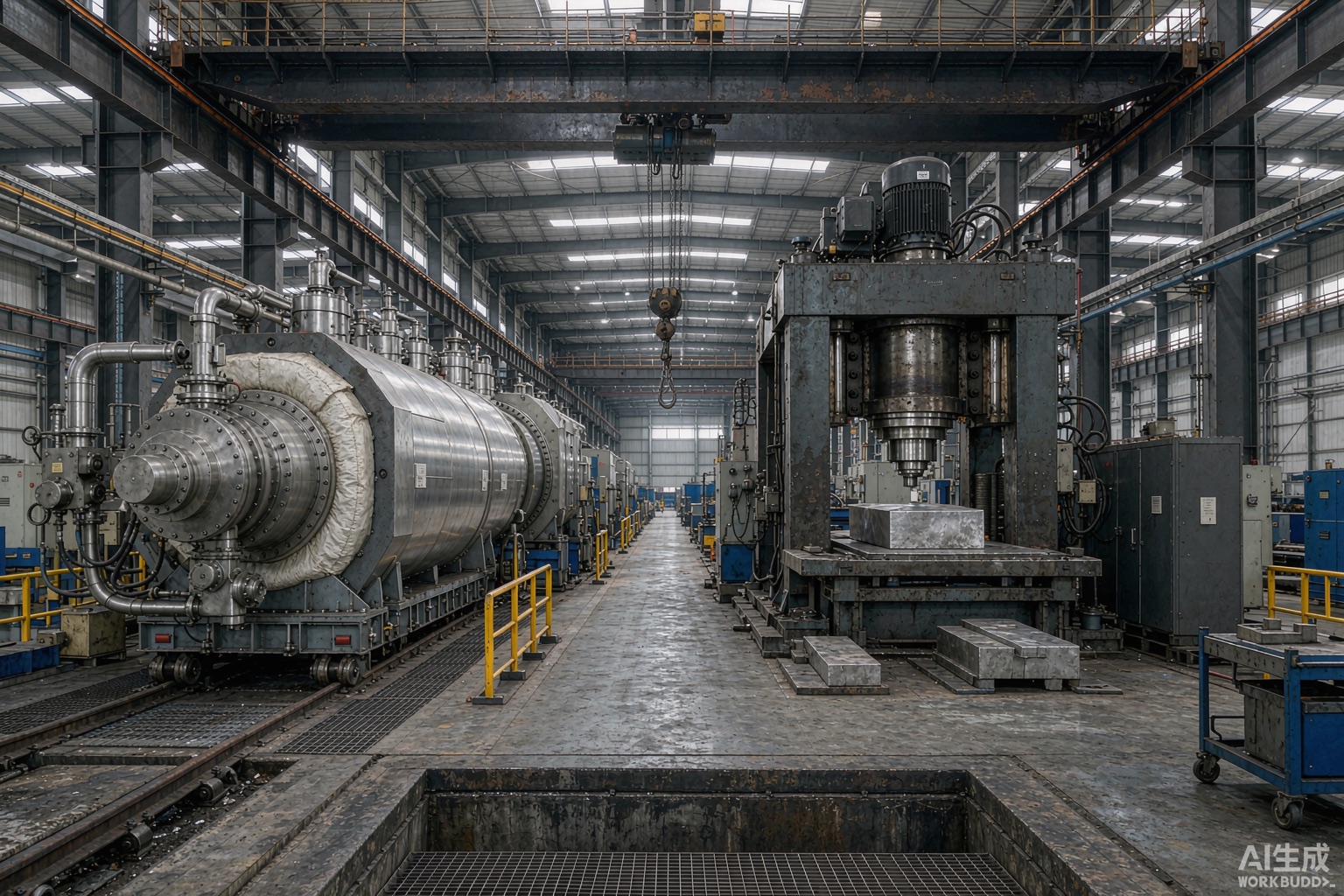
The single most important unknown in a nickel alloy purchase is whether the company answering your email actually makes the metal. A trader and a manufacturer can quote the same grade, ship the same certificate format, and use the same photographs, but only one of them controls the melt, the heat treatment and the test results. When something goes wrong — a sensitized weld, a substituted melting route, an untraceable heat — the difference is the difference between a partner who can fix it and a mailbox that forwards complaints to a mill it never named.
This guide is written for procurement managers and project buyers who source nickel-based and high-temperature alloys from overseas and want to know, before they pay, whether they are dealing with a mill or an intermediary. It gives you the specific questions, documents and physical evidence that separate a real manufacturer from a trading company, and the red flags that should stop an order. The checks here take minutes and remove most of the risk. Verifying that the mill is real is the first step; proving where the metal was actually melted is the next — our origin and melt-shop verification guide covers the document fields and mill audit that expose a traded heat.
We write this as the manufacturer, so we describe what a real mill can show. Hangbo Alloy Group in Shanghai operates its own vacuum induction melting and electroslag or vacuum arc remelting equipment, an in-house metallurgical laboratory, and forging, rolling, drawing, heat-treatment and finishing lines. Grade names such as Inconel, Hastelloy, Incoloy and Monel are third-party trademarks defined by their UNS numbers and the applicable ASTM or EN specifications.
Our pillar guide on nickel alloy procurement pitfalls covers the full failure map, and our nickel alloy vs stainless steel guide helps you justify the material choice to your own management.
A trading company is not dishonest by definition, but it sits between you and the melt, and that distance is where most procurement failures live. Five consequences follow from buying through an intermediary:
None of this means you must buy only from a mill. It means you should know which you are dealing with, and weight the specification and the verification accordingly.
The table below contrasts what a real manufacturer can demonstrate against what an intermediary typically cannot. The attributes are observable, not matters of opinion.
| Attribute | Real mill | Trading company |
|---|---|---|
| Melt shop | Owns VIM and ESR or VAR equipment; can show it | No melting assets; sources from others |
| Laboratory | In-house spectrometry, mechanical, NDT and metallography | Outsources or has none |
| Process records | Furnace logs, heat numbers, heat-treatment charts | Receives a certificate, cannot show the underlying records |
| Technical depth | Answers metallurgical questions from its own data | Escalates or gives generic answers |
| Traceability | Heat-to-piece identity it created | Heat identity it inherited from a supplier |
| Facility evidence | Photos, video, virtual or physical visit possible | Stock-yard or office photos only |
Certain answers, or non-answers, are themselves the signal. The table maps a question to the worrying reply and to what a mill will normally provide.
| Your question | Red-flag reply | What a mill provides |
|---|---|---|
| Can you show the melting route? | “It is standard double melt” with no furnace identity | VIM+ESR or VIM+VAR named, with furnace and heat number |
| Where is the melt shop? | “Confidential” or a vague region | Named facility, often with photos |
| Can we visit or do a virtual tour? | Deflection or “our factory is very busy” | A planned visit or video walkthrough |
| Do you have an in-house lab? | “We use a third-party lab” only | In-house lab plus third-party option |
| Price far below market | No breakdown of contained metal value | Transparent on the metal-value basis |
| Are you the manufacturer? | Business licence shows trading scope | Manufacturing licence and production assets |
You do not need a forensic audit to separate a mill from a mailbox. Work through this sequence on the first inquiry:
| Step | What to request | What a credible mill returns |
|---|---|---|
| 1 | Facility photographs or video of the melt shop and lab | Images showing VIM/ESR/VAR and testing equipment |
| 2 | Business licence and scope of operation | Manufacturing, not only trading, in the scope |
| 3 | Melting route, furnace identity, heat number on a sample certificate | All three stated, matching the heat |
| 4 | A technical question about the grade and service | A specific, data-based answer |
| 5 | Offer of a virtual or physical visit | A concrete arrangement |
| 6 | EN 10204 3.1 (and 3.2 with witness) examples | Complete certificates with the controls above |
Our facilities page shows the melting, laboratory and finishing assets a buyer should expect, and our test reports and traceability process shows the documents a mill issues for every heat.
A manufacturer’s honesty is easiest to judge by the document package it issues without being asked. A trader can usually produce a certificate, but a mill produces the whole chain of evidence behind it. The table shows what to expect from each source when you request the full package.
| Document | Real mill | Trading company |
|---|---|---|
| Mill test certificate (EN 10204 3.1) | Issued against its own heat, with route and heat number | Forwarded from the underlying mill |
| Melting record (furnace log, heat number) | Created in its own melt shop | Generally not available |
| Heat-treatment chart with load thermocouples | From its own furnace, named | Rarely producible |
| Composition report (OES, wet, combustion) | From its own laboratory | From a third-party lab it engaged |
| NDT records (UT, PT, ET) | Performed and recorded in-house | Often summarised only |
| Third-party witness (3.2) | Coordinates SGS / TÜV / BV / DNV at its plant | Arranges via the mill, with delay |
| Facility and process photographs | Routine and specific to your order | Generic or unavailable |
Request the package on a real inquiry and the difference becomes obvious within a day. A mill responds with documents that name its own equipment and heat numbers; an intermediary responds with a certificate it cannot fully explain. Neither response is necessarily dishonest, but only one lets you trace a future problem back to the exact melt that produced it.
The fastest filter is a technical question a reseller cannot answer. Try these:
A manufacturer answers these from production data; a trader has to go ask someone it may not be able to name.
For contrast, here is how a vertically integrated nickel alloy producer operates, and the evidence it can show at each stage. Our own chain is end to end and we can show it: virgin prime raw material charged into vacuum induction melting with electroslag or vacuum arc remelting, complete oxide-scale removal before working, controlled forging and rolling, the standard heat treatment the grade requires, finishing, and full-process checks — composition by spectrometry and wet analysis, mechanical testing, ultrasonic or penetrant NDT, dimensional inspection, marking and packing — with every stage recorded against the heat number. Because the melt, the test and the record are all ours, the certificate describes material we actually made, and a future question reaches the people who made it.
Put these into the supplier-qualification step before you release the first order:
Use this table as a starting point for qualification. Always confirm the current edition.
| Subject | Reference | What it supports |
|---|---|---|
| Mill test documentation | EN 10204 3.1 / 3.2 | Certificate type and witnessing |
| Product specifications | ASTM B166/B167, B443, B444/B622, B564, B574, B637 | Grade-specific requirements |
| Composition verification | ASTM E1473 / E1019 and OES, ICP-OES, combustion methods | Reported chemistry checks |
| NDT | ASTM E213/E2375 (UT), E165/E1417 (PT), E309 (ET) | Inspection evidence |
| Facility evidence | Our facilities page and test reports | What a mill should be able to show |
This article is guidance for buyers, not a legal opinion. Verify any supplier against your own qualification procedure and the applicable standards.
No. A trading company can be a legitimate and convenient channel, especially for small or mixed orders. The risk is not the trader itself but buying without knowing you are using one, and therefore skipping the verification a mill would give you for free. Know which you are dealing with and weight the specification and inspection accordingly.
Ask for the melting route, furnace identity and heat number on a sample certificate, and ask to see the melt shop. A manufacturer names the VIM+ESR or VIM+VAR route, the furnace and the heat, and can show the equipment; a reseller struggles to provide the underlying records and deflects on facility evidence.
Yes, but a 3.1 only certifies that the results are specific to the material and are signed by the manufacturer’s inspection representative. If the trader is not the manufacturer, the 3.1 it forwards is the mill’s document, and you should confirm the heat identity truly matches your bundle and that the mill is a real, named producer.
Because the melting route, the raw-material control and the traceability all originate at the melt shop. Some projects and end-users require a named country of melt for quality or compliance reasons. A supplier that refuses to state it, or gives a vague answer, is removing exactly the information you need to verify the material.
Apply the metal-value test: estimate the market value of the contained nickel, molybdenum, chromium and other expensive elements in the ordered grade, before any processing or margin. If the quotation sits at or below that contained-metal value, something is different about the material and you should demand the difference in writing before committing.
For critical or high-value programs, yes — a physical or virtual visit is the strongest evidence. At minimum request facility video of the melt shop and laboratory. A manufacturer will arrange it; a mailbox will find reasons it cannot.
Size is not the issue; control of the process is. A small mill that owns its melt shop, lab and records and can show them is lower risk than a large trader with no production assets. Judge the supplier by what it can demonstrate about the heat you will receive, not by its headcount.
If you want to confirm whether a supplier you are considering is a real mill, need help qualifying a source, or want a quotation you can verify end to end, send us the grade, product form, dimensions, quantity and service environment. We will share our facility, our melting route and our certificate format, answer your technical questions from our own production data, and quote virgin-material, double-melted production with full heat-to-piece traceability. Typical response time is ten minutes, and we ship worldwide from Shanghai.
Email: serena@hangboalloy.com
Phone: +86 166 2109 2936
WhatsApp: +86 166 2109 2936
Send us the grade, product form, dimensions, quantity and service environment, and any quotation or certificate you are reviewing. We will share our facility, melting route and certificate format, answer your technical questions from our own production data, and quote our virgin-material, double-melted production with full heat-to-piece traceability.